








Bitget’s $387M Hack: NEAR Protocol Blocks Part of the Laundering, SEC Softens Stance on Staking
 ·
29.09.2026 09:58
·
3 min read
·
29.09.2026 09:58
·
3 min read

The crypto industry is still dealing with the fallout from one of the biggest attacks of 2026: exchange Bitget has begun a phased restoration of operations after $387.5 million in assets were stolen. At the same time, the team behind the decentralized protocol NEAR Intents reported that it foiled an attempt by hackers to launder more than $50 million through its infrastructure. Against this backdrop, the U.S. Securities and Exchange Commission (SEC) published long-awaited guidance for the market, softening its rhetoric on liquid staking and token buybacks.
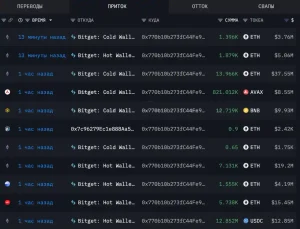
The Bitget incident occurred on September 24. Attackers exploited a flaw in a third-party security service, obtained internal credentials and generated fake cryptocurrency withdrawal orders. The exchange’s private keys and cold storage were not compromised, but after accounting for the stolen assets on the Tron and Zcash networks, the total damage rose from an initial $351.6 million to $387.5 million.
The platform is covering customer losses from its own user protection fund of more than $464 million, according to Bitget’s official report. Bitcoin withdrawals resumed on September 28, Ethereum operations became available on September 29, USDT settlements will return on September 30, and full access to fiat, P2P trades and other altcoins is expected to be restored by October 2.
Blocking at NEAR Intents: Refusing to Process Instead of Seizing
Immediately after the hack, the attackers tried to move more than $50 million through the NEAR Intents cross-chain system, hoping to cover their tracks. The SHIELD security module identified the criminals’ addresses and rejected requests to swap and transfer funds for that amount.
However, the claim that $50 million was “returned or frozen” is inaccurate, Crypto.news clarifies. The protocol simply refused to process the transactions: the hackers retained control of the rejected assets and redirected them to other mixers and bridges. Only about $503,000 was frozen at the moment the smart contracts executed, and transactions worth another $166,000 went through before the filter kicked in.
The case has once again divided the crypto community: supporters of full decentralization criticize selective transaction censorship in permissionless systems, while the protocol’s developers insist that open code should not serve as a free tool for legitimizing stolen funds.
New SEC Guidance: Staking and the Howey Test
Meanwhile, the industry’s regulatory wing received an important signal from U.S. authorities. The SEC’s Division of Corporation Finance published an updated set of answers to frequently asked questions (FAQ) on how the Howey test applies to digital assets, according to the regulator’s official portal.
The commission’s staff reached two important conclusions:
- regular token buybacks by the team of an already operating network do not by themselves prove the existence of an investment contract;
- liquid staking tokens (LSTs), subject to a number of technical conditions, may be classified as digital commodities or instruments that record a share rather than as securities.
Lawyers stress that these points are staff guidance from the agency, not a new federal law. They are not legally binding in court and require a case-by-case analysis of each blockchain project. Still, the document sets clearer rules of the game for DeFi protocol developers in the U.S., reducing the risk of sudden lawsuits over basic network incentive mechanisms.