









Northrop Grumman Secures $7M DARPA Contract for ‘Diamond’ Chips to Increase Power 10x
 ·
30.08.2026 23:16
·
3 min read
·
30.08.2026 23:16
·
3 min read
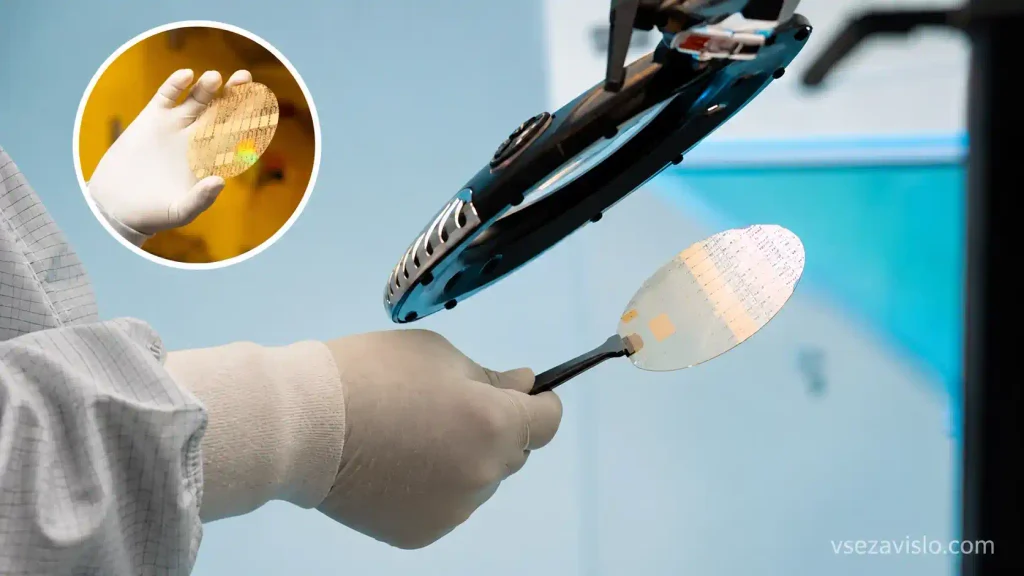
US defense contractor Northrop Grumman has secured a $7 million contract from DARPA for Phase II of the THREADS program. The project aims to develop next-generation radio-frequency semiconductors with integrated diamond heat sinks, capable of operating under extreme loads in radar, electronic warfare (EW), and satellite communications systems.
Growing Diamonds Inside Transistor Microchannels
Modern high-power radio-frequency transistors based on gallium nitride (GaN) generate massive amounts of thermal energy within a microscopic area. Due to the risk of thermal degradation in the die, military systems are often forced to operate well below their physical limits.
Instead of mounting standard external heatsinks, Northrop Grumman engineers, working alongside researchers at Stanford University, developed a direct heat dissipation technology:
- microscopic channels are etched onto the backside of the semiconductor wafer;
- a polycrystalline diamond layer is synthesized directly inside these structures;
- diamond’s thermal conductivity at room temperature is roughly five times higher than copper, allowing heat to be drawn away from transistor gates instantly at the point of origin.
Phase I Results and the 81 W/mm Goal
According to an official press release from Northrop Grumman, Phase I testing demonstrated that integrating diamond microstructures boosted RF power density by 3.3 times. In Phase II, the company plans to triple that figure, achieving a combined 10-fold increase in power over conventional silicon and GaN solutions without increasing the chip’s physical footprint.
According to DARPA, the THREADS program (Technologies for Heat Removal in Electronics at the Device Scale) aims to reach a power density of up to 81 W per millimeter of gate width in X-band amplifiers, alongside an eightfold reduction in thermal resistance. Military engineers estimate that such a leap in transmitter efficiency could nearly double the operational range of airborne radar systems.
Applications: From Radars to Satellites
Technical documentation for the DARPA THREADS program highlights key deployment areas for diamond microchips:
- active electronically scanned arrays (AESA) for fighter jets and air defense systems;
- high-power transmit/receive modules for space-based satellite communication systems;
- directional RF jamming systems.
The company notes that prototype diamond receiver protection components have already withstood peak loads exceeding 100 W, twice the limit of existing commercial power limiters.
Northrop Grumman has been investing in diamond microelectronics since 2019 and is developing the technology under an open-access manufacturing model, sharing its lithography capabilities with other US defense contractors. Eventually, similar nanodiamond heat sinks could also be adopted in the commercial sector—specifically for cooling silicon dies in server CPUs and AI compute accelerators.