








Gamers Nexus Investigation: LG TVs Scan Home Wi-Fi and Are Vulnerable to Spying in Standby Mode
 ·
07.09.2026 22:21
·
3 min read
·
07.09.2026 22:21
·
3 min read
The team at popular tech outlet Gamers Nexus, together with experts from Level1Techs, has published a detailed investigation into hidden activity within LG’s webOS operating system on modern smart TVs. The researchers uncovered aggressive data collection about home network infrastructure for LG’s ACR advertising platform and identified vulnerabilities that could turn a Smart TV into a listening device even when the screen is off. However, viral social media posts claiming that the TVs are inherently programmed to stream conversations 24/7 exaggerate the findings.
Local Network Scanning and Content Recognition System
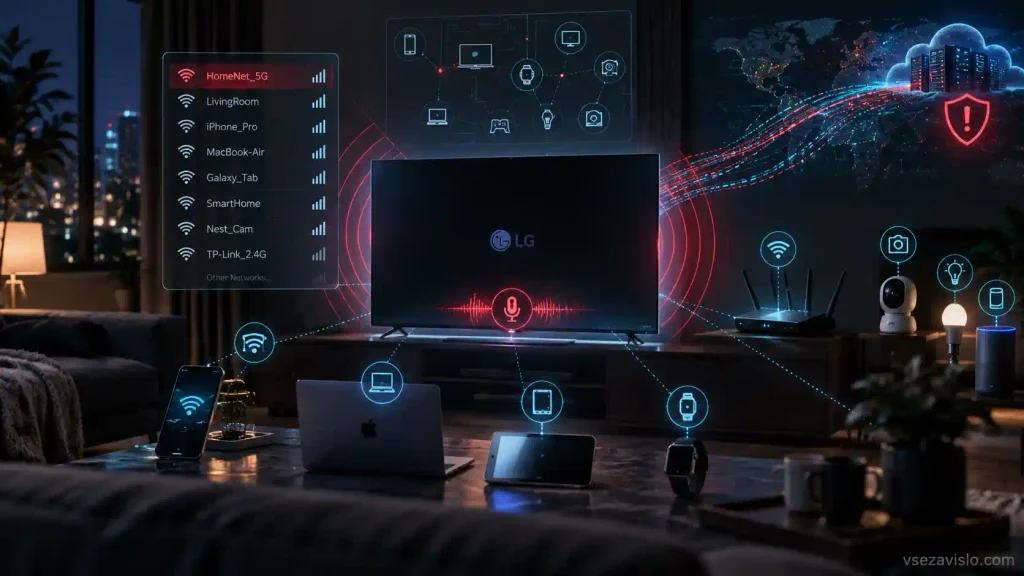
As part of a two-hour test, the researchers analyzed traffic from a retail LG OLED G5 TV. Packet analysis revealed that the TV scans the home local network in the background, collecting identifiers of connected smartphones, computers, and smart home appliances, as well as recording the names and signal strengths of all neighboring Wi-Fi access points.
This data collection is directly tied to the LG Ad Solutions platform and its built-in Automatic Content Recognition (ACR) algorithm. The technology analyzes on-screen content in real time—from streaming services to external HDMI sources—and sends digital fingerprints to company servers. This allows LG to profile the household and serve synchronized targeted ads on the smartphones of all residents. LG maintains that the system is activated only after the user accepts the terms during initial setup.
Microphone Hijacking in Standby Mode and LG’s Response
The researchers found the primary threat within webOS’s codebase. As tech outlet Cybernews reports, a chain of remote code execution (RCE) vulnerabilities was discovered in the firmware.
In a test scenario, the researchers gained control of the device and enabled continuous audio recording via the built-in microphone in standby mode, while the screen appeared completely off. The software cached audio files in local memory if there was no internet connection and uploaded them at the first opportunity, while system logs revealed text transcripts of voice queries.
An analysis by Malwarebytes emphasizes the distinction between a software flaw and default behavior: while the investigation proved that exploitation and eavesdropping are technically possible via these flaws, it found no evidence that stock TVs record ambient room audio out of the box.
LG representatives previously stated that the company’s devices do not collect or store ambient conversations in the background. The researchers reported the discovered vulnerabilities to the vendor through a responsible disclosure program, but the case underscores a broader reality: modern Smart TVs are full-fledged networked computers equipped with microphones and cameras that pose genuine privacy risks if the home router is insufficiently secured.