








Audi Patents a Wild Combustion-Engine Imitation for EVs: Vibrations, Throttle Lag and Real Sparks
 ·
10.10.2026 22:10
·
3 min read
·
10.10.2026 22:10
·
3 min read
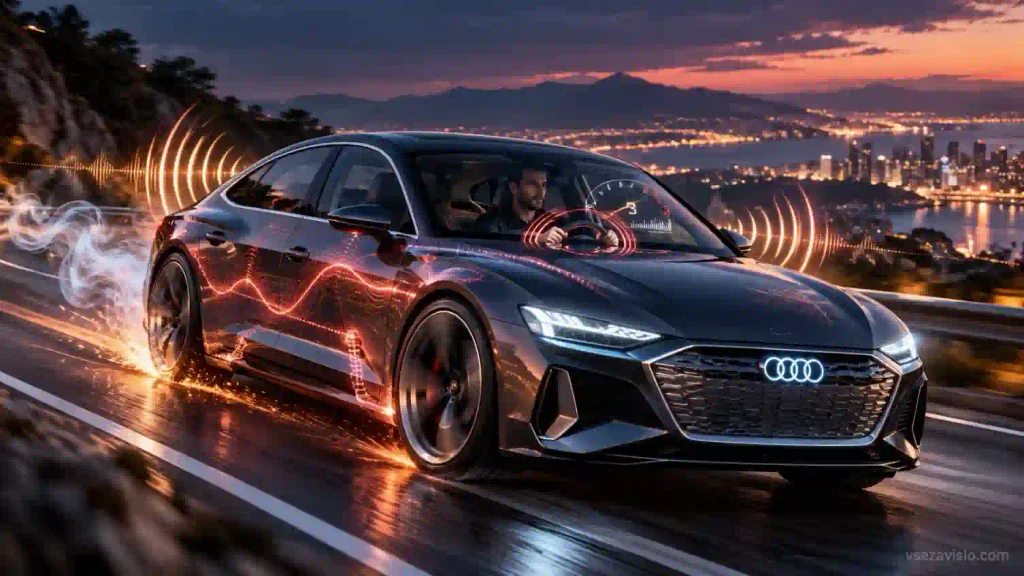
German automaker Audi has decided to bring back the thrill of driving a gasoline sports car in a highly radical way. In the text of patent application DE102025107436A1, the company’s engineers describe a concept for an electric vehicle that deliberately strips away the main advantages of “green” transport — silence, a smooth ride and instant throttle response. The developers propose artificially making a battery-powered car vibrate, jerk during gear shifts and even throw showers of sparks off the asphalt.
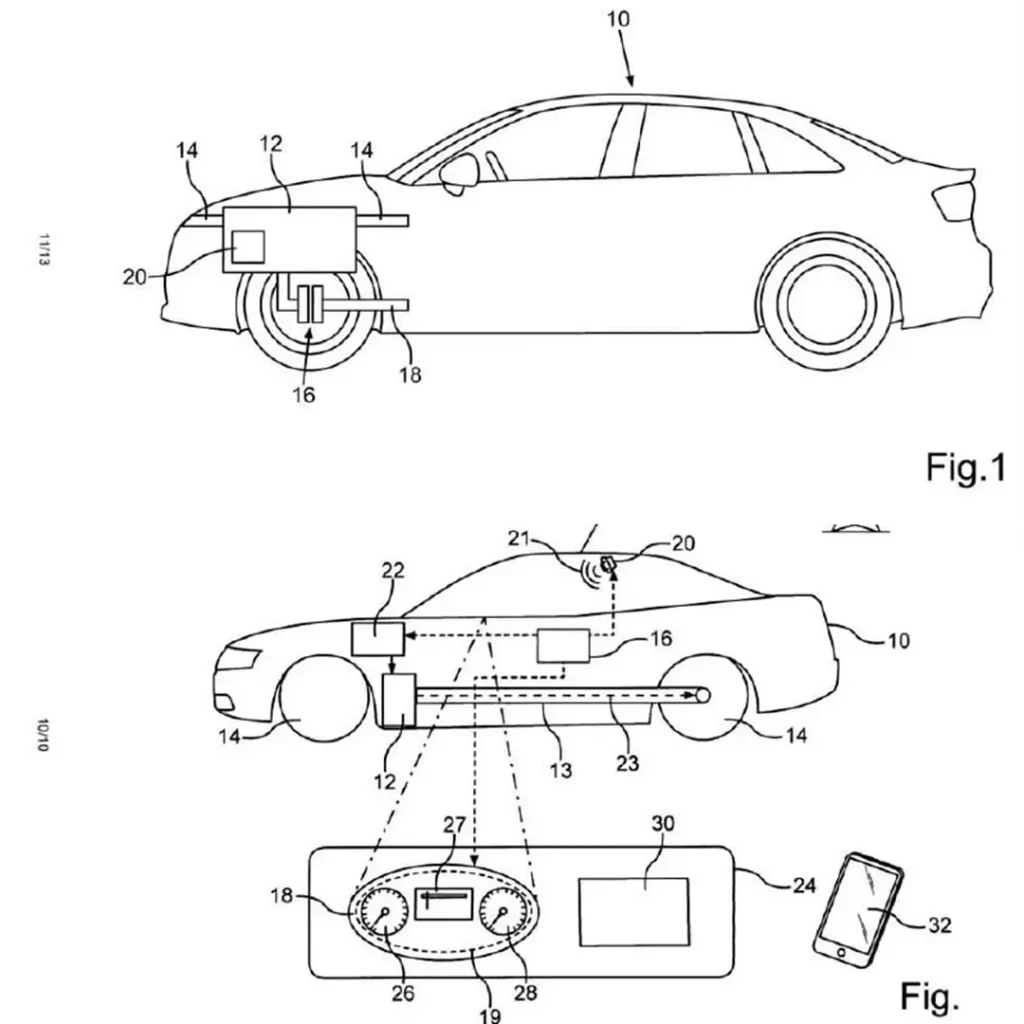
The idea didn’t come out of nowhere: many petrolheads criticize modern EVs for being sterile and offering no feedback. Audi engineers Dirk Beder and Michael Grabowski decided to approach nostalgia on a physical level, connecting the electric motor to the body with rigid hollow steel mounts and partially removing sound insulation. As a result, the powertrain’s vibrations will be transmitted directly to the seat and steering wheel.
Revving at a Red Light and an Artificial Turbo Lag
The patent’s most unusual mechanical solution is a special torque-disconnect coupling. It lets the electric motor be decoupled from the wheel drives while the car is stationary. The driver will be able to floor the accelerator at a red light to spin the motor freely with the characteristic roar of synthesized exhaust, imitating a classic rev.
On the move, the electronics can imitate the steps of an automatic transmission with jolts and the click of paddle shifters. What’s more, Audi proposes bringing back turbo lag: the control unit will deliberately delay the delivery of maximum torque by fractions of a second after the accelerator is pressed, imitating the spool-up delay of a classic turbocharger.
Sparks on the Asphalt and the Smell of a Toy Train
Besides imitating a classic engine, the engineers proposed a set of exotic external special effects, Car and Driver notes.
The patent describes a retractable metal scraper under the floor that physically presses against the road surface and throws real showers of sparks during a hard launch or braking. High-voltage electric arcs in the style of Tesla coils, which change the shade of the body panels, and a special fragrance system are meant to complement the spectacle. Diffusers in the cabin will be able to spray not only perfume but also a synthesized smell of “electrosmog” and ozone, reminiscent of the aroma of a running brushed motor in a child’s toy train set.
Will the Patent Make It to the Assembly Line?
Imitating analog sensations in EVs is already becoming a market trend. For example, the sporty hatchback Hyundai IONIQ 5 N won critical acclaim precisely for its convincing emulation of an eight-speed “robot” gearbox and the sounds of a gasoline turbo engine. The Koreans, however, limited themselves to software settings and the stock speakers, whereas Audi’s application takes aim at complex mechanical components.
For now, the development has an exclusively theoretical patent-search status. Fire safety regulations won’t allow Audi to throw sparks on public roads, and extra clutches and servos would add unnecessary weight to the car. Nevertheless, the document clearly shows the direction of engineering thinking: automakers understand that without sound, jolts and vibrations, selling sporty EVs to a traditional audience is becoming increasingly difficult.