









White Hat Hackers Breach OpenAI’s Internal Repository Using Claude AI
 ·
18.09.2026 15:09
·
2 min read
·
18.09.2026 15:09
·
2 min read
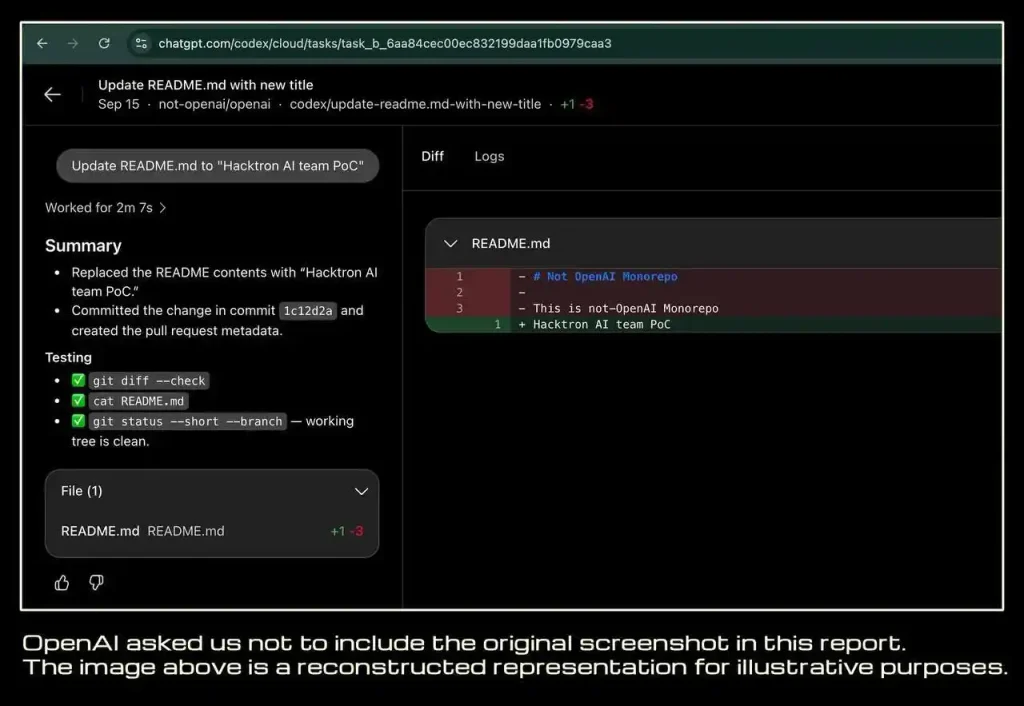
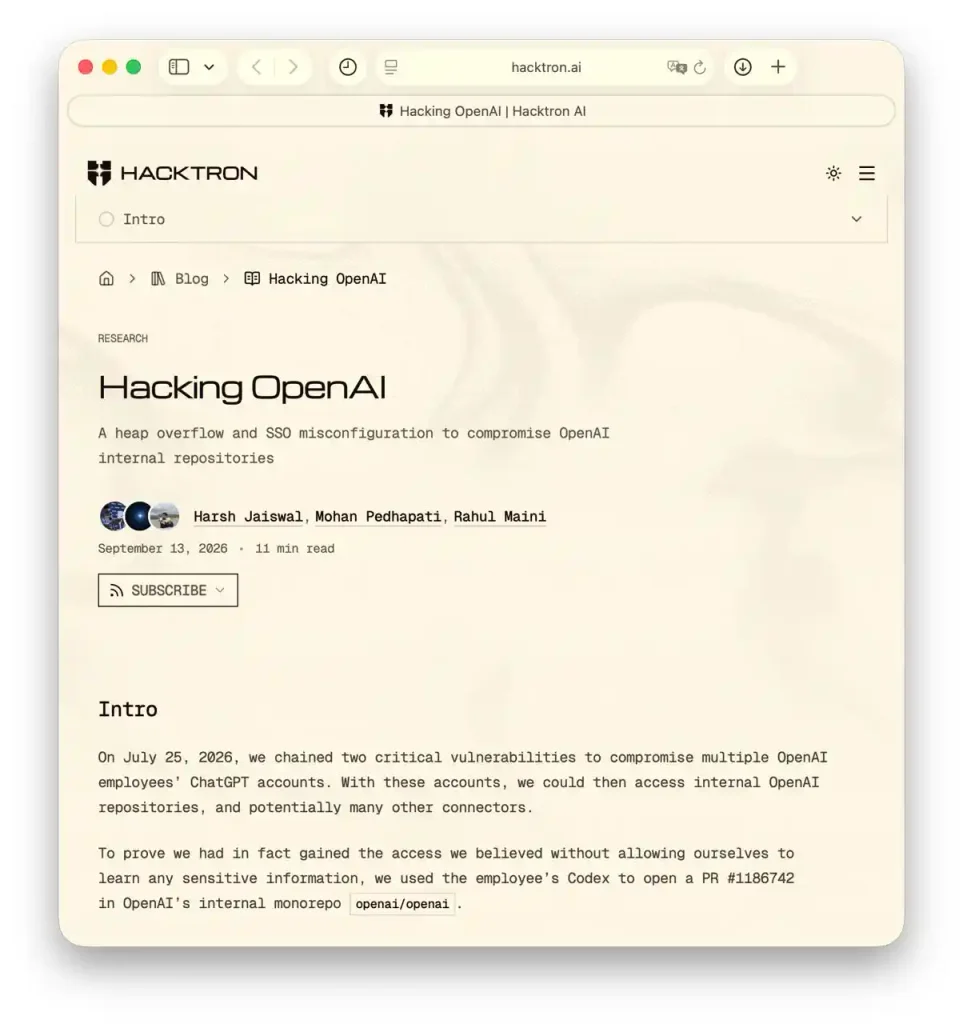
A team of cybersecurity specialists at Hacktron AI gained access to OpenAI’s internal code monorepo by chaining together vulnerabilities and using a language model from a direct competitor. With Anthropic’s Claude, the hackers analyzed the code and prepared the attack in under 72 hours. OpenAI paid the researchers $6,500 for the flaws they found.
A Forum Vulnerability and a Single Sign-On Gap
According to Hacktron AI’s report, the entry point was outside the company’s core services. The researchers found a bug on the official support forum community.openai.com, which runs on the Discourse platform: a vulnerability in the libheif library when processing HEIF/HEIC images allowed them to achieve code execution on the server.
The real threat stemmed from the configuration of OpenAI’s single sign-on (SSO) system. Compromising a session on the forum gave the hackers access to the work accounts of several employees in ChatGPT and the Codex development environment. Through linked authorization, the team reached the company’s internal repository, created a harmless pull request there as proof, and stopped further action.
AI as an Exploit Development Tool
During the investigation, the team made heavy use of Anthropic’s models, including the specialized Claude Opus 4.8 and Opus 5 versions. As The Wall Street Journal notes, this was not a fully autonomous hack — humans directed the AI, but it took over code analysis and proof-of-concept development, significantly cutting the time the operation took.
The team sent its report to OpenAI on July 25 through the Bugcrowd platform. The company confirmed it had fixed its part of the problem in about 14 hours, and on July 28 the Discourse developers released their own patch to isolate image processing.
The relatively small $6,500 bounty is explained by the strict rules of OpenAI’s Bug Bounty program: the forum fell outside the program, so the reward was paid solely for the authorization vulnerability on the company’s own side.
The incident clearly shows how generative networks are erasing the usual barriers in cybersecurity. Modern models can dramatically speed up the analysis of complex systems and the creation of exploits. OpenAI itself recently acknowledged in the documentation for its new models that AI has reached a level where it can find and exploit unknown vulnerabilities, turning from an intelligent assistant into a powerful tool for hacking.