









Three Minutes of Max Effort Altered 714 Blood Proteins — Compared to Just Seven After 1.5 Hours of Steady Cardio
 ·
21.08.2026 21:25
·
2 min read
·
21.08.2026 21:25
·
2 min read
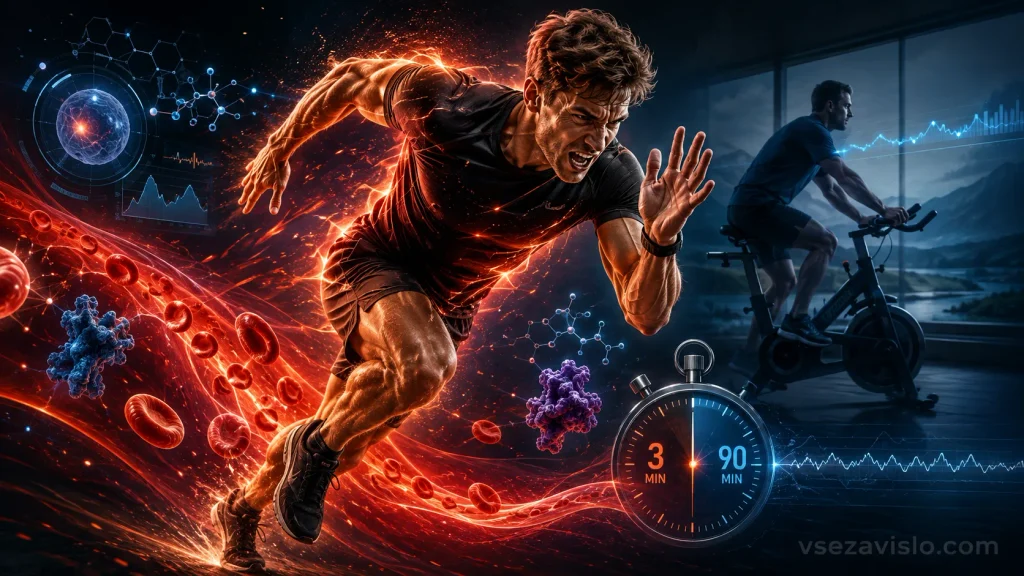
A short but maximum-intensity physical effort triggers a completely different molecular response in the body than long, monotonous endurance training. According to a study published in the journal Cell Reports Medicine, six 30-second stationary bike sprints led to an immediate change in the levels of 714 blood plasma proteins (nearly 25% of all proteins studied).
By comparison, after 90 minutes of continuous, moderate cycling, significant shifts were detected in only seven proteins — a roughly 100-fold difference in immediate molecular responses.
Three Minutes of Max Effort vs. 90 Minutes of Moderate Cycling
The study by researchers at Rockefeller University involved young, physically active men. The sprint protocol consisted of six 30-second maximum-power intervals with four-minute rest periods between them (a total of three minutes of pure peak effort). The second group pedaled continuously for an hour and a half at the first lactate threshold.
In addition to proteins, sprinting triggered a spike in over 200 metabolites, including signaling molecules involved in tissue repair, angiogenesis (blood vessel growth), and metabolic regulation.
Links to Diabetes Risk and Impact on Fat Cells
By cross-referencing their data with genomic and biochemical databases from over 53,000 UK Biobank participants, the researchers identified 33 protein markers associated with a reduced risk of obesity, type 2 diabetes, and slower biological aging:
- After three minutes of sprinting, 32 of the 33 target proteins were altered;
- After 90 minutes of moderate cardio — only 3.
As reported by ScienceDaily, in lab tests, blood plasma collected after sprinting altered the expression of more than 1,600 genes in human fat cells (1,128 genes were upregulated and 549 downregulated), initiating an active cross-talk between fatigued muscles and fat tissue. Notably, this response did not diminish even after eight weeks of regular training.
The authors emphasize that the findings do not negate classic long-form cardio: moderate aerobic exercise triggers its own beneficial adaptations in liver function and lipid metabolism, though these manifest gradually (several hours after exercise), whereas high-intensity sprinting acts as an immediate metabolic switch.