








Pentagon Deploys Secure Versions of ChatGPT and Grok for 3 Million Troops: AI Cleared for Official Data
 ·
01.09.2026 19:51
·
3 min read
·
01.09.2026 19:51
·
3 min read
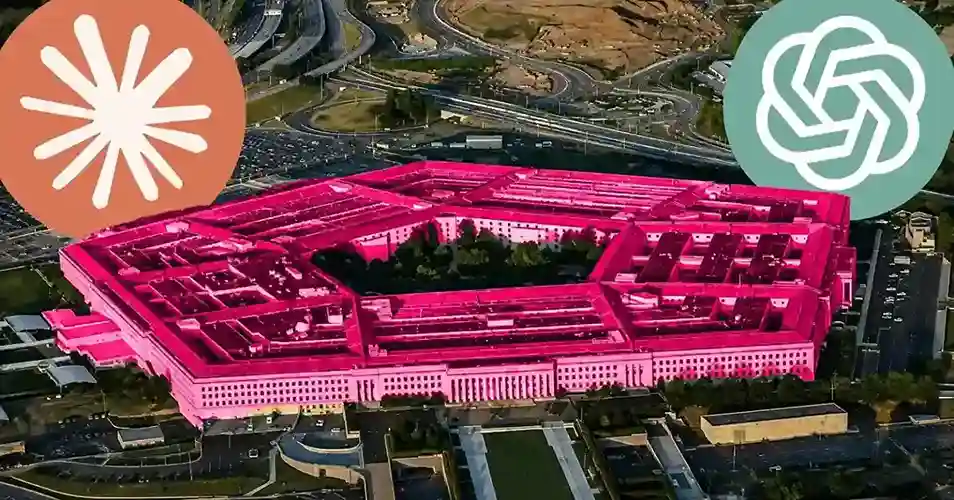
The U.S. Department of Defense has officially rolled out specialized versions of commercial AI models — ChatGPT Mil from OpenAI and Grok for Government from Elon Musk’s xAI. The tools are now part of the isolated government ecosystem GenAI.mil, which is accessible to more than 3 million service members and civilian personnel.
IL5 Security Clearance: What Data Can Be Processed
Both models have received the government security certification Impact Level 5 (IL5). This clearance allows the AI to handle Controlled Unclassified Information (CUI) — sensitive official data that does not contain classified secrets: internal technical specifications, supply chain analytics, procurement documentation, personnel reports, and operational regulations.
As highlighted in TechCrunch’s coverage, this is not about combat AI for controlling missile systems, but rather a secure counterpart to the corporate ChatGPT Enterprise tier for automating routine tasks. The main goal is to prevent leaks of official documents through consumer chatbots.
| Parameter | Public Service | GenAI.mil Platform |
| Available Models | ChatGPT / Grok / Gemini | ChatGPT Mil / Grok for Gov / Gemini for Gov |
| Deployment Environment | Public cloud servers | Isolated government network |
| Data Clearance | Basic user queries | CUI official documents (IL5 standard) |
| Training on Data | Possible (by default) | Strictly prohibited |
ChatGPT Mil Capabilities and Grok’s Reasoning Modes
According to the Pentagon’s official release on ChatGPT Mil, the military version of OpenAI’s chatbot supports working with large file libraries, Projects workspaces, and allows troops to create isolated custom models (Custom GPTs) for niche tasks of garrisons and headquarters.
Meanwhile, the Grok for Government release offers deep reasoning algorithms with three levels of detail (Auto, Fast, and Expert). A key feature of Grok is reusable workflow scenarios called Playbooks: for example, logistics and procurement specialists can save template algorithms for financial market audits and supplier analysis, which are then automatically applied across entire units.
Multi-Model Base: 1.7 Million Users and 100,000 AI Agents
The GenAI.mil platform has been operational since December 2025, with Google Gemini for Government as its first component. Adding solutions from OpenAI and xAI implements a strategy to avoid vendor lock-in.
The scale of AI integration into the U.S. military has reached record levels:
- more than 1.7 million unique users are already connected to the closed portal;
- military personnel and analysts have collectively created over 100,000 specialized AI agents for applied tasks;
- the defense budget allocates $250 million for platform development and agent pilots.
OpenAI’s Red Lines and the Anthropic Legal Precedent
Integrating AI into the defense sector comes with strict legal restrictions. Contrary to rumors about removing all barriers, the official terms of OpenAI’s agreement with the Pentagon include three fundamental prohibitions:
- A complete ban on using the models for mass domestic surveillance of U.S. citizens;
- A ban on integration into systems controlling fully autonomous lethal weapons;
- A ban on delegating AI to make automatic decisions in situations with high risk to human life.
Additionally, in late August, a conflict between the military department and Anthropic was resolved: a federal court ruled that the Pentagon’s attempt to blacklist the creators of the Claude model was unlawful, due to their principled refusal to provide AI for military purposes without ethical restrictions.
The deployment of ChatGPT Mil and Grok for Government marks a shift for military agencies toward full-scale use of generative AI as secure office and analytical infrastructure.