








US Pushes to Ban Chinese Vehicles, but Strict Rules Risk Hitting Mercedes-Benz
 ·
07.09.2026 17:31
·
3 min read
·
07.09.2026 17:31
·
3 min read
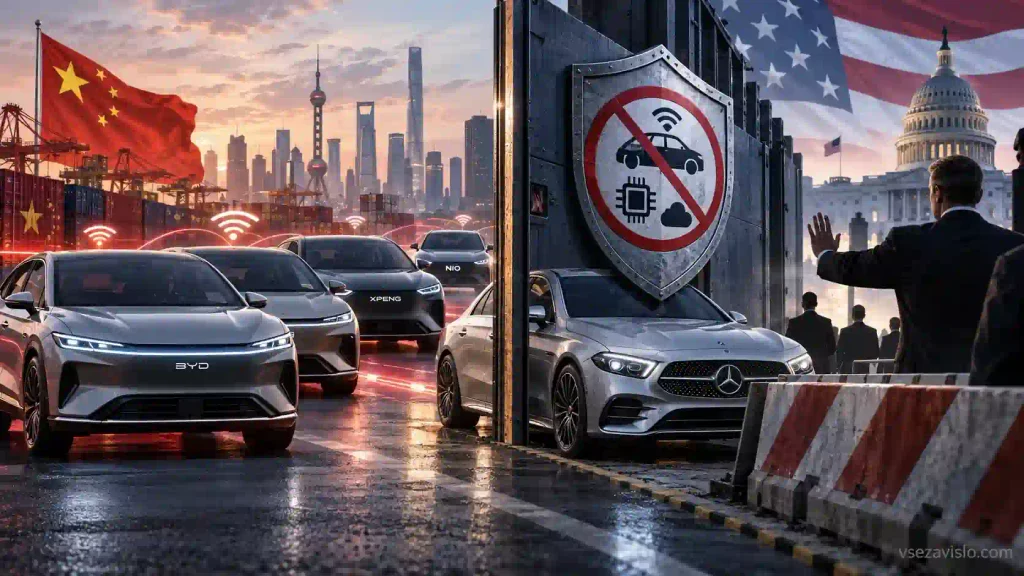
Leading global automakers have urged the US Congress to pass a law by the end of 2026 imposing a permanent ban on Chinese connected vehicles, as well as their related onboard software and electronic components. However, the strict criteria of the document have created a legal trap: German automaker Mercedes-Benz unexpectedly faces these restrictions due to its shareholder structure.
National Security Threat and Protecting the Domestic Market
The petition was initiated by the Alliance for Automotive Innovation, an industry lobby representing Ford, General Motors, Toyota, Volkswagen, and dozens of other brands. Automakers are demanding the immediate passage of the Connected Vehicle Security Act (S. 4429).
US automakers fear a repeat of European and Asian scenarios, where Chinese brands like BYD are rapidly expanding market share thanks to massive government subsidies and aggressive price cuts. Protecting national security serves as the official justification for the embargo: modern smart vehicles feature dozens of cameras, microphones, and telematics units capable of covertly collecting infrastructure data and sending location information to foreign servers.
The relevant Senate committee has already unanimously approved the bill. The legislation aims to codify existing US Department of Commerce administrative rules into permanent law; the agency has already banned Chinese software starting with model year 2027 and specific communication chips starting in 2030.
The 15% Paradox and Chinese Shares in Stuttgart
The main point of contention surrounds foreign control criteria. The Senate-approved version of the bill blocks US market access for automakers where citizens or entities from “unfriendly nations” hold more than 15% of capital or voting rights.
At the same time, according to the public shareholder structure of Mercedes-Benz Group, Beijing state-owned BAIC holds 9.98% of the company’s shares, while another 9.69% is owned by Geely founder Li Shufu. Combined, Chinese partners hold 19.67% of the shares—well above the threshold set by lawmakers.
This creates an absurd paradox: Mercedes-Benz is itself a member of the alliance lobbying for a law that, in its current form, formally classifies its products as a threat to US security.
Lawmakers on Capitol Hill have already acknowledged the issue. Senator Ted Cruz warned colleagues against passing overly broad rules, while Bernie Moreno, one of the bill’s co-authors, stated that no one intends to penalize European allies. Lawmakers promised to refine the exemption system and establish a flexible transition period until 2030 to protect German luxury sedans from US sanctions.