








“TVs don’t eavesdrop”: LG responds to spying allegations, confirms network scanning
 ·
10.09.2026 19:54
·
3 min read
·
10.09.2026 19:54
·
3 min read
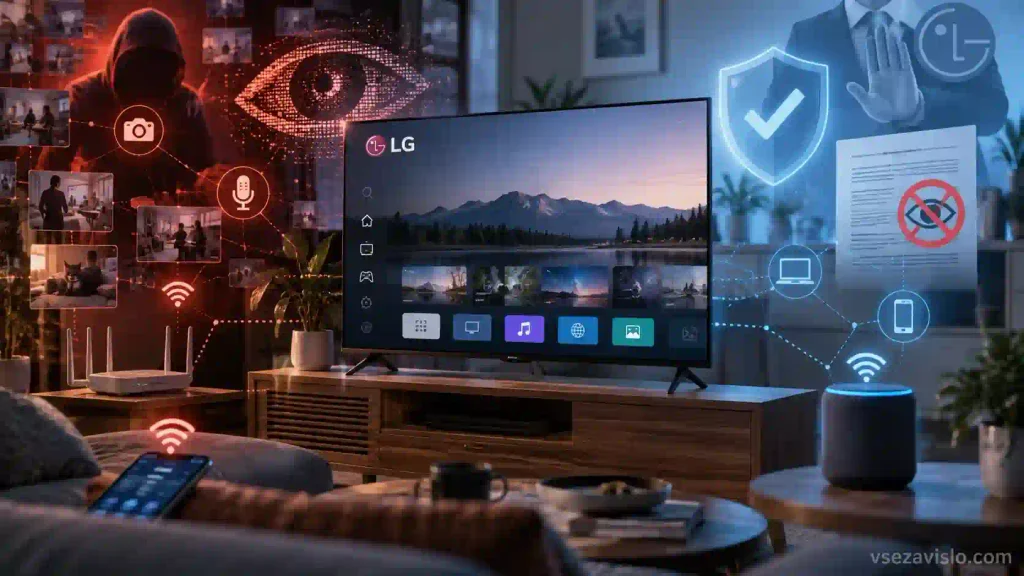
LG Electronics has issued an official statement in response to an independent technical investigation that accused its webOS operating system of secretly recording owners and collecting data about home appliances. The South Korean manufacturer categorically rejected suspicions of background listening, but confirmed that it regularly polls the local network and that its ad content-recognition algorithms are running.
LG’s position: microphones work only on command
The investigation was prompted by a report in which researchers found how LG TVs scan the home Wi-Fi and collect data about nearby devices. The authors of the experiment claimed that security gaps in the firmware allow audio to be intercepted remotely through the built-in microphones even when the screen is off.
In a comment to Tom’s Hardware, LG representatives called the key allegations false. According to the company, the microphone path is activated only in two standard scenarios:
- When the voice input button on the Magic Remote is physically pressed;
- When the wake phrase “Hi LG” is recognized, if the user has independently enabled the voice activation feature in the settings menu.
The developers insist that if the wake phrase is not detected, the draft audio fragment is instantly deleted from the processor’s local buffer and is not transmitted to the cloud infrastructure. The company called the loud figure of “216 million spy TVs” a manipulation, since it reflects the total number of Smart TVs sold worldwide, not the number of compromised panels.
What the manufacturer confirmed and what questions remain
At the same time, the company did not deny other facts from the investigation. LG admitted that the TVs poll the home router in the background to search for available gadgets, calling this a standard feature for pairing with smartphones and the smart home ecosystem.
The operation of the Automatic Content Recognition (ACR) system was also confirmed. According to LG’s press service, the technology scans the image on the screen for ad targeting, but is activated only after the buyer’s consent at first power-on. Earlier, due to the opacity of data collection through ACR, the company already entered into a settlement with Texas authorities, promising to make opting out of tracking more accessible.
The researchers’ main question remained without a direct rebuttal: LG did not comment on the remote code execution (RCE) vulnerabilities that allowed the device to be forced to record audio in standby mode. Independent experts emphasize that even if the manufacturer does not conduct intentional surveillance, the presence of unpatched holes in Smart TVs leaves the televisions vulnerable to third-party spying.