









AMD Preparing 10% Price Increase for GPUs and Chipsets: Why Building a PC Will Cost More by Winter
 ·
17.09.2026 21:45
·
2 min read
·
17.09.2026 21:45
·
2 min read
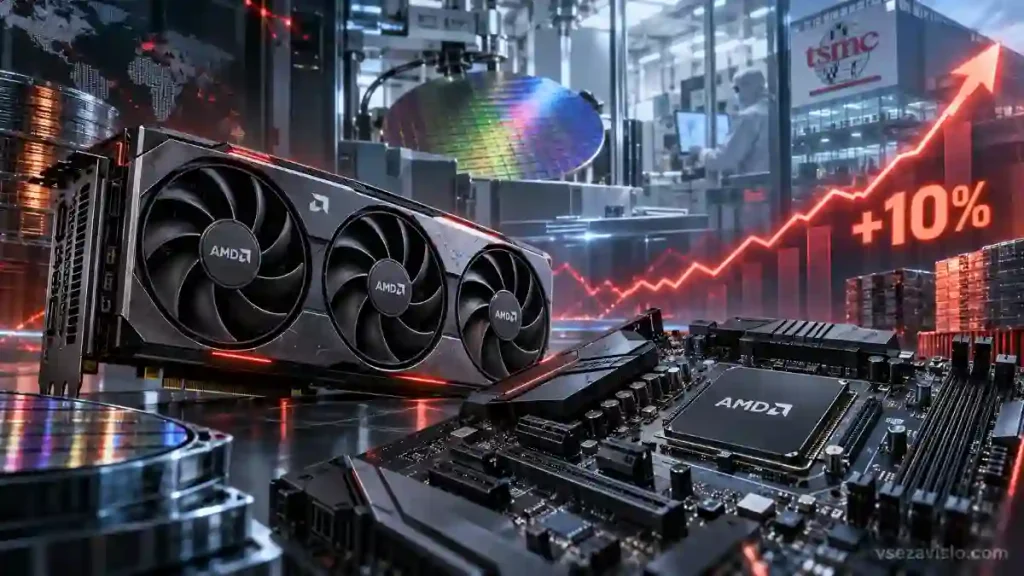
Fall PC upgrades might end up costing more than expected. According to sources in the Asian supply chain, AMD has notified partners about an upcoming increase in wholesale prices for its silicon wafers in Q4 2026. Prices will rise by around 10%, driven primarily by higher contract manufacturing fees from Taiwanese foundry giant TSMC.
What’s Getting More Expensive and Where CPUs Fit In
The rumor originated from Chinese industry channel ChannelGate, with the data later shared by insider @harukaze5719. As reported by Club386, the new pricing will take effect between October and December.
Three product categories are affected by the price hike:
- Consumer Radeon graphics cards;
- Motherboard chipsets;
- Enterprise AI accelerators.
In fan communities, the news quickly sparked panic over a broad price hike across all AMD hardware, but the leak contains an important gap. Ryzen CPUs are not explicitly listed for price increases. To be sure, according to AMD’s own financial filings, the company contracts TSMC to manufacture all its modern processors, placing pressure on CPU profit margins. However, predicting a guaranteed 10% price jump for recent Ryzen chips is premature at this stage.
Why a 10% Chip Price Increase Doesn’t Mean 10% Higher Retail Prices
A 10% price increase on silicon doesn’t mean retail graphics cards will automatically cost 10% more on store shelves.
The graphics processing unit (GPU) is only one component in a finished product’s bill of materials. Vendors like ASUS, Gigabyte, and MSI also factor in VRAM, PCBs, complex cooling systems, power delivery components, logistics costs, and their own retail margins. AMD’s higher silicon costs might translate to just a 3–5% price increase for finished GPUs if board partners choose to absorb part of the cost to prevent sales from slumping. Additionally, retailers will continue selling existing warehouse stock purchased under older contracts during the first few weeks.
A similar scenario was seen in the summer when AMD adjusted prices on GPU and memory bundles, which did not result in a catastrophic retail price spike.
Broader market conditions pose a much greater threat to gamers’ budgets. High demand for AI servers is forcing foundries to allocate top-tier lithography capacity to highly lucrative enterprise orders, leaving consumer hardware with what remains. As reported by Reuters, consumer electronics makers are bracing for prolonged shortages and rising memory chip prices that will persist through at least 2027.