










James Webb Finds Signs of an Atmosphere on the ‘Coldest’ Lava Super-Earth — It May Resemble Early Earth
 ·
29.09.2026 23:00
·
4 min read
·
29.09.2026 23:00
·
4 min read
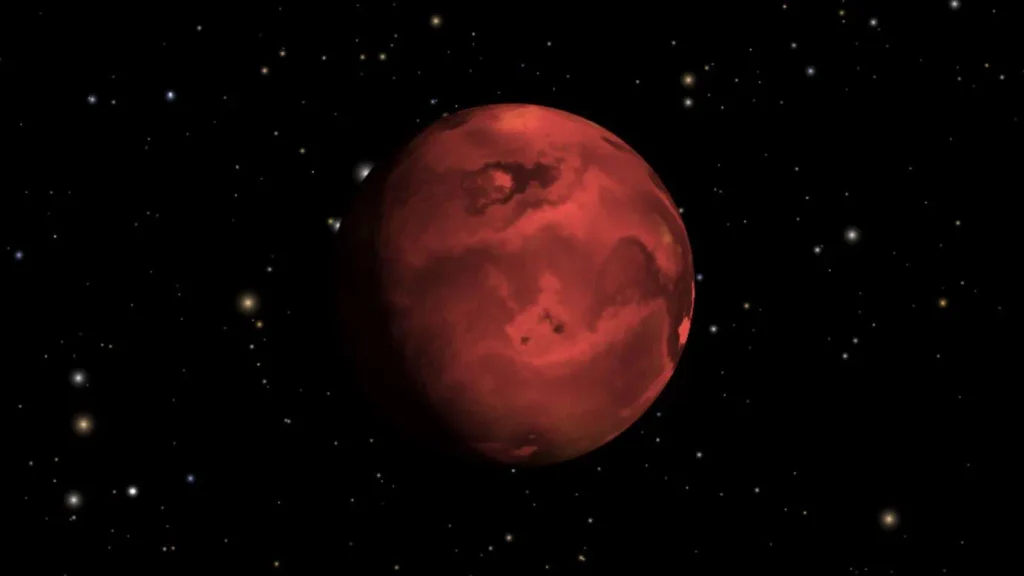
The James Webb Space Telescope has found compelling evidence of an atmosphere on HD 3167 b, a scorching rocky super-Earth about 154 light-years from Earth. Its dayside turned out to be significantly cooler than a bare rocky world should be.
The results were published in The Astrophysical Journal Letters. HD 3167 b itself was discovered back in 2016, so the new result is the detection of signs of an atmospheric envelope.
The planet is roughly 1.6 times larger than Earth in radius and 4.8 times more massive, and it completes one orbit around its star in just 0.96 Earth days. According to NASA, it sits extremely close to its star, so its illuminated side is probably covered in molten rock.
HD 3167 b’s equilibrium temperature is estimated at about 1,780 K, or roughly 1,500 °C.
The planet is too cool for a bare rocky world
Astronomers observed HD 3167 b with the James Webb telescope’s MIRI instrument during a secondary eclipse — the moment when the planet passes behind its star.
By comparing the system’s radiation before and during the eclipse, the researchers were able to determine how much infrared light comes directly from the planet itself.
The eclipse depth was just 38 ± 11 parts per million, whereas a model of a dark rocky planet with no atmosphere predicted about 104 ± 3 ppm.
The measured brightness temperature of the dayside was about 1,300 K — roughly 1,025 °C. The difference from the hottest bare-surface model exceeds five standard deviations.
For a planet orbiting so close to its star, that is an unexpectedly low value.
Researchers consider the most likely explanation to be an atmosphere that carries some of the heat from the dayside to the nightside. Clouds reflecting some of the star’s radiation back into space could provide additional cooling.
A similar mechanism is clearly visible on Venus: its dense atmosphere redistributes heat between different regions of the planet extremely efficiently.
What the atmosphere is made of is still unknown
Current James Webb data are not enough to determine the chemical composition of HD 3167 b’s envelope.
It was previously assumed that the atmospheres of such hot rocky planets should consist mainly of vaporized minerals and silicates. However, the new observations allow for the presence of heavier volatile compounds, including carbon dioxide, carbon monoxide or water vapor.
The team plans to test these possibilities with follow-up spectroscopic observations, including with the NIRSpec instrument.
As researchers from the University of Chicago explain, HD 3167 b is also interesting because it falls in a cooler temperature range than other known lava worlds with signs of atmospheres.
So the phrase “coldest lava planet” does not mean that HD 3167 b is actually cold. It refers to the coolest of the currently known lava worlds where evidence of an atmosphere has been found.
This is what Earth may have been like in its first millions of years
HD 3167 b is completely unsuitable for life as we know it. Even its relatively “cool” dayside remains hot enough to melt many rocks.
But that is exactly why the planet is of particular interest.
In the first millions of years after it formed, Earth also went through a global magma ocean stage. Energy from numerous planetesimal impacts kept the surface molten, and the early atmosphere was very different from today’s.
By observing worlds like HD 3167 b, astronomers effectively get a chance to study processes that took place on young rocky planets but disappeared from Earth long ago.
The discovery also shows that atmospheres can survive even on rocky planets orbiting extremely close to their stars, where powerful radiation and stellar wind should actively erode the gas envelope.