










Buying a Used Ryzen 7 5800X3D Got This Gamer Banned in Valorant: Vanguard Locked His Entire PC
 ·
02.10.2026 21:54
·
2 min read
·
02.10.2026 21:54
·
2 min read
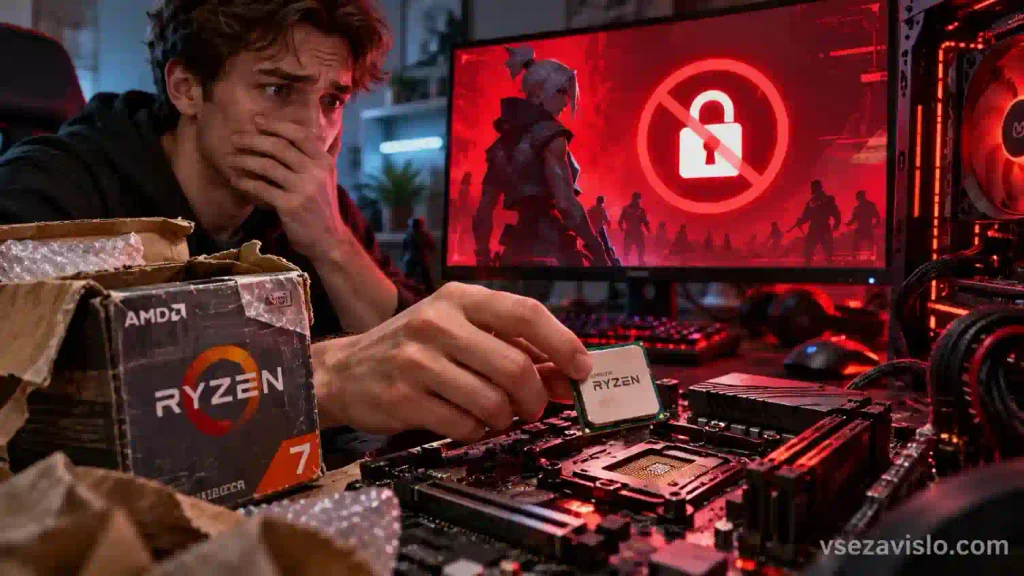
A German gamer ran into a non-obvious hazard of the secondhand components market. After buying a used AMD Ryzen 7 5800X3D processor, he found that the Vanguard anti-cheat began force-closing the shooter Valorant, even though the game ran fine with his old chip. As his exchange with tech support on Reddit revealed, the previous owner of the part had used cheats, which landed the hardware on Riot Games’ blacklist.
The processor itself is physically fully functional and passes any synthetic performance test without issue. The buyer purchased it on September 21 on the German classifieds site Kleinanzeigen. But Riot support said the identifier of this particular chip had been in the database of blocked devices since August 12 — meaning the ban was issued more than a month before the resale.
A Chain-Reaction Ban: Motherboard and SSD Caught in the Blast
The story took an even uglier turn when the gamer tried to roll back the changes. It turned out that the Vanguard anti-cheat worked on a “contagion” principle: upon detecting a blocked processor in the system, the algorithm flagged other computer components as fraudulent too.
Now Riot’s blacklist also includes the motherboard and the storage drive that the ill-fated Ryzen had been paired with. Because of that, putting the old processor back in the socket and simply carrying on playing is no longer an option — the system is fully compromised. The developer’s tech support refused to lift the hardware restriction manually.
How the Anti-Cheat Identifies a Specific Processor
Riot Games has not publicly commented on this particular incident, but on its official support site the company openly warns that it uses strict hardware bans. Vanguard runs deep at the OS kernel level and builds a comprehensive fingerprint of the system.
A CPU’s regular serial number is usually not enough to identify the die precisely. As PCWorld notes, the anti-cheat relies on deep ties to the TPM encryption module, the serial numbers of motherboard components and other low-level identifiers.
This situation proves that checking a part for a hardware ban in competitive games before buying it secondhand is practically impossible. A physically functional product may turn out to be unusable, and buyers can only hope for the seller’s honesty.