









A Liposuction Replacement, Not an Ozempic Killer: How the New CBL-514 Drug Burns Localized Fat
 ·
03.10.2026 15:24
·
3 min read
·
03.10.2026 15:24
·
3 min read
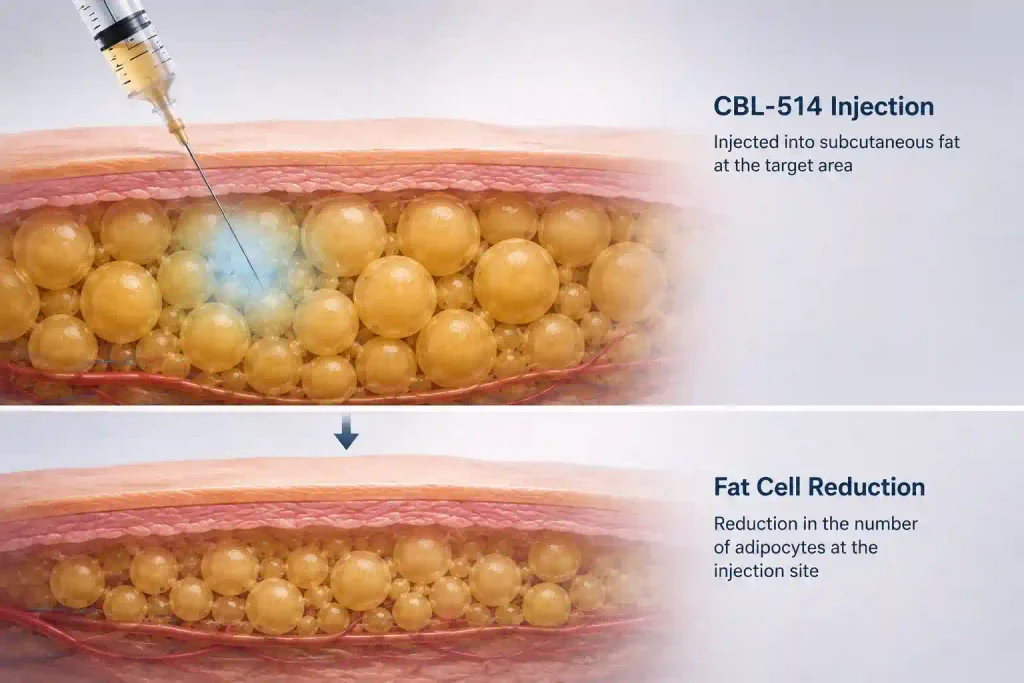
In September 2026, at the conference of the European Association for the Study of Diabetes (EASD), researchers presented new trial results for the experimental drug CBL-514. Social media users were quick to dub the treatment an “Ozempic killer,” but that comparison is completely off base. The drug from Taiwan’s Caliway Biopharmaceuticals does not suppress appetite or treat systemic obesity. It is essentially an injectable alternative to liposuction that targets localized fat deposits and physically destroys them.
As the developer’s report states, a new analysis pooled MRI data from 40 participants in the phase 2 trials. The drug was injected into the subcutaneous fat of the lower abdomen once every three weeks. A month after the course ended, patients’ visceral (internal) fat volume had shrunk by an average of 12.01%. By comparison, in the placebo control group, that figure rose by 5.68%. The effect proved durable: 8–12 weeks later, fat volume was still 10.45% below baseline.
Destroying Cells Instead of Controlling Hunger
The difference between CBL-514 and the popular semaglutide is fundamental and medical. GLP-1 drugs (Ozempic, Wegovy) work systemically: they act on receptors in the brain and pancreas, reducing hunger and normalizing blood sugar, which leads to overall weight loss.
CBL-514, by contrast, triggers apoptosis in adipocytes — the programmed death of specific fat cells at the injection site. In a larger study published on PubMed involving 108 volunteers, the average reduction in subcutaneous fat volume reached 20.3%. No systemic side effects were recorded — patients mainly reported temporary irritation and swelling at the injection sites.
When the Drug Will Hit the Market
Despite the encouraging numbers, social media promises of a “flat stomach in a couple of weeks” remain premature. First, a 12% loss of visceral volume does not mean a 12% drop in overall body weight. Second, researchers still need to prove in humans that fat will not return after the chemical destruction of cells if a person does not stick to a diet (so far, such results exist only in animal tests).
The project has now entered its final stage of testing. In Canada’s clinical trials registry, the global phase 3 trial SUPREME-01 is registered as a double-blind, placebo-controlled study. The first patient received an experimental injection in September 2026. Researchers expect to collect primary results no earlier than late 2027, so years will pass before the drug reaches ordinary clinics.