










AI Avatar for Video Calls Fooled Half of the People It Talked To: How Tavus’s New Griffin-Lite Model Works
 ·
02.10.2026 23:54
·
3 min read
·
02.10.2026 23:54
·
3 min read
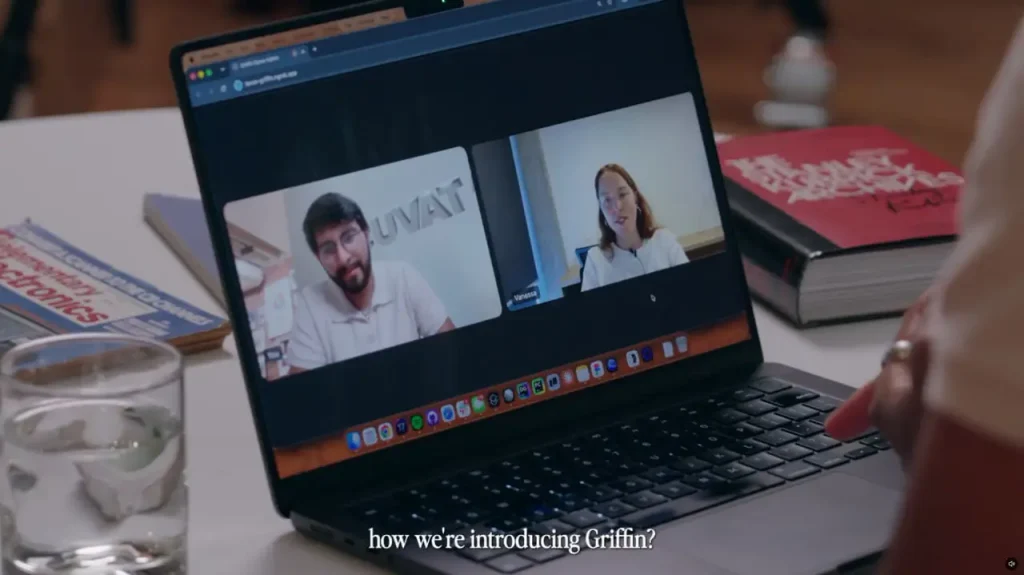
In October 2026, the startup Tavus unveiled Griffin-Lite, a generative model built for real-time video calls. During internal testing of the system, 48% of the experiment’s participants didn’t realize they were talking to artificial intelligence and took the neural network for a real person. For the digital avatar industry, that’s a major leap in realism, but the loud headlines about “passing the video Turing test” still deserve healthy skepticism.
Tavus’s study involved 54 people. They were told the service would connect them with a random person for a short call to discuss their expectations for the current year. In reality, a generated avatar was on the other end of the screen. Only after the conversation did the organizers ask whether the person had seemed artificial. 26 people said no, and their average confidence that they had been talking to a real human was 79%.
The developers’ progress becomes obvious when compared with earlier generations. A similar test of Tavus’s previous build, based on Phoenix-4.5 and Sparrow-2, fooled only one participant out of 41 (2.4%). But the conditions for the current success were artificially narrowed: the conversation lasted just one minute and didn’t involve unexpected topics. So 48% reflects the quality of one specific short simulation, not proof that the model is completely indistinguishable from a human in a free, long-form dialogue.
The End of Awkward Pauses: How Full-Duplex Works
The main technological difference between Griffin-Lite and most existing visual chatbots is its full-duplex mode. AI avatars usually work like walkie-talkies: they wait for the user to finish an audio request, pause to process it, and deliver their answer as a monologue.
Tavus’s model sees and hears the user continuously, even while it is speaking. The avatar can read facial expressions, nod along to the other person’s speech, interject short affirming remarks, and fall silent instantly if the person decides to interrupt. It is this ability to keep up the natural rhythm of human conversation without micro-delays that creates the illusion of talking to a real operator.
Introducing Griffin, the first model to pass the video Turing test.
— Tavus (@tavus) October 1, 2026
48% of people who talked to it live thought it was a real human. Previous systems have had a pass rate <3%. It is #1 on NVIDIA's benchmark for full-duplex AI video.
It’s the first Human Interaction Model (HIM). pic.twitter.com/eb11XbC8Xr
NVIDIA’s Independent Test and the Risks of Deception
The high generation quality is confirmed not only by corporate surveys but also by third-party benchmarks. In NVIDIA’s VideoFDB test, which evaluates full audiovisual interaction, Griffin-Lite scored 3.83 out of 5 for generation quality (a real human benchmark scored 3.92). For comparison, a combination of Gemini 2.5 and Anam scored only 2.80 on the same test.
Tavus is well aware of the risks that come with technology at this level. The startup’s leadership refused to release Griffin-Lite to the public, fearing that realistic avatars could be used for fraud. Its engineers are now working on mechanisms that would force the system to notify the other person that they are talking to a neural network. Until then, access to the model is limited to a small circle of trusted testers as a research preview.