







DDR5 SO-DIMM for Laptops Has Nearly Sixfolded in Price — XMG Raises PC Prices
 ·
26.09.2026 16:04
·
3 min read
·
26.09.2026 16:04
·
3 min read
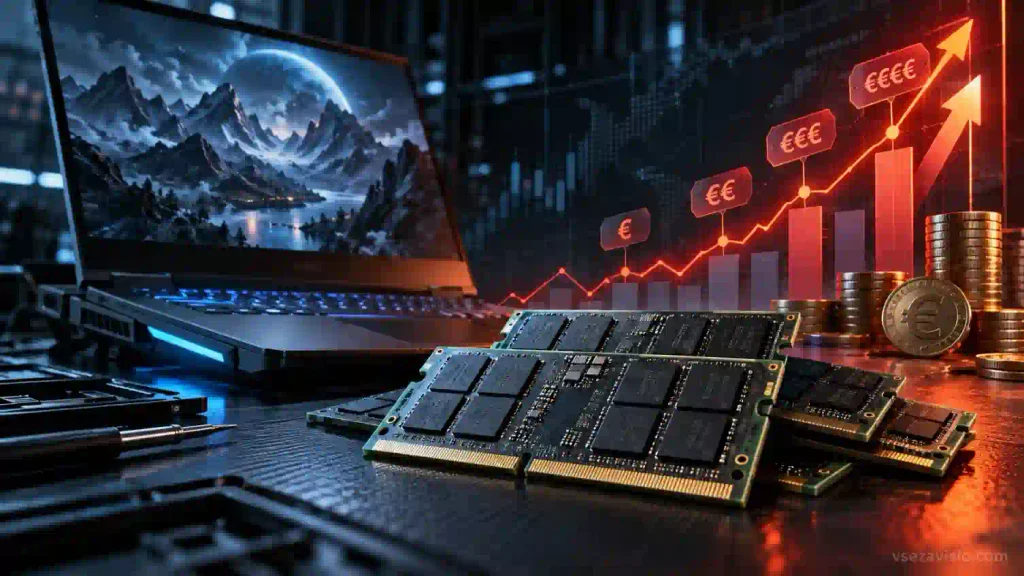
Schenker Technologies, the manufacturer of XMG gaming laptops, has reported a sharp rise in component costs. According to the company, prices for DDR5 SO-DIMM laptop memory have risen nearly sixfold since July 2025, forcing it to raise prices on most of its current models.
Importantly, this does not apply to literally all DDR5 memory on the market. XMG tracked the lowest retail prices of three common SO-DIMM models through the German price aggregator Geizhals, comparing September 2026 with July 2025 — a period of roughly 14 months.
Schenker says its own purchasing prices have risen at roughly the same pace. The company published the details in an official XMG post.
Laptops Now Cost €100–300 More
Since September 18, XMG has raised the starting prices of most affected models by roughly €100–150.
For example:
- The XMG CORE 15 went up by €100;
- the XMG FUSION 15 by €150;
- the SCHENKER KEY 18 Pro by €300.
For some configurations with a GeForce RTX 5090 Laptop, the additional markup rose by about another €120.
Not every model was affected, though. Some series, including XMG EVO and SCHENKER WORK, are still selling at their previous prices.
The company stresses that the price increase stems from higher costs and does not mean higher margins.
Memory Isn’t the Only Thing Getting More Expensive
The problem goes far beyond DDR5. According to Schenker, purchasing prices have risen for SSDs, printed circuit boards, electronic components, Intel and AMD processors, GPUs and GDDR7 memory.
Logistics and cargo insurance are adding to the costs — air freight and sea shipping have both gotten more expensive.
The situation fits a broader trend in the memory market. TrendForce notes that DRAM makers are increasingly shifting capacity to server solutions and HBM used in AI infrastructure.
Those products are far more profitable than consumer memory, so laptops, smartphones and other mass-market electronics get less manufacturing capacity.
DRAM Shortage Could Persist Through 2027
Analysts don’t expect a quick return to previous prices.
According to a TrendForce forecast, the tight situation in the DRAM market could persist throughout 2027 amid sustained demand from AI servers and data centers.
NAND Flash could potentially improve sooner. Rising supply may begin to ease the shortage in the second half of 2027, so SSD prices could stabilize faster than memory prices.
The XMG story shows clearly how the AI infrastructure boom is starting to affect not just servers and graphics cards, but also the final price of ordinary laptops. If expensive memory and other components keep up their current pace, Schenker’s price hikes may turn out to be not an exception but part of a broader trend in the PC market.