







GPT-6 Astra AI Deciphers Secret Napoleonic Military Letter Unsolved for 217 Years
 ·
02.10.2026 14:56
·
3 min read
·
02.10.2026 14:56
·
3 min read
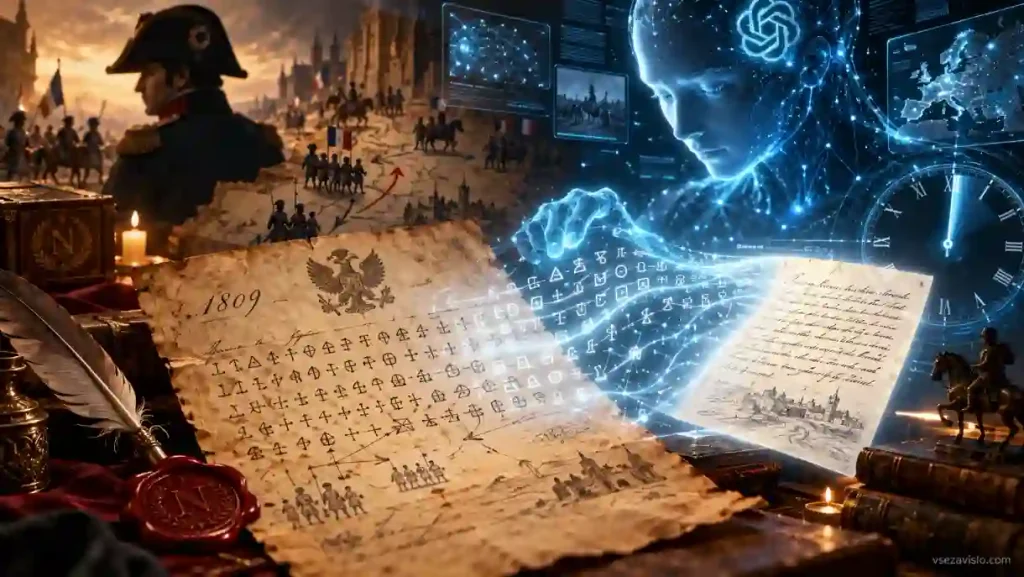
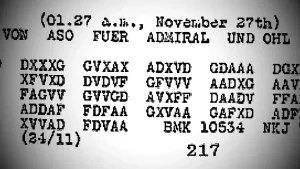
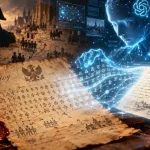
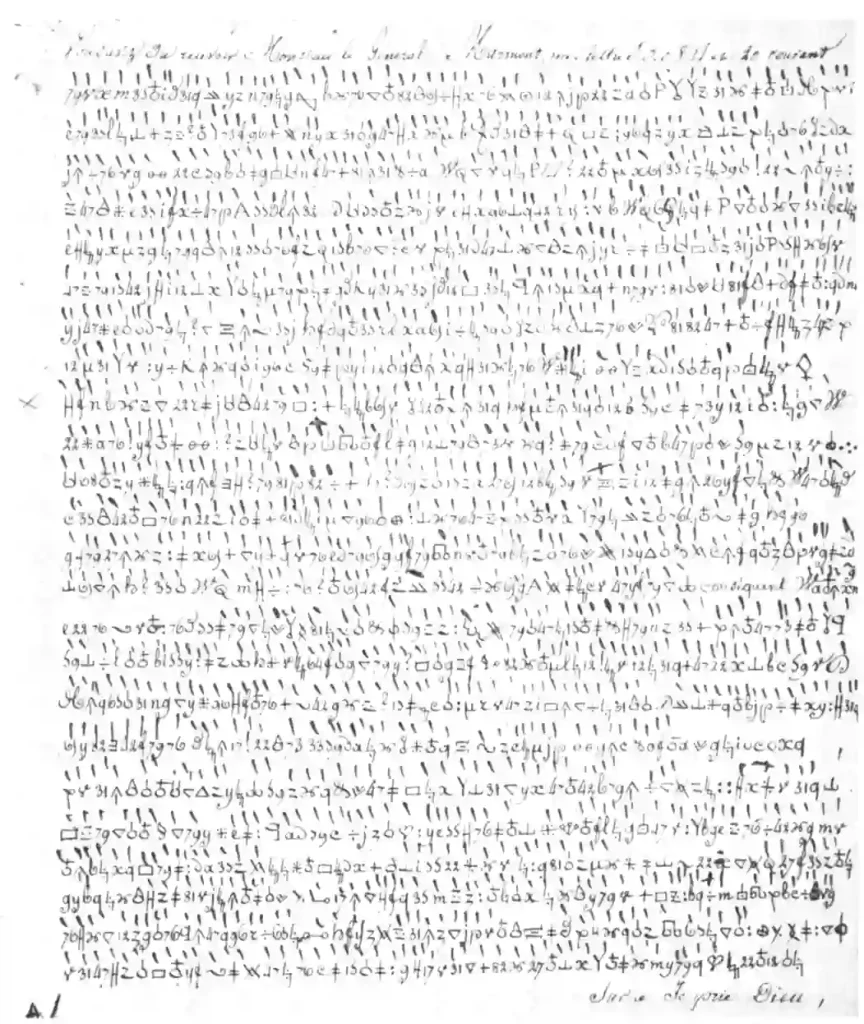
More than two centuries later, historians have finally learned the exact contents of an encrypted message sent in 1809 to French General Auguste Marmont. AI engineer Carter Church tackled the challenge using OpenAI’s GPT-6 Astra language model. The neural network processed a scan of the handwritten document and helped reconstruct the complete cipher key. The entire process took about six hours of compute time.
Online, the document is often mistakenly called “Napoleon’s letter.” In reality, on March 16, 1809, the emperor merely ordered his stepson, Eugène de Beauharnais, Viceroy of Italy, to transmit secret intelligence to Marmont. As Church found during his analysis, the final letter was sent from de Beauharnais’s headquarters in late March and virtually mirrored the French commander-in-chief’s instructions verbatim.
Troop Dispositions Ahead of the War
The decrypted text reveals specific strategic details regarding the disposition of French and allied forces on the eve of the War of the Fifth Coalition. The report provides exact figures: 40,000 Bavarians positioned between Munich and Passau, 30,000 Poles holding lines along the Vistula, and another 80,000 French troops stationed near Bayreuth.
The letter explicitly instructed General Marmont to prepare his corps to march. Command stressed that he should not allow small enemy detachments to delay the army’s advance.
How Algorithms Cracked the Handwritten Cipher
The message’s code was extensive: the document contains around 1,300 cipher units made up of 155 distinct symbols. Prior to this experiment, historians knew the meaning of only 33 letter symbols, covering barely a third of the text. French cryptographers used a complex mix of Arabic numerals, Latin and Greek letters, and custom handwritten symbols, some of which stood for entire words rather than individual letters.
The success was not simply a matter of pushing a button in the AI interface. GPT-6 Astra started from scratch: the model analyzed the scan, segmented it into lines on its own, recognized handwritten elements, and grouped visually similar symbols despite variations in slant.
The researcher then applied a simulated annealing algorithm. The script generated decryption candidates while the language model evaluated the output based on French language statistics and early 19th-century historical context.
The primary value of the project lies in demonstrating the evolving capabilities of multimodal AI. The developer brought together computer vision, complex handwriting recognition, programming, and cryptanalysis into a single workflow that would have taken humans months of tedious labor. To verify the findings, the author published the complete cipher key, original transcription, and codebase, allowing anyone to replicate the experiment.