










T-Mobile Security Team Physically Cuts Network Cable to Stop Chinese Hackers Mid-Breach
 ·
21.08.2026 18:33
·
2 min read
·
21.08.2026 18:33
·
2 min read
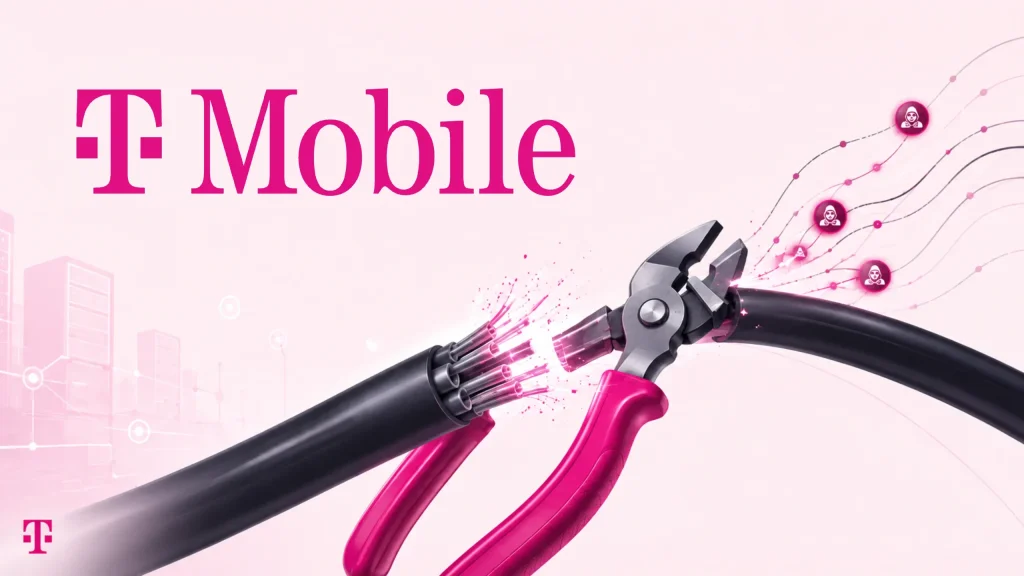
The cybersecurity team at US telecom giant T-Mobile took emergency measures to protect critical infrastructure. As Bloomberg reports, upon detecting an active intrusion into internal systems by China-linked hackers, company specialists literally severed a physical network cable to instantly isolate the targeted segment.
The radical “physical disconnection” method was deployed the moment network defenders realized standard software isolation tools were not fast enough to block the sophisticated attackers.
Telecom Hunting and the Salt Typhoon Campaign
The incident occurred as part of a widespread series of cyberattacks against major US telecom operators (including AT&T, Verizon, and Lumen Technologies) backed by state-sponsored hacking groups such as Salt Typhoon. The primary goals of the attacks were spying on high-ranking politicians, intercepting call metadata, and gaining access to lawful interception systems (CALEA).
When T-Mobile’s monitoring systems detected unauthorized movement deeper into the network, company engineers opted not to waste time coordinating software routing changes and instead disconnected the targeted servers at the hardware level.
Emergency Air-Gap in the Era of Digital Warfare
Physically severing a data transmission line is a rare and extreme measure in the corporate sector, carrying risks of customer service disruptions. However, when facing state-backed APT groups (Advanced Persistent Threat) capable of intercepting administrator commands and establishing covert management channels, creating an immediate hardware barrier (air-gap) proved to be the most reliable way to prevent sensitive database leaks.
T-Mobile emphasized that thanks to its timely response, the attackers failed to gain access to confidential customer data or disrupt the overall operation of its cellular network.