








Plums May Lower “Bad” Cholesterol — but the Evidence Is Still Weak
 ·
05.10.2026 22:41
·
2 min read
·
05.10.2026 22:41
·
2 min read
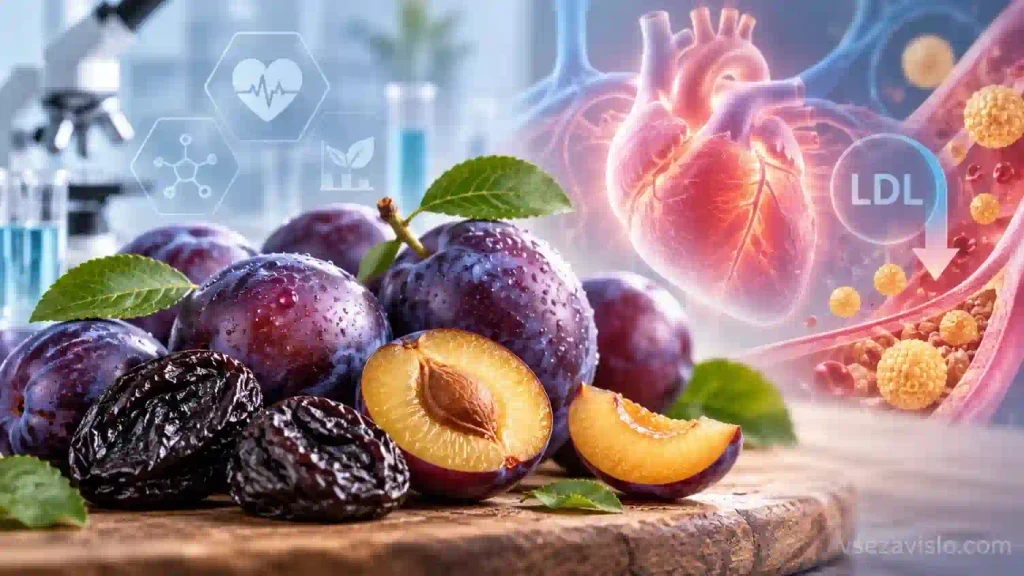
Plums contain fiber, potassium and polyphenols that may benefit the cardiovascular system. But recent publications about an alleged new study calling plums “the best autumn fruit for your heart” overstate the scientific basis of the news. No new Russell Sage College study on the topic was conducted — the coverage in question is a Verywell Health article with comments from dietitians and references to earlier research.
The most interesting data concern LDL — so-called “bad” cholesterol. In a 2024 systematic review and meta-analysis, researchers pooled the results of clinical trials of plum products.
LDL data were available for 410 participants. On average, those who received plum products had levels 12.5 mg/dL lower than control groups. The difference was statistically significant.
Still, the results cannot be automatically applied to a regular serving of fresh plums.
Prunes Showed the Most Noticeable Effect
In subgroup analyses, the LDL reduction was more pronounced among people with health problems and in studies that used dried plums — prunes.
Results for other markers were weaker. The meta-analysis found no statistically significant change in triglycerides, HDL — “good” cholesterol — or total cholesterol in the overall sample.
In addition, the included studies varied widely. The authors rated the quality of evidence as moderate for LDL, low for total cholesterol and HDL, and very low for triglycerides. They therefore explicitly call for larger, higher-quality studies.
Fresh plums are still a normal part of a healthy diet. According to data cited by Verywell Health, a cup of sliced fruit contains about 2 g of fiber and 259 mg of potassium.
Soluble fiber can reduce cholesterol absorption, and potassium helps regulate blood pressure. Red, blue and purple varieties also contain anthocyanins and other polyphenols with antioxidant properties.
No Data on Lower Heart Attack Risk
The main limitation is that the studies assessed mostly intermediate blood markers, not rates of heart attacks, strokes or deaths from cardiovascular disease.
So it is too early to claim that eating plums regularly by itself “protects the heart.” A more careful conclusion is different: plum products, especially prunes, may moderately lower LDL, but the quality of the available evidence is not yet sufficient for strong recommendations.