








Free video editor ffmpeg-webCLI performs over 30 operations right in the browser without uploading files to a server
 ·
20.08.2026 21:51
·
2 min read
·
20.08.2026 21:51
·
2 min read

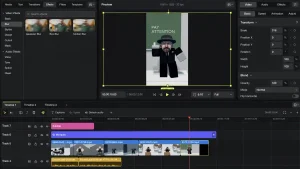
An open-source developer has introduced a tool called ffmpeg-webCLI that turns the FFmpeg console library into an intuitive graphical video editor. The app runs entirely locally within a web browser using WebAssembly (ffmpeg.wasm), eliminating the need to upload sensitive files to third-party servers.
The project addresses a key issue with online converters: processing heavy or private videos happens solely on the user’s CPU, ensuring complete data security.
Over 30 tools and local subtitle generation via Whisper
The interface of the ffmpeg-webCLI web service replaces complex terminal commands with user-friendly buttons and sliders. The editor supports MP4, WebM, MKV, MOV, and AVI formats, allowing users to compress files, change resolution, crop the picture, overlay logos, create GIF animations, adjust speed, trim audio tracks, and remove metadata.
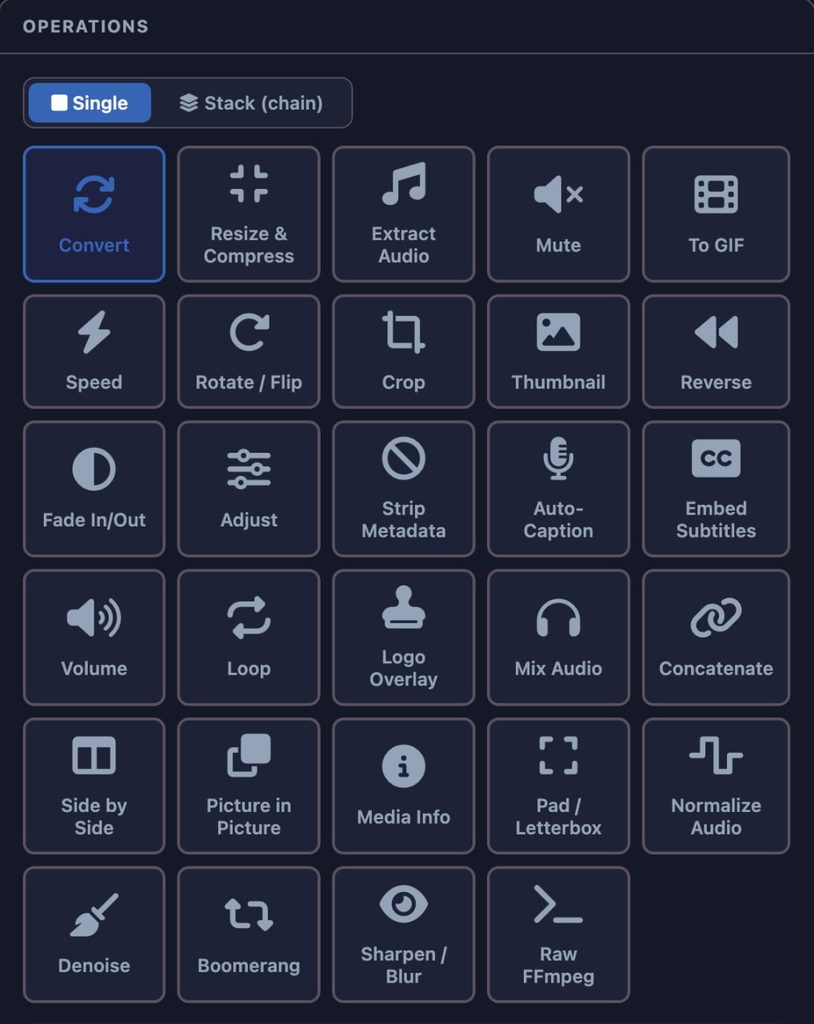
A standout built-in feature is the integration of the Whisper model via Transformers.js:
- The neural network transcribes speech and generates subtitles directly in the browser without calling cloud APIs;
- Three model versions are available: Tiny (39 MB), Base (140 MB), and Small (466 MB);
- The resulting text can be manually edited, exported as a separate SRT file, or burned into the video during final rendering.
Batch Mode for bulk processing and Stack for command chains
For handling large volumes of media files, there’s a batch mode called Batch Mode that applies a single operation to a group of files at once and then packages them into a ZIP archive for download.
The Stack tool lets you build task chains (e.g., change resolution → denoise → normalize audio → convert) to run sequentially in one pass, preventing quality loss from multiple re-encodings.
The utility is designed as a Progressive Web App (PWA): after the initial load of the ffmpeg.wasm core (about 31 MB), the service is cached and can run fully offline on computers and smartphones.
The project is free and open-source under the GPL-3.0 license, with its only functional limitation being the device’s available RAM.