








Neural Networks Bring 19th-Century Cars to Life: The Battle of Steam, Gas, and Electricity Before Tesla
 ·
29.08.2026 15:25
·
3 min read
·
29.08.2026 15:25
·
3 min read
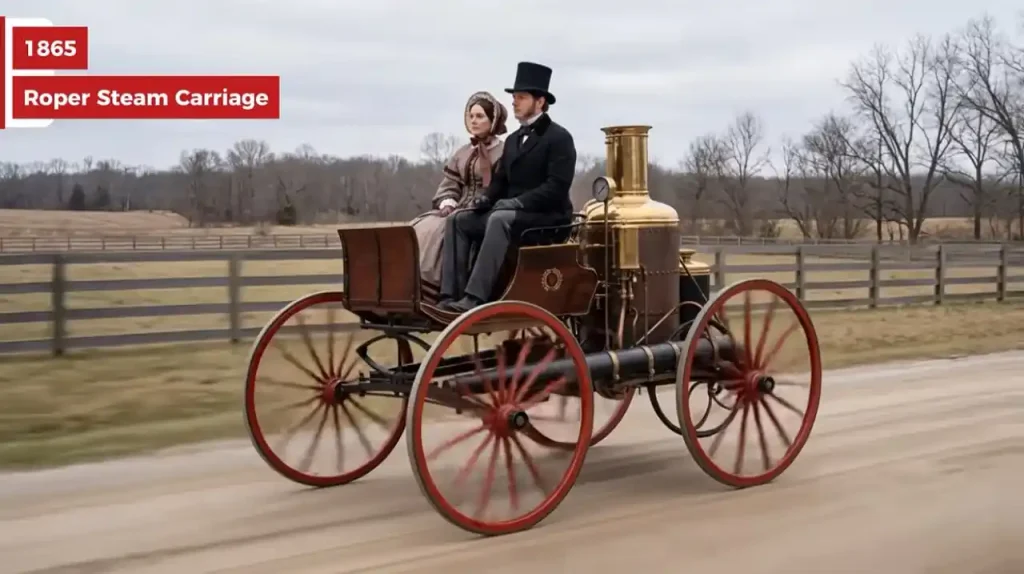
A series of AI-generated videos showing early self-propelled vehicles from the 19th and 20th centuries in motion is going viral online. The visuals vividly reconstruct the dawn of the automotive era, when engineers desperately experimented with steam, batteries, and gasoline long before the triumph of internal combustion engines.
Roper’s 1865 Steam Carriage: America’s Oldest Car
Unlike fictional steampunk concepts, most of the vehicles in the footage are real historical machines. One of the video’s central subjects is Sylvester Roper’s 1865 steam carriage.
According to the The Henry Ford museum archive, which houses the surviving original, it is the oldest existing American automobile:
- Design: A carriage body weighing 313 kg and measuring 2.54 meters in length;
- Powertrain: A two-cylinder double-acting steam engine fueled by coal or wood;
- History: The inventor built seven steam carriages and two steam motorcycles, showcasing them at circus arenas and fairs as marvels of engineering 20 years before gasoline tricycles appeared in Europe.
From Cugnot’s Steam Cart to Benz’s Tricycle
Attempts to create horseless transport began long before Roper. A Smithsonian Institution study notes that as early as 1769, French officer Nicolas-Joseph Cugnot built a three-wheeled steam cart to transport heavy artillery pieces.
The classic concept of the automobile only took shape toward the end of the 19th century:
- In 1886, Karl Benz received patent DRP 37435 for the three-wheeled Benz Patent-Motorwagen with a four-stroke gasoline engine producing 0.75 hp, which became the starting point of the modern automotive industry;
- In 1896, Henry Ford built his first experimental gasoline-powered Quadricycle with 4 hp, capable of reaching speeds up to 32 km/h.
A Third of the Market on Batteries: Why Electric Cars Won in 1900
At the turn of the century, gasoline’s dominance was not a foregone conclusion. According to the U.S. Department of Energy, by 1900, about 33% of all cars on American roads were electric, and New York City successfully operated a fleet of more than 60 electric cabs.
Electric cars were chosen for their quietness, lack of soot, and ease of operation: they didn’t require starting with a dangerous hand crank. Steam cars, in turn, put people off with their complicated maintenance — in winter, heating the boiler took up to 45 minutes, and the driving range depended on water supplies. Only the advent of the electric starter, the growth of oil refining, and assembly-line production allowed internal combustion engines to conquer the market for the next 100 years.
AI Reconstruction: A Glimpse into the Pre-Footage Era
Most inventions from the mid-19th century have no video documentation — the first video cameras appeared decades later. Generative diffusion models allow researchers and enthusiasts to turn static engravings, patents, and blueprints into realistic dynamic simulations.
While such videos are not documentary footage and contain AI’s physical assumptions, they vividly illustrate the technological chaos of a century and a half ago, which in many ways resembles today’s race in neural networks, humanoid robots, and autonomous systems.