









OpenAI Launches Dots, Always-On AI Agents Powered by GPT-6 Astra
 ·
29.09.2026 23:17
·
4 min read
·
29.09.2026 23:17
·
4 min read
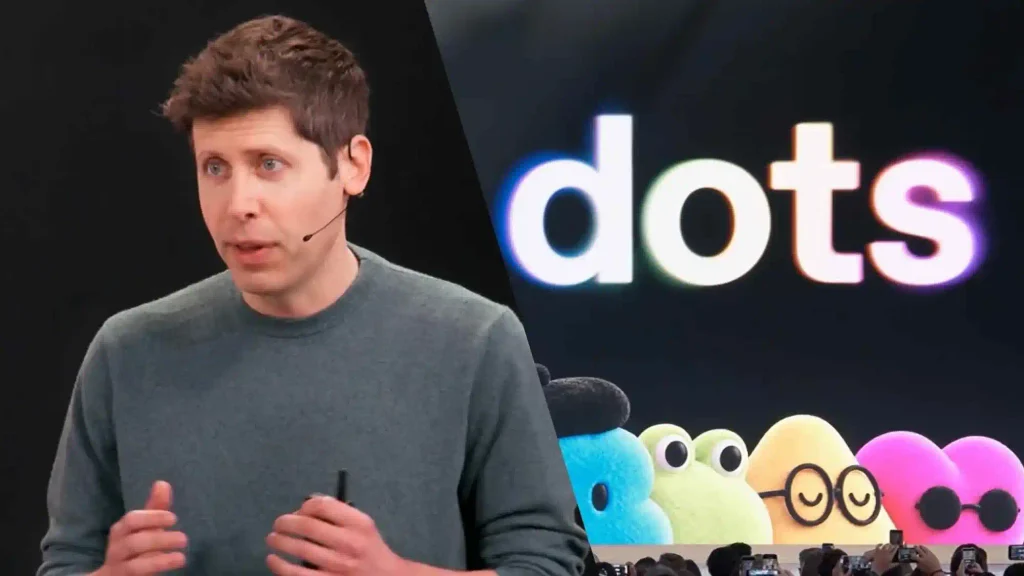
At DevDay 2026, OpenAI introduced Dots, personal AI agents capable of working in the background even after users close ChatGPT. Powered by GPT-6 Astra, each agent gets its own cloud computer to independently interact with browsers, apps, and workplace tools.
Unlike a traditional chatbot, a Dot is designed for long-term goals rather than one-off prompts. Users can assign a task and leave ChatGPT, while the agent continues working, monitoring changes, and checking back with results, questions, or updates.
According to Reuters, OpenAI demonstrated scenarios where a Dot automatically updates a sales pitch after client requirements change, builds a working product prototype, or continues research as new data emerges.
Each Dot Gets Its Own Cloud Computer
Dots run on GPT-6 Astra, which OpenAI previously introduced as its most advanced model for computer use, web browsing, coding, and multi-step professional tasks.
Each agent gets a dedicated cloud environment with access to a browser and connected applications. The Verge reports support for over 4,000 apps.
Dots can also tap into the capabilities of Codex and ChatGPT Work to write and test code, conduct research, analyze data, draft documents, and work with files.
At launch, users have access to one primary Dot. It can be named, configured with custom instructions, and given specific operating rules. Moving forward, OpenAI plans to allow users to create multiple agents and assemble them into teams where each Dot handles a specific specialty.
For instance, one agent could monitor user feedback and fix app bugs, another could analyze data, and a third could draft documentation and reports.
Dots Can Autonomously Return to Tasks
One of the key distinctions of Dots is their continuous background execution.
OpenAI shared an example of a developer assigning an agent to track user feedback. The Dot can independently detect new reports, build fixes, test changes, and present the results to its owner.
For researchers, the company showed another scenario: the agent re-runs analyses and tests hypotheses as new experimental data comes in, rather than waiting for another human prompt.
Users can also open a live view into the Dot’s cloud computer to observe its work in real time.
Over time, the agent learns a user’s work preferences and project context. However, this does not mean it literally “remembers everything” — access to data and connected systems is strictly governed by user and organizational permissions.
Slack and Teams Supported at Launch, SMS Coming Later
Users can interact with Dots directly through ChatGPT. For enterprise workflows, integrations with Slack and Microsoft Teams are available, with the agent preserving context across devices and apps.
TechCrunch reports that OpenAI plans to add standard SMS support at a later date.
The Verge also notes that voice interactions with Dots will be supported via ChatGPT, though OpenAI is rolling out communication features gradually, so channel availability may vary by account and region.
Introducing dots, powered by GPT-6 Astra.
— OpenAI (@OpenAI) September 29, 2026
Remarkably capable, always-on agents built to handle everything. pic.twitter.com/inY5BZj3Kz
Sensitive Actions Require Approval
Because an always-on agent has significantly broader capabilities than a standard chatbot, OpenAI places heavy emphasis on its permission model.
Users can configure which actions a Dot can perform autonomously and which require prior confirmation.
Sensitive operations come with extra restrictions. For example, changing passwords or permanently deleting data must be confirmed by a human.
The platform also includes an automated verification system that checks agent actions against safety rules and security policies.
For enterprise customers, OpenAI states that customer data is not used to train models by default. Personal account holders can opt out of having their chats and Dot work results used for training.
Dots Rolling Out to Paid Users
OpenAI is rolling out Dots to ChatGPT Pro, Business Premium, and Enterprise subscribers. Availability may expand gradually depending on region and account tier.
The company sees Dots as the next evolution of ChatGPT — transitioning from a tool that requires prompt-by-prompt instructions to an always-on digital coworker capable of sustaining long-term work autonomously.
Sam Altman described the concept as the type of AI interaction previously seen mostly in science fiction. While standard ChatGPT primarily responds to prompts, a Dot is designed to take a goal, work independently, and reach out to a human only when truly necessary.