








China Tests Airplane-Sized S4000 ‘Flying Power Plant’: Wind Energy Generation at 4,000 Meters
 ·
25.08.2026 21:17
·
2 min read
·
25.08.2026 21:17
·
2 min read
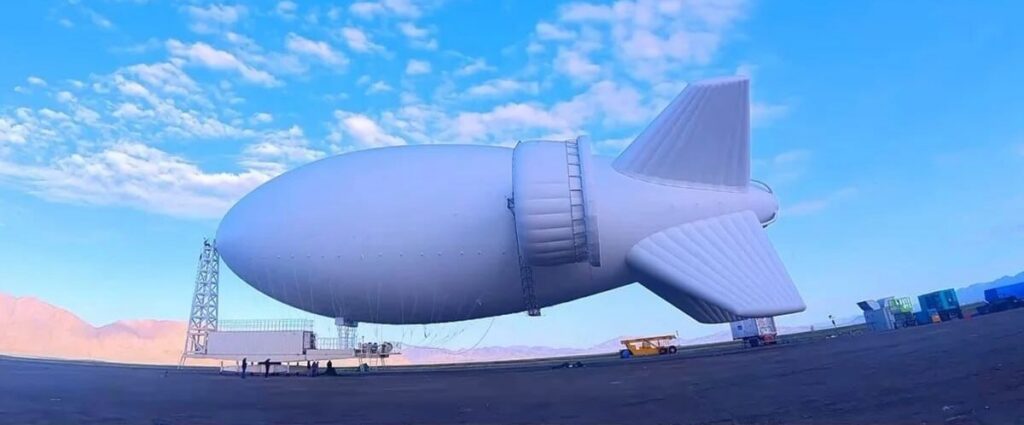
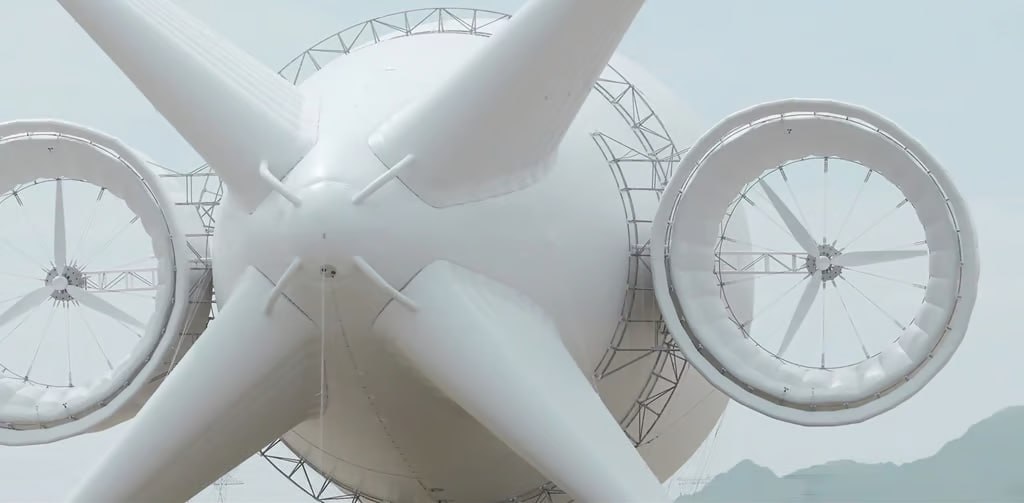
Chinese engineers have successfully tested the giant S4000 aerostat generator, which harnesses high-altitude wind currents. Measuring 67 × 40 × 23 meters, the unit ascended to an altitude of 4,000 meters above sea level, completed a power generation session, and performed a standard landing.
The test marks the world’s first successful launch of a tethered wind energy system of this scale at such an altitude.
Tether Power Transmission and Aerostat Design
In terms of dimensions, the platform is comparable to a large passenger airliner. Its envelope is filled with helium to create lift, while incoming air is routed through internal aerodynamic channels to lightweight turbine modules.
The system outputs voltage ranging from 10 to 35 kV. Generated electricity is transmitted directly to the ground distribution grid via a high-strength tether cable, eliminating the need to carry heavy storage batteries. The airship’s payload capacity exceeds 1 ton, with an estimated system service life of about 20 years.
Advantages of High-Altitude Wind and Plans for a 5 MW Station
According to CNR’s scientific division, Beijing Sawes Energy Technology developed the project alongside specialists from Tsinghua University and the Aerospace Information Research Institute of the Chinese Academy of Sciences.
The technology’s main advantage lies in atmospheric physics: several kilometers above ground, wind currents are dense and blow almost continuously. This allows the system to generate a stable amount of power without the seasonal drops typical of ground-based wind turbines. The system is planned for use in supplying power to remote islands, mountain outposts, and desert infrastructure.
The current test is part of a larger program: in early 2026, the previous-generation S2000 model successfully generated electricity at an altitude of 2,000 meters. Engineers will use the gathered data to build a future flying power plant, the 5 MW S6000.