








GPT-6 Astra AI Model Beats Portal from Start to Credits: Inside the $570 Experiment
 ·
07.09.2026 22:01
·
3 min read
·
07.09.2026 22:01
·
3 min read
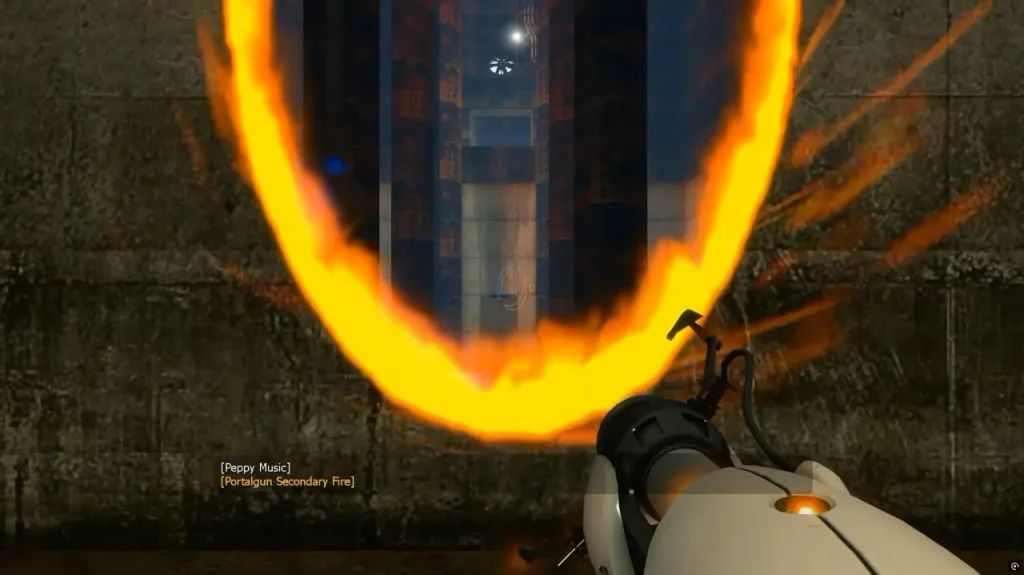
OpenAI’s latest flagship model, GPT-6 Astra, has autonomously completed the original spatial puzzle game Portal from the starting chamber to the final credits without direct human input. Conducted by an enthusiast known as cozyblaze, the experiment took 23 hours and 43 minutes of continuous operation, during which the algorithm processed nearly 435 million tokens.
Thinking Pauses and the MCP Protocol
Connecting the model to the Source engine was achieved using open-source tools. According to documentation in the project’s GitHub repository, the creator linked Astra to the development environment using a local MCP (Model Context Protocol) server and a patched SourcePauseTool utility.
The AI model had no direct access to the game code: at each step, it analyzed a fresh screenshot, the character’s 3D coordinates, and the camera’s view vector. Based on this visual data, the model calculated flight trajectories, selected placement points for blue and orange portals, activated buttons, and moved cubes.
The playthrough was not played in real time. Before making each move, the script paused Portal, giving Astra time to compute its chain of thought at the maximum reasoning effort setting. Once instructions were sent, the game resumed for a specified number of ticks. As a result, nearly a full day was spent on “thinking” and processing queues, while the actual movement time totaled about two hours. Across the entire session, the AI generated over 3,300 in-game actions, with a human operator intervening only during the final credits.
An independent AI researcher forced the new GPT-6 Astra to complete Portal. The process burned nearly $600 worth of tokens and took 24 hours, reduced to just two hours with the pause (thinking) removed. The open-source project is available on their Twitter page: @cozyblazex pic.twitter.com/NBEi6pNtVh
— Gabe Follower (@gabefollower) September 7, 2026
Compute Costs and Limitations of Autonomy
According to published logs, the algorithm consumed 434.8 million tokens (including 426.4 million cached input tokens). According to estimates by Tom’s Hardware, calculating this usage at standard GPT-6 Astra API pricing puts the commercial cost of the run at around $574. The creator ran the session on an unlimited Codex Pro subscription, avoiding out-of-pocket charges.
The experiment was a striking demonstration of context memory resilience: the algorithm maintained its global objective for hours, navigated space independently, and corrected its own mechanical errors.
However, the model’s versatility shouldn’t be overstated. As noted by VideoCardz, Valve’s classic 2007 game is thoroughly documented online, meaning text descriptions of puzzles and walkthrough maps were almost certainly present in the model’s training dataset. In addition, step-by-step time pausing spared the AI from having to demonstrate human-like real-time reaction speeds.