








Venus Becomes a Thin Crescent and Hits Peak Brightness in September: Phase Visible Through Regular Binoculars
 ·
04.09.2026 23:15
·
3 min read
·
04.09.2026 23:15
·
3 min read
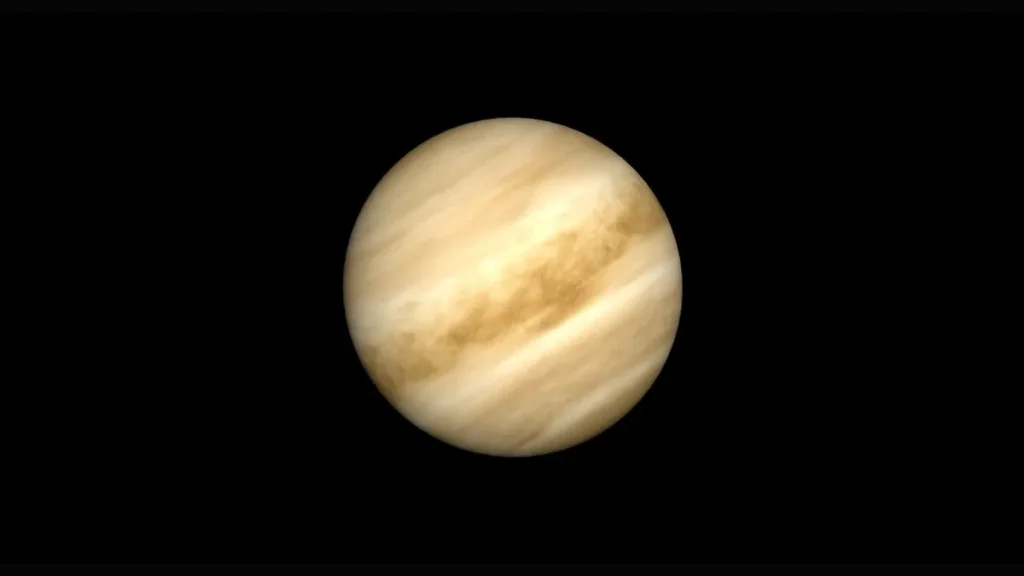
In September, Venus will put on one of the most striking sky shows of the year. The second planet from the Sun is rapidly approaching Earth, changing its apparent shape: its disk is gradually turning into a delicate crescent that can be discerned even through simple optics. According to NASA, on September 18, the celestial body will reach its peak brightness for the entire period of its current evening visibility.
The Paradox of Approach: Why a Crescent Shines Brighter Than a Full Disk
To the naked eye, Venus appears as a dazzlingly bright evening star, but through optical instruments, a completely different picture emerges. The planet goes through phases similar to the Moon’s: at the beginning of the month, its disk is about 35% illuminated, and by September 18, that will drop to 26%.
Despite the decrease in illuminated area, the planet’s overall brightness does not fall but rises, approaching magnitude −4.8. As the specialized publication Space.com notes, it’s a matter of distance compensation:
- Venus moves along an inner orbit and is currently catching up with Earth, reducing the distance between the planets;
- Although the solar crescent is narrowing, the angular size of the planet itself in the sky is rapidly increasing;
- In mid-September, an ideal balance occurs when the visible area of the reflecting surface provides the maximum light flux for an observer on Earth.
The approach will culminate on October 24, 2026, at the point of inferior conjunction, when the planet will pass almost exactly between Earth and the Sun at a minimum distance of about 40 million km, temporarily disappearing into the Sun’s glare.
When to Look and Safety Precautions
One of the most beautiful coincidences is scheduled for the evening of September 14: a thin crescent of the young Moon will appear right next to Venus, which by that time will be illuminated by about 29%.
The best time to observe the planet is 20–40 minutes after sunset, low above the western or southwestern horizon. To clearly discern the crescent shape, a small amateur telescope or even tourist binoculars with parameters from 10×50 will suffice, provided you have a steady hand.
The main safety rule for such observations is to never point optics toward the sunset until the Sun has completely disappeared below the horizon; otherwise, an accidental flash could cause retinal burns.
It was Galileo Galilei’s observation of the changing phases of Venus in the early 17th century that dealt a devastating blow to the geocentric model of the universe, proving that planets orbit the Sun. Over the coming weeks, anyone can repeat this historic experience.