







Astronomers Discover Candidate for New Class of Cosmic Objects: A Solar System-Sized ‘Black Hole Star’
 ·
15.08.2026 16:07
·
2 min read
·
15.08.2026 16:07
·
2 min read
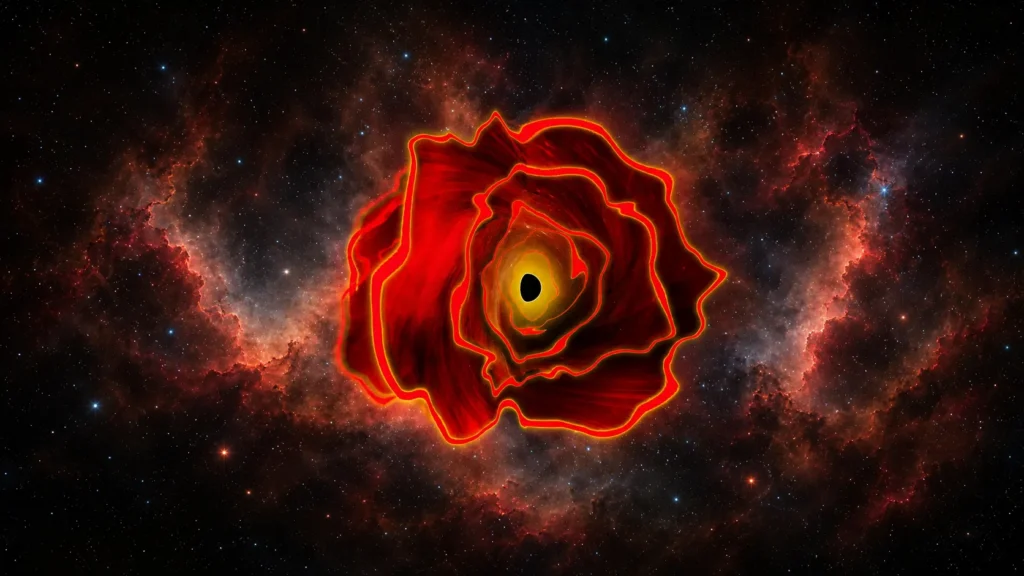
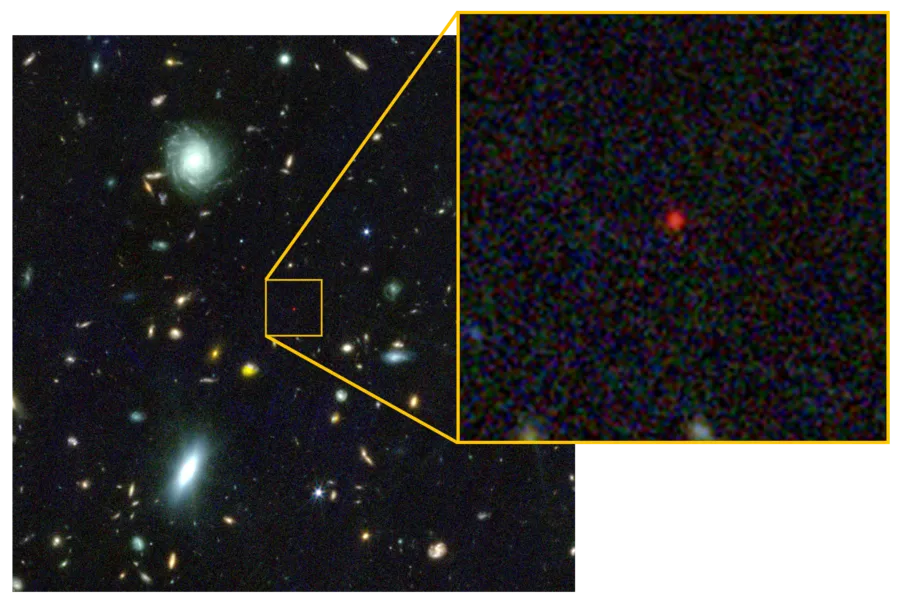
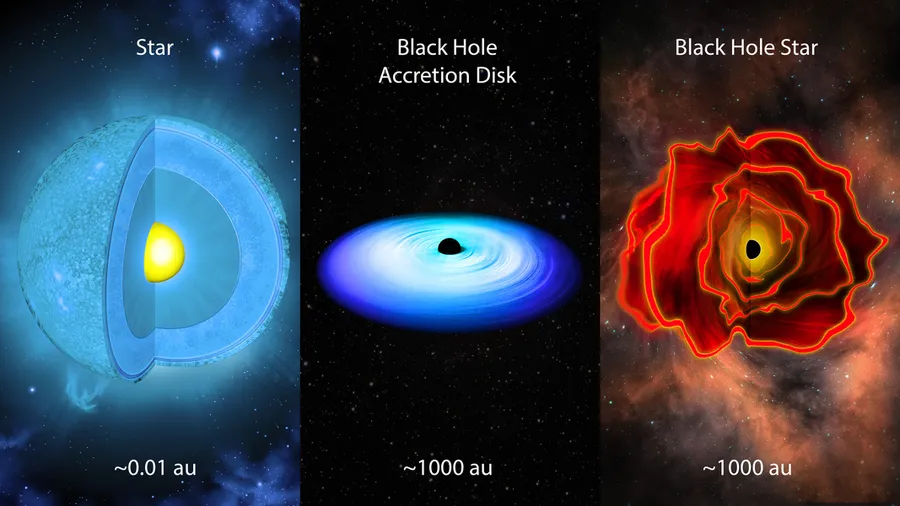
An international team of astrophysicists using the James Webb Space Telescope has discovered a candidate for a new type of astrophysical object: the MoM-BH*-1 “black hole star.” According to a study published in the journal Nature, the object is an intermediate-mass black hole of 100,000 Solar masses enclosed in a Solar System-sized gas cocoon.
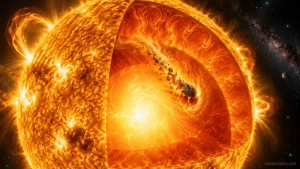
The MoM-BH*-1 object (short for Mirage or Miracle) was observed as it existed just 660 million years after the Big Bang. According to the Massachusetts Institute of Technology (MIT), the celestial body lacks a classic surface; instead, a dense cloud of hydrogen and helium spanning 10 to 100 astronomical units acts as a pseudophotosphere. The gas absorbs and re-emits energy from matter accreting onto the black hole, mimicking the behavior of a giant star’s atmosphere.
Anomalous Luminosity and Unlocking Little Red Dots
The pseudo-star’s energy output exceeds the thermonuclear fusion capacity of any known stars by roughly 100 billion times. In telescope images, the object appears as a compact, bright red dot. Spectral analysis helped identify the object’s nature: scientists recorded an extremely deep Balmer break (a 7.7-fold change in light intensity) uncharacteristic of typical galaxies.
Astrophysicists suggest that discovering MoM-BH*-1 explains the nature of mysterious “Little Red Dots” found en masse by the James Webb Space Telescope at the edge of the observable universe. A larger galaxy was detected near the object, with a merger expected in 100 million years — such processes explain how supermassive black holes managed to rapidly gain mass in the early universe.