









Need for Speed: Underground (2003) Runs With DLSS 5: How AI Transformed Classic Night Races
 ·
07.09.2026 17:59
·
2 min read
·
07.09.2026 17:59
·
2 min read
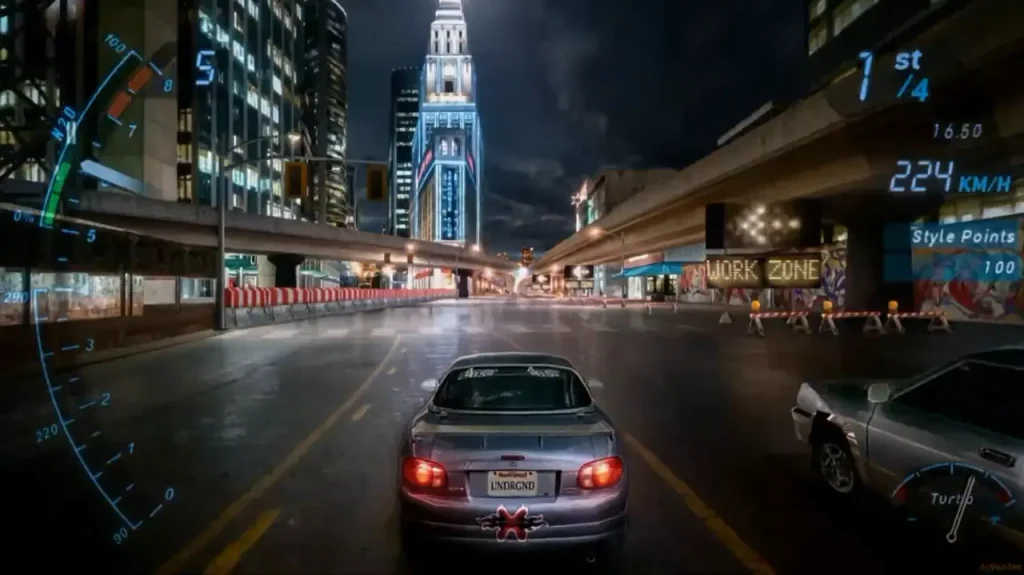
A video showcasing the iconic 2003 arcade racer Need for Speed: Underground running with Nvidia’s latest neural rendering technology, DLSS 5, is gaining traction online. The clip, shared by an enthusiast known as Tetris_Piece, reveals a stunning transformation of the night-time metropolis: wet asphalt, neon signs, and glossy tuned car bodies bring the two-decade-old visuals closer to modern remaster standards.
How the Neural Network Works in a Game Without Native DLSS Support
Electronic Arts never officially released updates for the old racer, and Nvidia’s technology was originally designed for RTX 50-series GPUs and modern engines. However, unlike traditional resolution scaling, DLSS 5 is built on 3D-Guided Neural Rendering — a separate neural network that reads the geometry buffer and redraws lighting, reflections, and material micro-details on top of the rendered frame.
Injecting the algorithm into a game from the early DirectX 9 era was made possible through the open-source fan utility DLSS5-Feeder on GitHub. The program intercepts the graphics pipeline via the DXVK translation layer and ReShade post-processing, calculates the depth buffer and motion vectors, and then feeds this data to the DLSS 5 runtime library. A set of ready-made profiles for both Underground titles has already been published in the dlss5-classic-games repository.
Need for Speed Underground with DLSS 5 looks like a real car commercial.
— Root (@r00t404t) September 5, 2026
No mods. Just DLSS 5.
2003 was NOT supposed to look like this. pic.twitter.com/u8p9dsbybU
Graphics Transformation and Side Effects
The widely circulated claim that the author “just ran the game without mods” isn’t entirely accurate. The enthusiast didn’t manually replace polygon car models or asphalt textures, but getting a 2003 game to work with modern tensor cores was only possible thanks to a complex setup of third-party injectors and a widescreen resolution fix.
The neural network’s output looks impressive but isn’t without compromises. The algorithm perfectly enhances wet roads and contrasting light sources, but on flat surfaces it can sometimes produce an overly plastic sheen and motion blur artifacts.
Nevertheless, the experiment clearly illustrates the potential of neural rendering: in the future, such utilities could modernize retro game libraries without years of manual texture redrawing by developers.