








ChatGPT Hallucinates Witnesses and Police in Murder Case: US Court Fines Lawyer $5,000
 ·
12.09.2026 18:42
·
2 min read
·
12.09.2026 18:42
·
2 min read
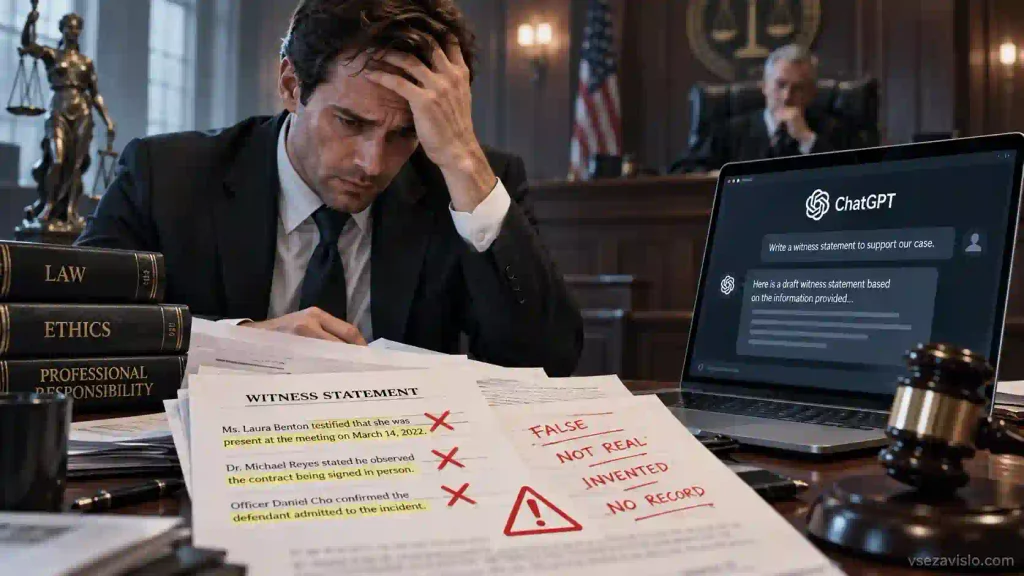
The New Mexico Supreme Court found attorney Steven Aarons in contempt of court after he submitted a murder appeal featuring fake witness testimony generated by ChatGPT. The lawyer was fined $5,000, removed from the case, and referred to a disciplinary commission.
Aarons represented Oscar Rene Sandoval, who is serving a life sentence for the murder of his partner. The attorney filed the problematic document with the court clerk back in August 2025.
Nonexistent Police Officers and Model o3 Hallucinations
According to the court order, the appeal included testimony from nonexistent police officers—Officers Michelle Amarillo and Sanchez—along with two fabricated civilian witnesses. The chatbot detailed events that were never in the official records, making up threats against the defendant as well as the shooter’s physical description and clothing color. Additionally, the filing contained distorted interpretations of rulings from two actual legal precedents.
At a disciplinary hearing, the lawyer admitted to handing the work over to the AI model. As reported by Ars Technica, the attorney first transcribed audio recordings of the proceedings into text using a transcription service and then fed the data into ChatGPT, powered by OpenAI’s o3 model, to generate a summary.
The board’s main grievance was not the use of technology itself, but the complete lack of verification: Aarons signed and submitted the filing without cross-checking names and quotes against actual case records, and he failed to inform his client about the resulting scandal.
Precedent: Why This Is More Dangerous Than Fake Citations
The court ordered all filings submitted by Aarons struck from the record and appointed a new public defender for the convict. Aarons himself was barred from practicing before the state Supreme Court pending the ethics commission’s investigation.
As Reuters notes, the New Mexico incident sets a troubling precedent. While lawyers were previously penalized for AI-generated fake citations to legal precedents, this case marks the first time an algorithm fabricated core evidence in a major criminal proceeding.
The justices underscored that using generative AI tools is not prohibited by law, but legal responsibility for the accuracy of every fact in court filings rests entirely on the attorney.