








Battery Eject: Stellantis Patents Emergency System to Drop a Burning EV Pack
 ·
03.10.2026 15:43
·
2 min read
·
03.10.2026 15:43
·
2 min read
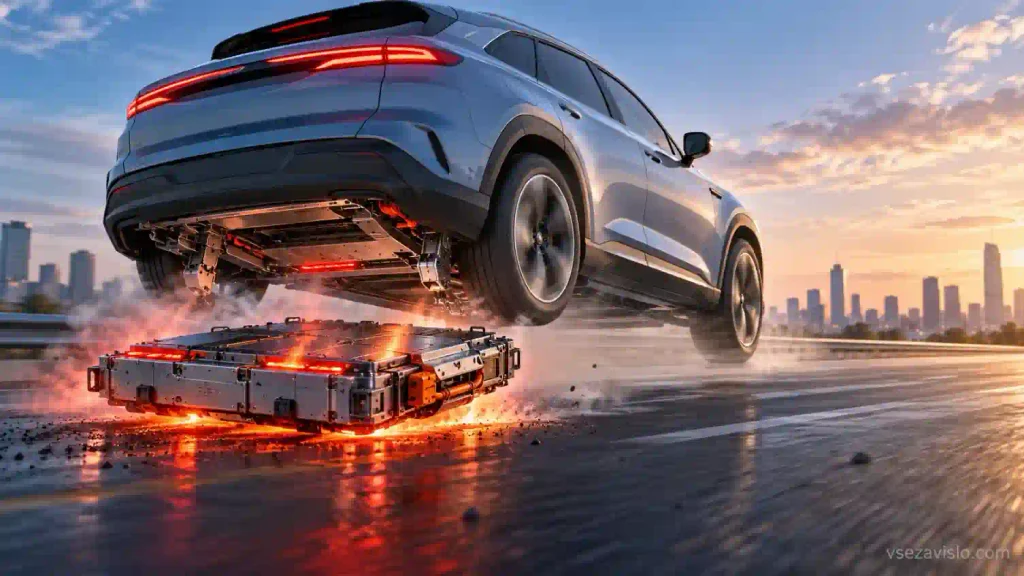
Engineers at the Stellantis automotive alliance have patented a radical way to fight fires in electric vehicles. According to published documents, the company is developing an emergency system for jettisoning the traction battery. If sensors detect critical overheating or the threat of thermal runaway, the driver or rescue workers can physically shoot the battery pack off the body, after which the car will try to drive away from the potential seat of the fire on backup power.
As follows from the official patent documentation, the rescue procedure is split into several stages. When the emergency switch is activated — the proposal is to place it both in the cabin and on the outside of the body for access by emergency services — the electronics first isolate the high-voltage line. Then the mounts fire. The main scenario under consideration uses special pyrotechnic bolts: they break apart from an electrical impulse and drop the heavy battery straight to the ground.
The most unconventional part of the concept begins after a successful drop. The central controller switches the power supply of one of the traction electric motors to an ordinary low-voltage 12-volt battery. Its modest capacity should be enough for the car to travel a short distance and safely move away from the dropped pack.
Headlines about the “end of fires” and the real prospects
As news of the patent spread, claims began circulating online that the technology will permanently solve the problem of burning electric vehicles. That assertion is incorrect: the system does nothing to prevent a chemical fire inside the cells; it only saves the passengers and the body itself from the fire spreading to them. The battery on the asphalt will keep burning.
Nor should the concept be presented as an absolute novelty this fall. The original application was filed by FCA US engineers back in March 2023. The document published on September 17, 2026 is merely a divisional application clarifying the details of the older development.
Stellantis has not said anything about putting the drop mechanism into production EVs. Implementing such protection on the assembly line would be extremely difficult because of the associated risks to those nearby: a red-hot battery weighing several hundred kilograms suddenly falling onto a busy highway could trigger a mass accident whose consequences would be more serious than the original fire.