








Kenya Tests Stella Juva Mobile Solar Clinic: a Self-Sufficient Medical Post for Areas Without Power Grids
 ·
23.09.2026 15:05
·
3 min read
·
23.09.2026 15:05
·
3 min read
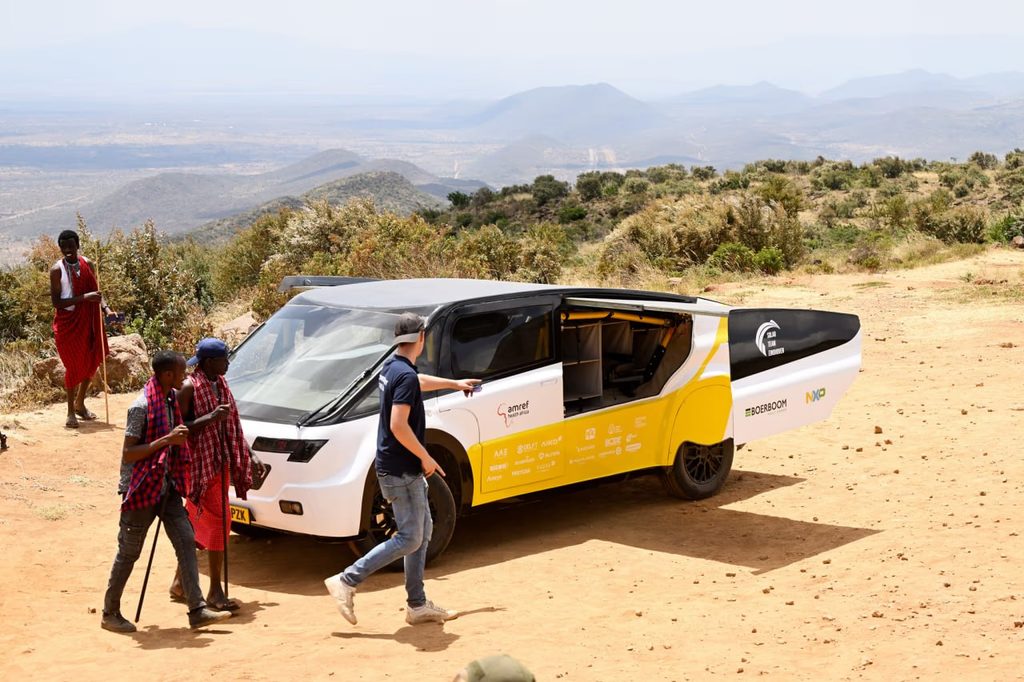
In September 2026, a team of 23 students from Eindhoven University of Technology (Solar Team Eindhoven) completed field tests of the experimental medical electric vehicle Stella Juva in remote regions of Kenya. The vehicle drives and powers its onboard equipment entirely on energy from built-in solar cells. For developing countries, this is a critically important development: in remote African settlements, the lack of road and charging infrastructure often deprives thousands of people of basic medical care.
The developers call their project “the world’s first solar ambulance,” although there is no independent confirmation of this record. During the tests, the vehicle covered a total of more than 800 kilometers on broken dirt roads and asphalt, reaching the isolated settlement of Mosiro. The vehicle demonstrated high reliability — the entire route required only a replacement of the steering tie rod, which took about half an hour, according to Electrive.
A Mobile Hospital Instead of Classic Transport
In essence, Stella Juva is not a classic ambulance for emergency delivery of patients to a hospital, but a self-sufficient doctor’s office on wheels. The concept is built around delivering medical staff and heavy diagnostic equipment directly to patients.
The body of the electric vehicle integrates a set of portable equipment:
- a mobile X-ray machine and an ultrasound scanner;
- an automated external defibrillator;
- a self-sufficient refrigeration unit for the safe transport of vaccines and heat-labile medications.
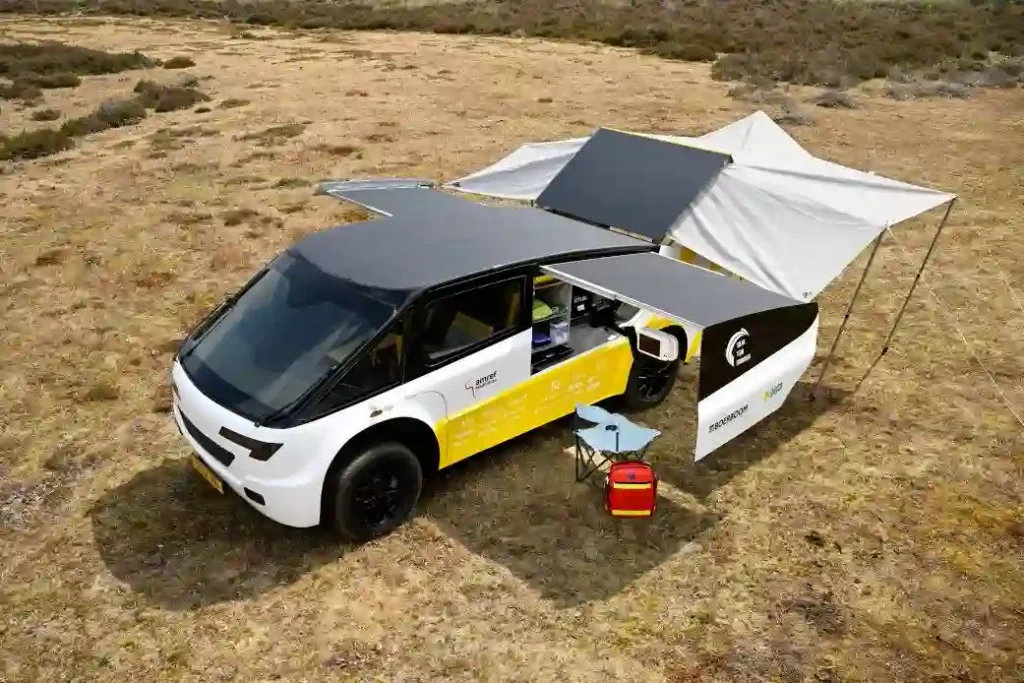
When the vehicle stops in a settlement, additional solar panels extend from the roof and sides. They not only double the electricity generation area but also create a shaded canopy under which doctors can set up a reception area. A report by the humanitarian organization Amref Health Africa emphasizes that during the two-day tests, the vehicle’s power system generated more electricity than all the operating medical devices consumed at the same time. According to the team’s estimates, the energy reserve would be enough to examine two hundred people.
Estimated Range and Prospects for Mass Production
According to the technical data sheet, the vehicle’s top speed reaches 120 km/h, and its estimated range is up to 715 kilometers on asphalt in clear weather. However, as Euronews clarifies, under real African terrain conditions, no separate continuous run to the maximum distance without recharging was conducted — the 800 km covered represents the total distance of the expedition.
For now, Stella Juva remains purely a student concept car that has proven the viability of the idea. On Solar Team Eindhoven’s official website, the engineers note that they do not have the production capacity for mass production, so the team is currently in talks with international foundations and commercial automakers capable of adapting the platform for mass production.