









Mercury Has Shrunk More Than Scientists Thought, Losing Up to 23 km in Diameter
 ·
10.09.2026 19:01
·
2 min read
·
10.09.2026 19:01
·
2 min read
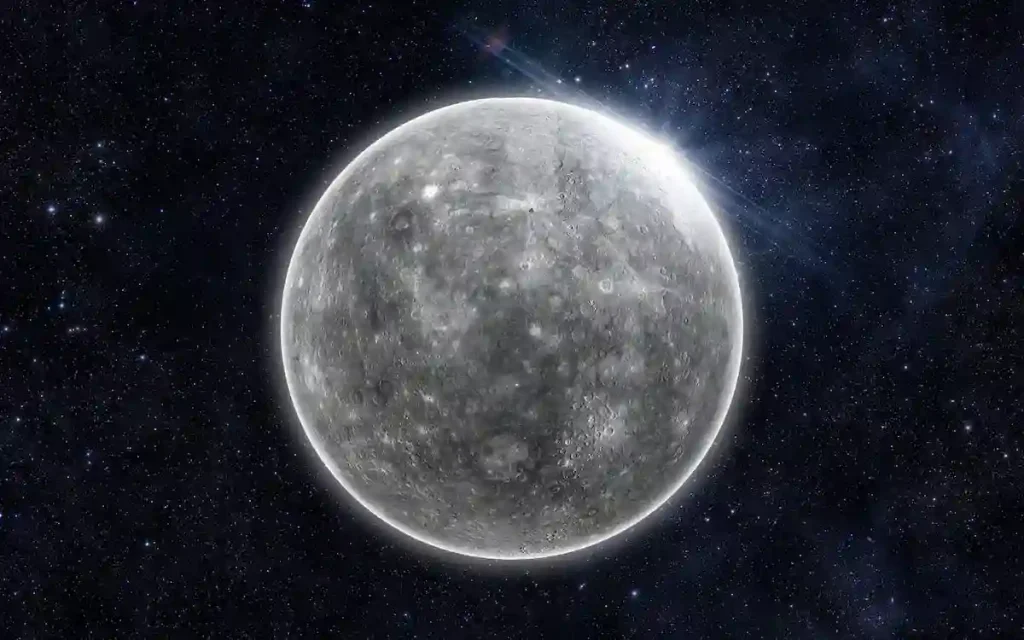
Over its 4.5-billion-year history, Mercury has shrunk far more than previous calculations by planetary scientists suggested. A new study by researchers at the German Aerospace Center shows that the scale of global contraction on the planet closest to the Sun was underestimated by 10–30%. The error stems from traces of ancient asteroid impacts that masked the signs of crustal faults.
Hidden Scarps and Buried Tectonics
Mercury’s contraction is an inevitable process driven by the slow cooling of its interior and the gradual crystallization of its giant metal core. As the planet’s volume shrinks, its outer silicate crust contracts, forming thrust scarps and folded ridges hundreds of meters high and hundreds of kilometers long.
A research team led by Gaku Nishiyama compared known tectonic structures with the first digital map of the planet’s surface roughness. According to abstracts presented at the Europlanet Science Congress, the roughest, most heavily cratered regions showed a suspicious shortage of signs of tectonic activity.
The scientists demonstrated that over billions of years of meteorite bombardment, debris from craters literally buried and smoothed over the oldest scarps, making them invisible to the optics on NASA’s MESSENGER probe.
Once hidden geological structures are factored in, Mercury’s total diameter reduction over its entire history is estimated at 19 km, with the upper bound reaching 23 km. Earlier conservative models put the process in the range of 4 to 16 kilometers.
What the Core Hides and When BepiColombo Arrives
As the astronomy portal Space.com notes, the revised figures do not point to a sudden tectonic catastrophe today. The study refines estimates of the total heat the planet has lost over its lifetime.
A larger scale of contraction means Mercury’s metal core accounts for an even bigger share of its volume than previously thought, or contains a different proportion of light elements (silicon and sulfur) that affect its melting point.
The joint mission BepiColombo, a collaboration between the European Space Agency (ESA) and Japan’s JAXA, is expected to settle the debate. The spacecraft are scheduled to enter orbit in late 2026, and in spring 2027 the BELA laser altimeter and high-resolution stereo cameras will begin scanning Mercury’s surface, revealing small faults hidden beneath the regolith.