







Qwen-Image-2.1 Goes Open Source: 7B-Parameter Model Generates 2K Images and Runs Locally
 ·
22.09.2026 19:08
·
3 min read
·
22.09.2026 19:08
·
3 min read

On September 20, 2026, the Qwen team released Qwen-Image-2.1, a diffusion model for image generation and comprehensive editing, to the public. Its visual block has 7 billion parameters and supports native resolution up to 2K while processing text and images at the same time. For local AI enthusiasts, this is a significant release: the model solves several long-standing problems of open generators and almost immediately got optimized builds for running on consumer graphics cards.
The new architecture is optimized for deep integration into work pipelines. The model can create images with a transparent background in RGBA format without the need for subsequent manual cutouts, edit selected areas by mask, and isolate individual objects from photos.
The system also supports passing up to ten reference images at once, which makes it easier to keep a consistent style or character appearance across generations. As stated on the Hugging Face repository page, the developers have significantly improved the rendering of typography and complex text within the frame, facial anatomy, fine textures, and complex stage-lighting scenarios.
Lightweight GGUF Builds and ComfyUI
The ecosystem around the release took shape in just a few days. The original weights are published under the Qwen Research License and are supported by the Diffusers, vLLM-Omni, and SGLang libraries, as reported in the GitHub documentation.
For home PC owners, independent enthusiasts have already prepared quantized GGUF builds for the popular ComfyUI interface. In particular, in the abenzerps repository on Hugging Face, versions ranging in size from 4.05 to 7.59 GB are available. The author calls the Q4_K_M variant weighing 4.6 GB the most balanced in terms of speed and quality. A full local launch also requires a text encoder and a VAE module.
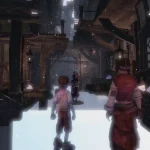
Got early access to the upcoming Qwen-image 2.1!
— Hakm (@hakmgpt) September 19, 2026
Here are a few images generated with the model , check out the comment section for the full quality. pic.twitter.com/PfEXECyIOR
What the “Uncensored” Status Actually Means
A stir quickly arose around the local builds because of the absence of strict content restrictions. Enthusiasts found that in an offline pipeline the model freely handles sensitive prompts, producing scenes of violence and NSFW material among other things.
However, this fact is tied exclusively to the absence of an external software layer (safety checker) and stop-lists that are usually built into cloud web interfaces. The Qwen team itself never declared the model an “uncensored neural network.” A separate page, Qwen-Image-2.1-Uncensored-GGUF, that appeared on the platform uses the model’s standard original weights without additional fine-tuning or removing restrictions at the architecture level.