








Spy Tech at Home: Enthusiast Builds “Invisible” Earbuds With a Microphone Hidden in a Ballpoint Pen
 ·
04.10.2026 18:30
·
3 min read
·
04.10.2026 18:30
·
3 min read

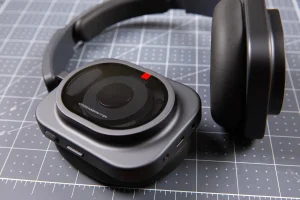
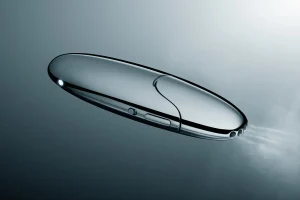
The creator behind the engineering YouTube channel Penguin DIY has built a set of wireless earbuds that are nearly impossible to notice from the side during everyday wear. To achieve maximum concealment, the blogger completely disassembled a pair of off-the-shelf TWS earbuds, resoldered their circuit boards and packed the internals into a clear polymer cast of the ear canal, while disguising the transmitter with its microphone as an ordinary ballpoint pen.
The system’s central component was built strictly around the author’s own anatomy. Instead of using 3D printing, the maker took an impression of his ear with alginate impression material, made a silicone mold and cast a one-piece shell from clear epoxy resin. Inside this tiny part he managed to fit a dynamic driver, a miniature Bluetooth controller board, a lithium-polymer battery and touch-sensitive control contacts.
Ultrafine Soldering and Magnetic Removal
To fit the bulky factory electronics into the compact shape of the ear canal, the author had to strip a standard TWS earbud down to its base. He replaced most of the rigid traces and flex cables with ultrathin enameled wires, resoldering the components right up against each other. The basic radio modules and audio path, however, remained original — the project demonstrates the limits of physically arranging existing off-the-shelf parts, not building chips from scratch.
The fit turned out to be so deep that pulling the earbud out with your fingers proved impossible. To solve this, the creator integrated a tiny neodymium magnet into the rear of the shell. The device is removed from the ear with a special metal stylus extractor that has a magnetic tip.
A Microphone Under Cover and a Reworked Charger
The blogger placed the second part of the headset inside the writing mechanism of an ordinary ballpoint pen. It houses a second Bluetooth module with a sensitive microphone. This arrangement lets the user hold a phone conversation unnoticed: they hold the pen near their mouth, pretending to be deep in thought while writing, and the other person’s voice plays straight into the hidden earbud.
The engineer also took care of everyday charging. The factory charging case from the original earbuds was modified: the author relocated the copper spring-loaded contacts and reworked the cradles so that the case could hold both the non-standard clear insert and the tip of the pen.
The Main Danger of an Experiment Like This
Despite the visual flair of the homemade device, repeating a project like this at home is strongly discouraged. The main risk factor is the DIY installation of a lithium-polymer battery with no factory protective casing right inside the ear canal.
If the battery short-circuits, goes into thermal runaway or is mechanically damaged, removing the red-hot plastic shell from deep inside the ear without a surgeon’s help will be impossible. The Penguin DIY project should be seen purely as a striking demonstration experiment in microsoldering, not as a practical guide to building spy gadgets.