








Apple Unveils Watch Series 12 and Ultra 4 with Continuous Heart Rate Monitoring, Siri AI, and New Readiness Score
 ·
09.09.2026 21:16
·
6 min read
·
09.09.2026 21:16
·
6 min read
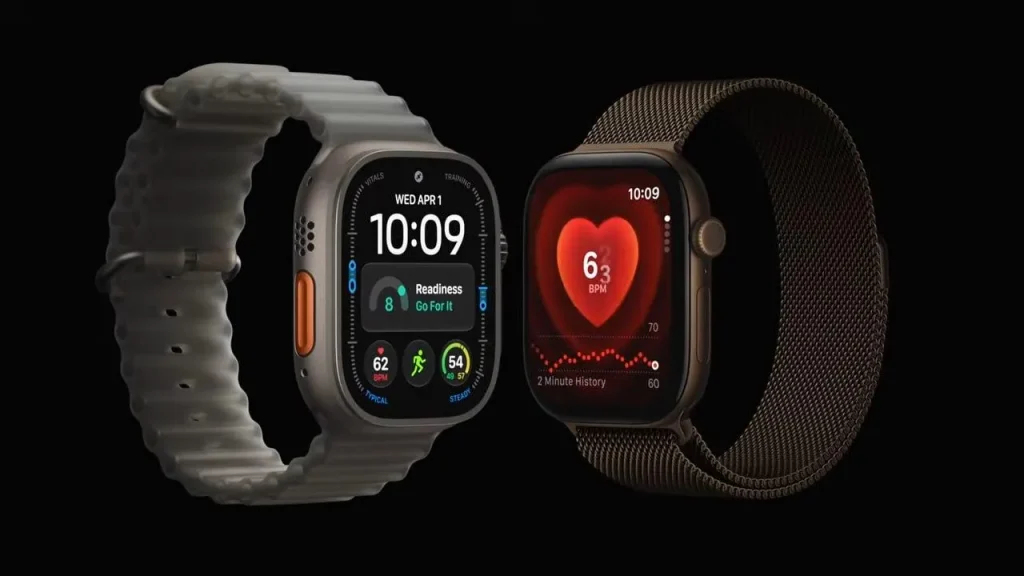
Apple has unveiled its next-generation smartwatches, introducing the flagship Apple Watch Series 12 and the rugged sports-focused Apple Watch Ultra 4. The company didn’t radically redesign the casings, instead focusing its engineering efforts on a deep overhaul of the internal architecture: the devices feature a powerful Apple S11 chipset, a new optical sensor that measures heart rate every five seconds, the long-awaited Readiness score, and advanced audio intelligence in watchOS 27.
The base price for the Series 12 in the US remains at $399, despite overall price increases across other lineups in 2026. The Ultra 4 starts at $799 as usual. Pre-orders are already open, and the first customers will receive their devices on September 18.
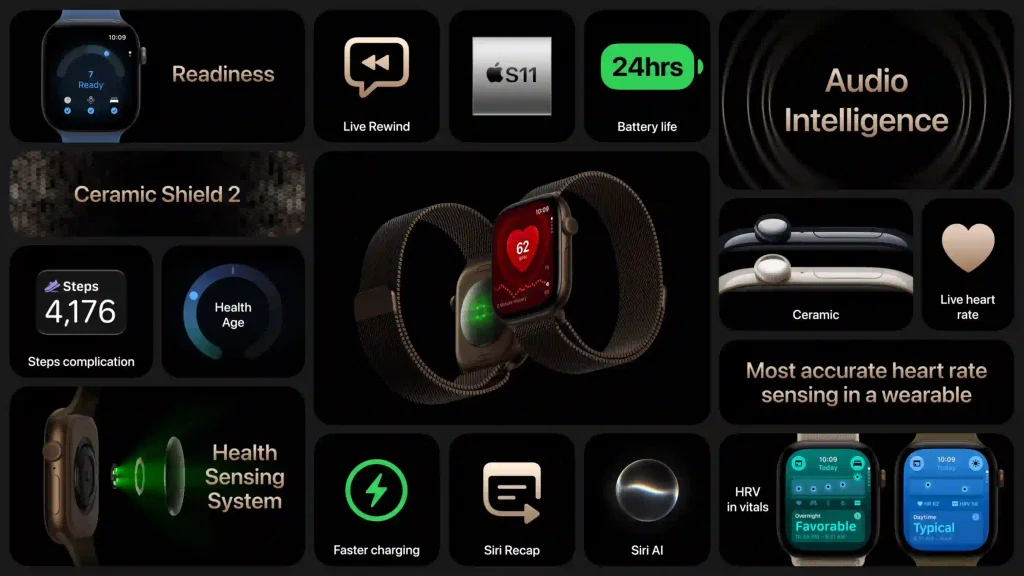
S11 Chip: First Real Performance Boost in Four Years
The move to the Apple S11 system-on-a-chip marks a major hardware milestone for the brand’s wearables. Apple Watch performance has essentially stagnated since the S9 chip in 2023, with the Series 11 and Ultra 3 generations using the same architecture under the S10 label. The new S11 delivers a noticeable increase in computing power and energy efficiency.
According to The Verge, the extra performance is needed for on-device processing of watchOS 27 algorithms. The watch acts as a personal wearable gateway for Siri AI within Apple Intelligence.
The voice assistant is no longer a simple command line: it can now analyze context based on the user’s schedule, location, and activity history, answer complex questions in natural language, and execute multi-step tasks within installed apps. Complex neural network computations are distributed between the watch’s chip, the paired iPhone’s processor, and Apple’s Private Cloud Compute infrastructure.
Audio Intelligence: Live Rewind and Siri Recap Evening Summaries
Specifically for the Series 12, engineers developed an Audio Intelligence suite that uses microphones to analyze the surrounding environment:
- Live Rewind: This feature lets you tap to go back to a snippet of a conversation, lecture, or meeting you just heard and get an accurate text transcript right on the watch screen.
- Siri Recap: A smart digest that compiles a brief, structured summary of events, meetings, reminders, and key conversations at the end of the day.
Apple emphasizes that these features don’t mean covert continuous recording of conversations: the audio stream is buffered in a secure local segment of the watch’s memory and is erased if the user doesn’t activate saving or analysis of a snippet.
Health Sensors: Heart Rate Every 5 Seconds and More Frequent HRV
The biggest change is in the optical health monitoring sensor. Previously, Apple smartwatches read heart rate in the background at irregular intervals of several minutes. With the Series 12 and Ultra 4, heart rate is measured every five seconds — up to 60 times more often than before.
The rugged Apple Watch Ultra 4 received a significant hardware upgrade:
- Updated electrodes for electrocardiogram (ECG) readings, improving accuracy when the skin is wet.
- New energy-efficient, brighter green LEDs in the photoplethysmography (PPG) sensor, eliminating measurement errors during trail running or swimming.
- Heart rate variability (HRV) measurements now occur every five minutes, allowing real-time tracking of the autonomic nervous system’s response to stress and fatigue.
Readiness Score: A Direct Answer to Garmin, Whoop, and Oura
Full heart monitoring has allowed Apple to introduce the Readiness recovery score — a direct counterpart to Garmin’s Body Battery, Whoop’s recovery score, and Oura ring’s algorithms.
Previously, users had to manually analyze sleep graphs, resting heart rate, and physical activity. Now the system consolidates all biometric markers into a single, easy-to-understand readiness score on a scale from 1 to 100:
- The algorithm compares the quality of nighttime sleep stages, body temperature deviations, HRV trends, and the load from previous workouts.
- In the morning, the watch provides a clear recommendation: whether your body is ready for a heavy cardio session or whether you should swap your workout plan for light stretching and rest.
With Readiness, Apple Watch moves from being an office accessory to a professional tool for athletes and biohackers.
Return of White and Black Ceramic Edition
The base Series 12 retains the slim bezels of last year’s model, but fans of premium materials got a surprise: Apple has brought back the legendary ceramic Edition. Ceramic watches haven’t been available since the Series 5 in 2019.
The new lineup includes white and charcoal black ceramic versions, distinguished by their mirror-like finish and exceptional scratch resistance. The standard lineup includes classic aluminum and stainless steel cases in Space Gray, Silver, Gold, and Bronze.
The extreme Ultra 4 retains its massive 49mm titanium case with the customizable Action Button, dual-band GPS, 5G cellular, and a satellite transmitter for sending SOS signals in remote areas. The main focus is on reducing sensor power consumption during continuous body scanning.
Apple, yeni akıllı saat modelleri Watch Series 12 ve Ultra 4'ü tanıttı.
— BPT (@bpthaber) September 9, 2026
— Tasarımında değişikliğe gidilmedi.
— Kalp atış hızını 5 saniyede, kalp atış hızı değişkenliğini (HRV) ise 5 dakikada bir ölçebiliyor. pic.twitter.com/zSENvJxKwB
Pricing, Availability, and No Budget SE 4
The lower-end Apple Watch SE wasn’t updated at the event: the company kept last year’s SE 3 as the entry point into its ecosystem.
Official US pricing:
- Apple Watch Series 12 (aluminum case): from $399;
- Apple Watch Series 12 (ceramic Edition): price varies depending on size and band type;
- Apple Watch Ultra 4 (titanium case): from $799.
Pre-orders for the new models began right after the presentation ended, with shipping to first customers and in-store availability set for September 18.
The new generation is practical: owners of Series 11 and Ultra 3 can safely skip this cycle, but for those with older devices (Series 6, 7, 8, and 9), the combination of the fast S11 processor, heart rate monitoring every five seconds, and the proprietary Readiness score is the most compelling reason to upgrade in years.