









Astronomers Release Largest 2D Map of the Universe with 5.6 Trillion Pixels and Nearly 4 Billion Objects
 ·
19.08.2026 23:00
·
2 min read
·
19.08.2026 23:00
·
2 min read
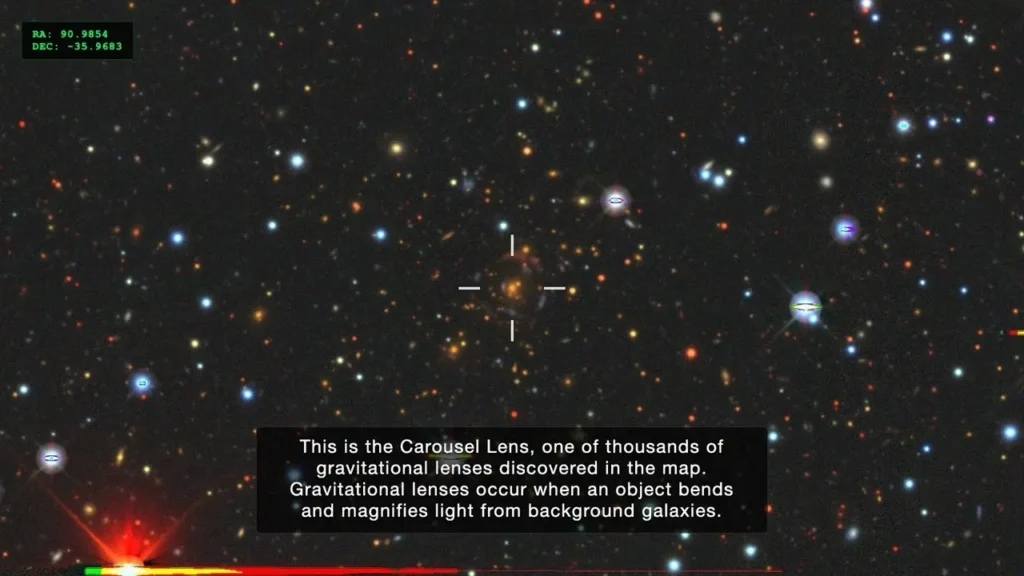
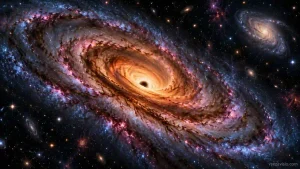
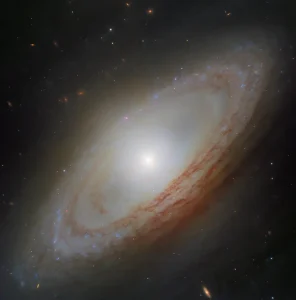
The DESI Legacy Imaging Surveys research team has released the largest-ever 2D color map of the sky in the optical and near-infrared spectra. The massive image, boasting a resolution of 5.6 trillion pixels, combines 263,407 individual exposures and catalogs nearly 4 billion cosmic objects.
The dataset covers approximately 75% of the observable sky, focusing on extragalactic regions unobstructed by the Milky Way’s dense dust clouds and star clusters.
Ten Years of Observations and the Perlmutter Supercomputer
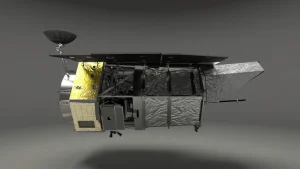
According to a Berkeley Lab (LBNL) report, an international team of 160 astrophysicists created the mosaic using data from 2,285 nights of observations over the past decade. The project relies on data from three major ground-based surveys—DECaLS, MzLS, and BASS—conducted by observatories in Chile and Arizona, alongside archival infrared measurements from NASA’s WISE space telescope.
To standardize hundreds of thousands of diverse exposures and account for atmospheric distortion, the Perlmutter supercomputer at the NERSC National Energy Research Scientific Computing Center spent eight weeks continuously processing the data.
Targeting for the DESI Spectrograph and Dark Energy
According to the NOIRLab national laboratory, the 2D map serves as a targeting grid for the Dark Energy Spectroscopic Instrument (DESI). The spectrograph points thousands of robotic fiber-optic positioners at selected galaxies and quasars, measures their redshift, and transforms the flat mosaic into a 3D model of the universe’s expansion.
As Space.com reports, the project aims to shed light on the evolution of dark energy. Early DESI observations have already suggested that dark energy’s influence may vary over time rather than remaining an unchanging cosmological constant.
Open Access via Online Browser
The cataloged dataset is publicly available to help train AI systems and search for rare phenomena like gravitational lenses and supernovae.
Anyone can explore the map down to individual stars and distant galaxies using the interactive Legacy Survey Sky Viewer web interface.