








Google Adds Motion Assist Feature to Android 17 to Combat Motion Sickness
 ·
25.08.2026 13:20
·
2 min read
·
25.08.2026 13:20
·
2 min read
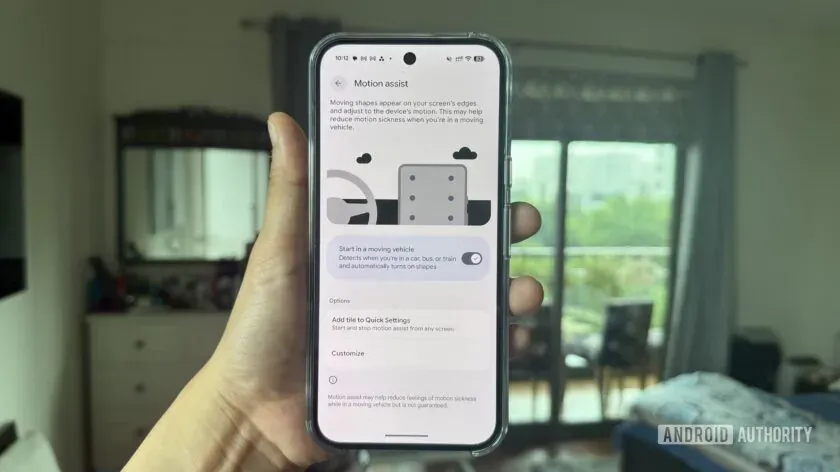
Google has started rolling out the system feature Motion Assist for Android 17. The tool helps combat motion sickness in vehicles by displaying animated dots along the edges of the display that sync in real time with the car’s acceleration and turns.
Owners of Google Pixel smartphones are the first to gain access to the new feature.
How It Works and Fighting Motion Sickness
The Motion Assist feature relies on the smartphone’s built-in gyroscopes and accelerometers to track motion inertia. Dynamic visual markers on the screen create a stable physical reference point for the eyes, resolving the sensory conflict between the visual perception of a stationary interface and signals from the vestibular system about the body moving in space.
Users can set the feature to turn on automatically when a car ride is detected or activate it manually via a toggle in Quick Settings. The parameters also allow customizing the color, shape, and transparency level of the indicators.
Deep Integration into SystemUI and Staged Rollout
According to Android Authority, early work on the technology under the name Motion Cues appeared in Google Play services back in late 2024, though that initial version could not overlay system notifications and menus.
As part of the Android 17 release, graphics rendering was moved directly into the system’s SystemUI process, allowing the dots to appear over any app and system menu without flickering.
The feature is rolling out in server-side waves. A similar tool previously debuted on Apple smartphones as Vehicle Motion Cues in iOS 18 and is also present in customized firmware from OPPO and vivo.