









Declining Ability to Handle Everyday Tasks Linked to Twice the Risk of Death
 ·
23.09.2026 20:45
·
3 min read
·
23.09.2026 20:45
·
3 min read
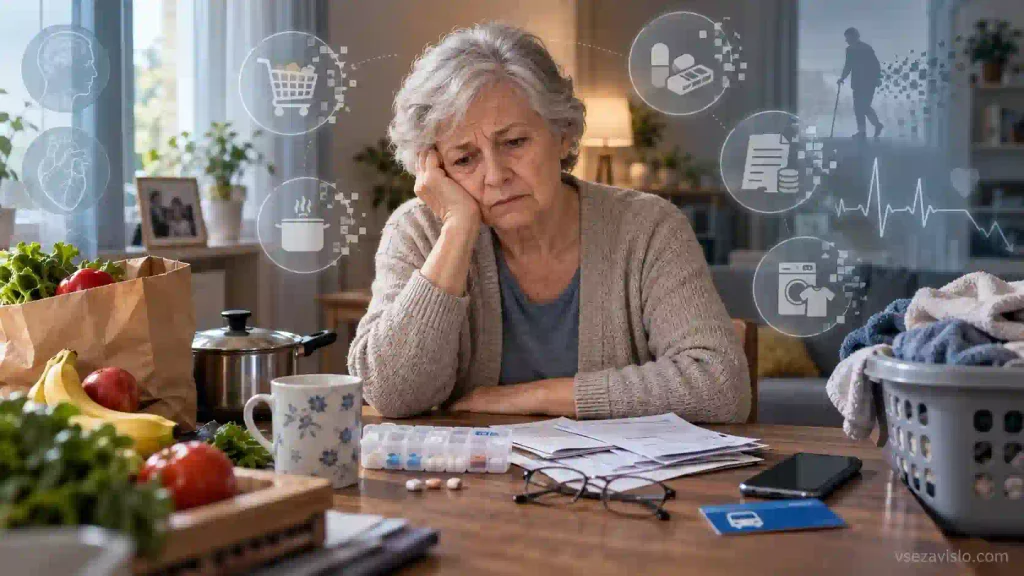
Gradually emerging difficulties with routine daily tasks may be a marker of declining overall health. South Korean researchers found that people whose ability to handle everyday chores on their own declined noticeably with age had roughly twice the risk of death in the following years.
The study included 6,033 people aged 45 and older who took part in the Korean Longitudinal Study of Aging. From 2006 to 2014, the researchers regularly assessed their ability to perform so-called instrumental activities of daily living – cooking, shopping, doing laundry, using transportation, managing money, taking medications and handling other tasks needed to live independently.
The paper was published on September 17 in the peer-reviewed journal GeroScience, and its results are available through PubMed.
For most people, independence barely changed
The researchers identified two distinct trajectories. Among 5,757 participants, or 95.4% of the sample, limitations stayed at a consistently low level.
For the remaining 276 people, the situation gradually worsened: over time they needed help with an increasing number of everyday activities.
Mortality was tracked through 2024. After accounting for age, chronic diseases, physical activity, socioeconomic indicators and other factors, the group with growing limitations had a 2.13 times higher risk of death compared with people who maintained their independence.
This is a statistical association, not evidence that being unable to shop or pay bills on your own directly shortens life.
Depressive symptoms explained about 16% of the link
The authors also examined the possible role of mental state. In 2016, participants were tested for symptoms of depression.
Statistical analysis showed that depressive symptoms could explain about 16% of the observed link between declining independence in daily life and mortality. The rest is likely tied to other factors.
Among the possible causes, the researchers cite worsening physical health and functional status. In addition, as ScienceAlert notes, the results may be influenced by hidden diseases, cognitive decline, frailty, poor nutrition or social isolation.
The study was observational, so it does not prove cause and effect. The reverse scenario cannot be ruled out either: a developing disease first impairs a person’s ability to handle ordinary tasks and then simultaneously raises the likelihood of death.
The practical value of the work lies elsewhere. A noticeable and sustained decline in independence may serve as an early signal of changes in physical or mental health that is worth not ignoring, especially if the person previously handled the same tasks with ease.