









First-person ‘Jump from Space’: China Lands Orbital Rocket Booster on Ground for First Time
 ·
21.08.2026 14:01
·
2 min read
·
21.08.2026 14:01
·
2 min read
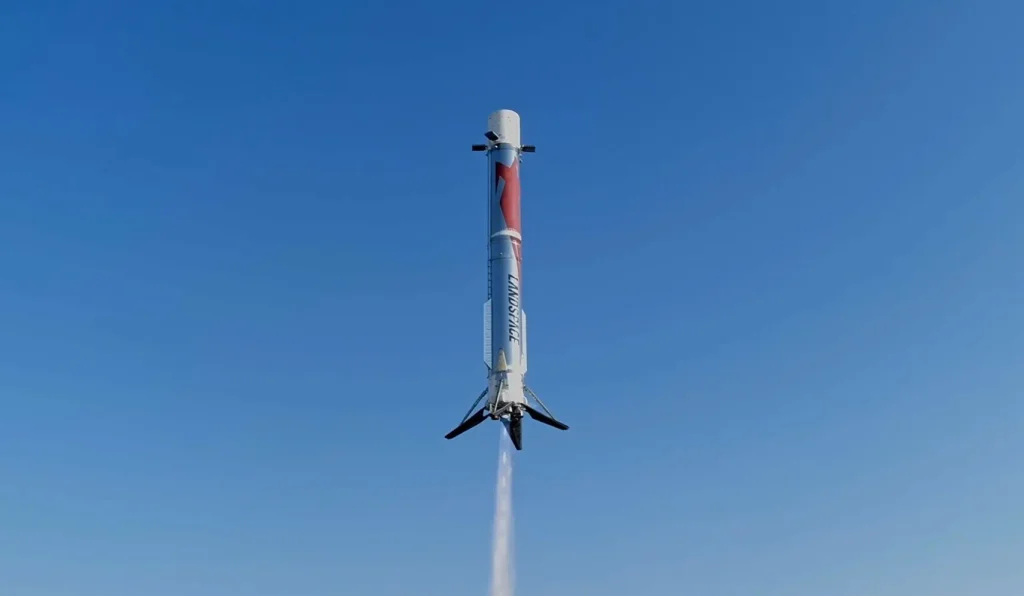
Private aerospace company LandSpace has made history in Chinese spaceflight by successfully landing the first stage of its Zhuque-3 Y2 rocket after a full orbital launch. As reported by Reuters, the rocket lifted off from the commercial Dongfeng pad near the Jiuquan Satellite Launch Center, delivered the Honghu-03 satellite to its target orbit, and then the 40-meter booster touched down vertically on a landing pad in Gansu Province.
Engineers captured the entire return from the upper atmosphere using an array of action cameras mounted directly on the booster’s hull.
Descent from the Stratosphere, Rocket’s-Eye View
To document the mission, engineers placed 12 DJI Osmo Action cameras around the booster’s perimeter, recording video autonomously to onboard storage. The footage, released after the vehicle was recovered, shows a panorama of stage separation against the backdrop of space, a fiery reentry into the dense atmosphere, reignition of the engines for braking at about 3 km altitude, and the synchronized deployment of four landing legs just seconds before touching down on the concrete pad.
For LandSpace, this landing is a key triumph: during Zhuque-3’s debut flight in December 2025, the stage successfully delivered its payload but crashed during the final landing phase.
🇨🇳 Imagens de câmera a bordo do primeiro estágio do foguete chinês Zhuque-3 Y2, mostrando desde o seu lançamento até o retorno do espaço e pouso na vertical em uma plataforma terrestre.pic.twitter.com/G7TCEAWt8b
— Análise Geopolítica (@AnaliseGeopol) August 20, 2026
Methane-Powered Rocket Designed for 20 Flights
According to Space.com, LandSpace is the first private Chinese company to successfully land an orbital booster on the ground using its own landing legs, following a scheme similar to SpaceX’s Falcon 9.
The Zhuque-3 is a two-stage stainless steel rocket powered by an eco-friendly liquid methane-liquid oxygen propellant combination. According to LandSpace, the first stage is designed for at least 20 reuse cycles.
Engineers plan to inspect the recovered booster and prepare it for another launch within the next six months.