








Xiaomi Unveils Poco X8: 8340 mAh Battery, IP69K Protection, and 3500-nit Display
 ·
01.09.2026 17:47
·
4 min read
·
01.09.2026 17:47
·
4 min read
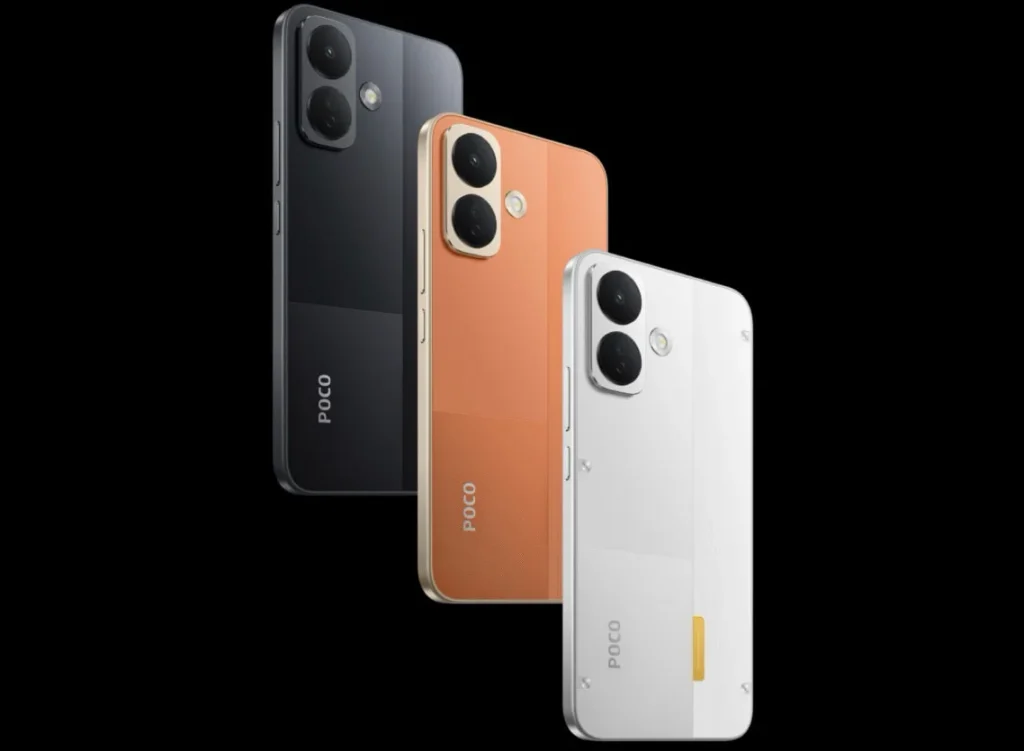
Xiaomi has officially unveiled the global version of its mid-range smartphone, the Poco X8. The standout features include a massive silicon-carbon battery with 8340 mAh capacity and reverse charging for other devices, an IP69K protection rating rarely seen on consumer smartphones, and a larger 6.83-inch AMOLED display. However, to achieve the record battery, the company made compromises in the camera and chipset departments.
Tablet-Level Battery and Six Years of Longevity
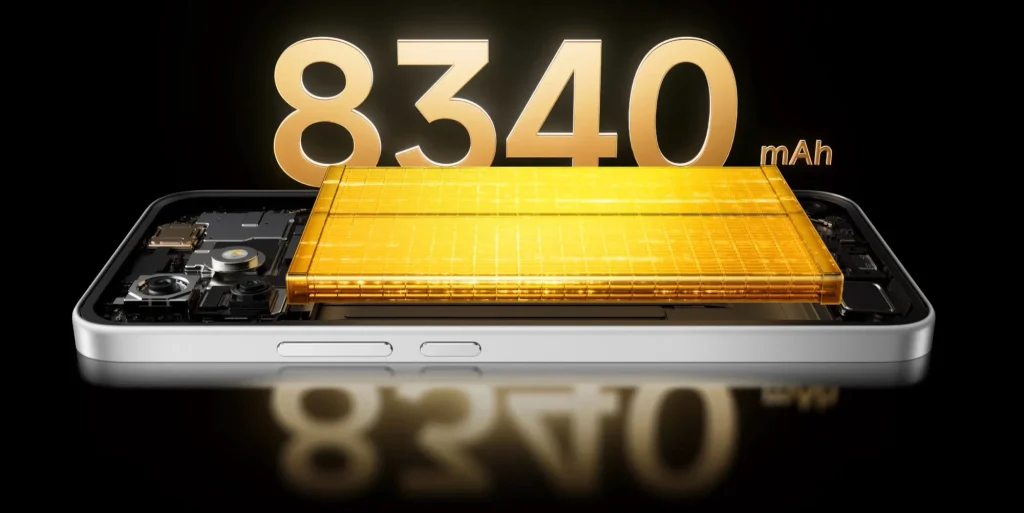
The main difference from its predecessor is a 63.2% jump in battery capacity (from 5110 mAh in the Poco X7 to 8340 mAh in the X8).
According to Notebookcheck, the use of an anode with 13% silicon content allowed the company to fit the record capacity into a body that is just 8.6 mm thick and weighs 223 grams.
Key features of the power system:
- Battery life: the manufacturer claims over two days of active use on a single charge;
- Charging speed: 67W HyperCharge adapter;
- Power bank mode: wired reverse charging at 22.5W to top up earbuds, smartwatches, or other phones in a pinch;
- Longevity: the battery is rated to retain at least 80% of its capacity after 1600 full charge cycles (equivalent to over six years of use with a remaining capacity above 6670 mAh).
Extreme IP69K Water Resistance and 3500-nit Display
Unlike most rivals with a basic IP68 rating, the Poco X8 comes with dual IP68 and IP69K certification. The body can withstand not only prolonged static submersion in fresh water but also high-pressure, high-temperature water jets. Additionally, a software Underwater Mode is included for underwater photography.
The front is dominated by a 6.83-inch AMOLED display with 1.5K resolution (2772 × 1280 pixels):
- 120Hz refresh rate;
- peak local HDR brightness of up to 3500 nits;
- protected by Corning Gorilla Glass Victus 2 with Wet Touch 2.0 technology for accurate touch recognition with wet fingers.
Direct Communication Without Cellular Network and HyperOS 3
According to French tech site Journal du Geek, the phone features Xiaomi Offline Communication. This technology allows two compatible smartphones to communicate over a direct radio link for voice calls at distances of up to 1.5 km in open areas with no cellular or internet signal.
The device runs on the company’s HyperOS 3 with built-in Google Gemini assistant and the HyperIsland status island.
Compromises: Last Year’s Performance and Simplified Cameras
While the Poco X8 makes a leap in battery life, the hardware is largely unchanged. It’s powered by the 4nm Qualcomm Snapdragon 6s Gen 4 chipset with Adreno 710 graphics. In Geekbench 6, the chip scores around 2930 points in the multi-core test, which is nearly identical to the MediaTek Dimensity 7300-Ultra in last year’s Poco X7 (2908 points).
The camera setup saw even more significant cutbacks:
| Specification | Poco X7 | Poco X8 |
| Main sensor | 50 MP (OIS, f/1.5) | 50 MP (OIS, f/1.8) |
| Ultrawide camera | 8 MP | None |
| Secondary sensor | 2 MP (macro) | 2 MP (depth) |
| Front camera | 20 MP | 16 MP |
The phone loses the ultrawide lens, and the main sensor’s aperture is slightly narrower.
Pricing and Availability
The smartphone is an adapted global version of the Chinese Redmi Note 17 Pro.
European sales begin in the first half of September:
- 8/256 GB configuration at an introductory promo price of €299–€319 (regular price €399);
- 12/512 GB version at launch for €329–€359 (regular price €449).
For users who prioritize maximum battery life, the new model will be one of the most enduring devices on the market, while mobile photography enthusiasts and those who want high frame rates in demanding 3D games should consider the higher-tier models in the series. For users who need maximum performance, POCO’s portfolio also includes the flagship F9 Ultra and F9 Pro with 185Hz displays and batteries of up to 8,050mAh.