









NASA Will Search for Caves on the Moon — They Could Serve as Natural Shelters for a Future Base
 ·
08.10.2026 17:58
·
3 min read
·
08.10.2026 17:58
·
3 min read
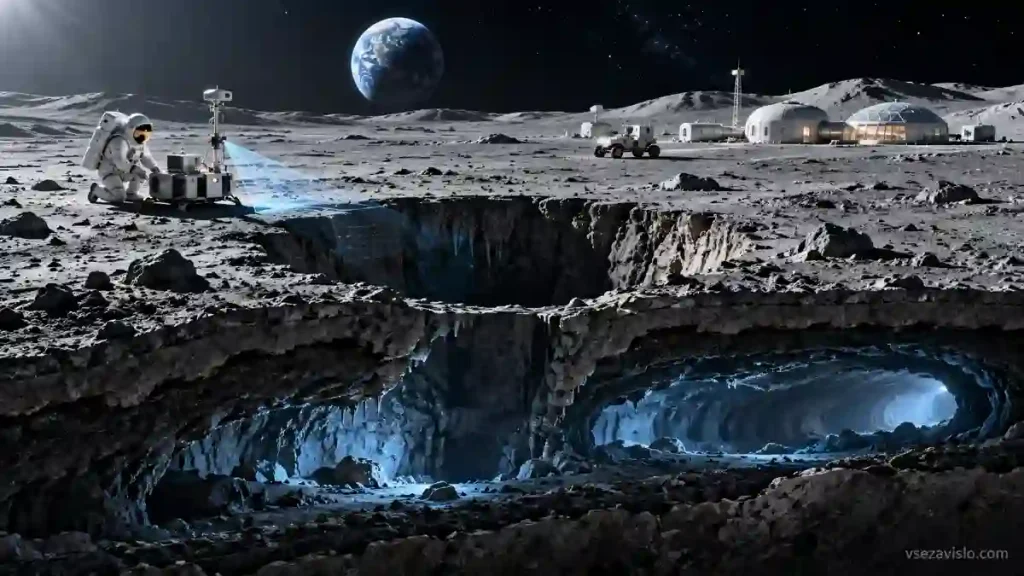
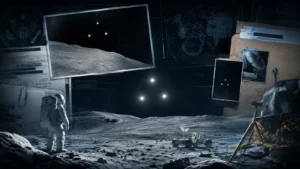
NASA has selected three new science payloads that will help pave the way for a long-term lunar outpost. One of them will head to the Marius Hills Pit to find out whether a large system of lava tubes lies beneath the surface, capable of shielding future astronauts from radiation, extreme temperatures and micrometeorites.
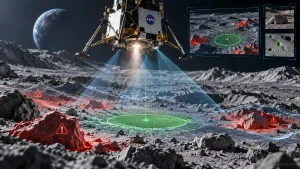
The investigations were chosen under the PRISM program and will be delivered to the surface by commercial landers through the Commercial Lunar Payload Services (CLPS) initiative. As NASA explains, their job is to study natural shelters, available resources and the hazards that must be taken into account when designing Moon Base.
Specific launch dates for the new instruments have not yet been announced.
Huge Lava Tunnels May Lie Beneath the Surface
The most unusual project is called GIMLI — Geophysical Instruments for Marius Lunar pit Investigation. It will be placed near the Marius Hills Pit and used to scan the subsurface for hollow spaces.
Such structures may be remnants of ancient lava flows: the surface of molten rock solidified while the lava inside kept moving and eventually left behind an empty tunnel.
If GIMLI confirms the existence of a large lava tube, it would be especially interesting for future construction. A layer of lunar rock can provide natural protection from ionizing radiation and micrometeorites, and temperatures inside such structures are far more stable than on the open surface.
Lunar Reconnaissance Orbiter studies have already shown just how big the difference is. NASA reported that in some shaded areas of lunar pits the temperature stays around 17 °C, while the open surface can heat up to about 127 °C and cool down to −173 °C.
Two More Payloads Will Tackle Ice and Base Safety
LEMS-SP will be an autonomous monitoring station near the south pole. It will track micrometeorite impacts, measure volatile content in the extremely thin lunar exosphere and record seismic events.
These observations will help assess the loads that habitat modules, power infrastructure and other equipment at the future base will face.
The third payload, DISCO — Depth Imager with Spectral and Color Optics, is meant to take the first direct measurements of ice in small permanently shadowed and extremely cold areas — so-called micro cold traps.
The instrument will also study the mechanical properties of the soil and the effect of lander engine exhaust on the surface. Lunar dust and regolith kicked up by engines could become a serious problem if landing sites, equipment and habitat modules are located close together.
Water ice is especially important for a long-term presence: it could potentially be used directly as water, and after processing it can yield oxygen and hydrogen.
So NASA is investigating three key conditions for future lunar infrastructure at once: where it is safer to live, what resources are available on site and what threats the base must withstand. That said, this is still preparatory research — the existence of a lava tube at Marius Hills suitable for human habitation has yet to be confirmed.