









Secret to 194 Years of Longevity: Scientists Sequence Genome of World’s Oldest Tortoise
 ·
08.10.2026 18:29
·
2 min read
·
08.10.2026 18:29
·
2 min read
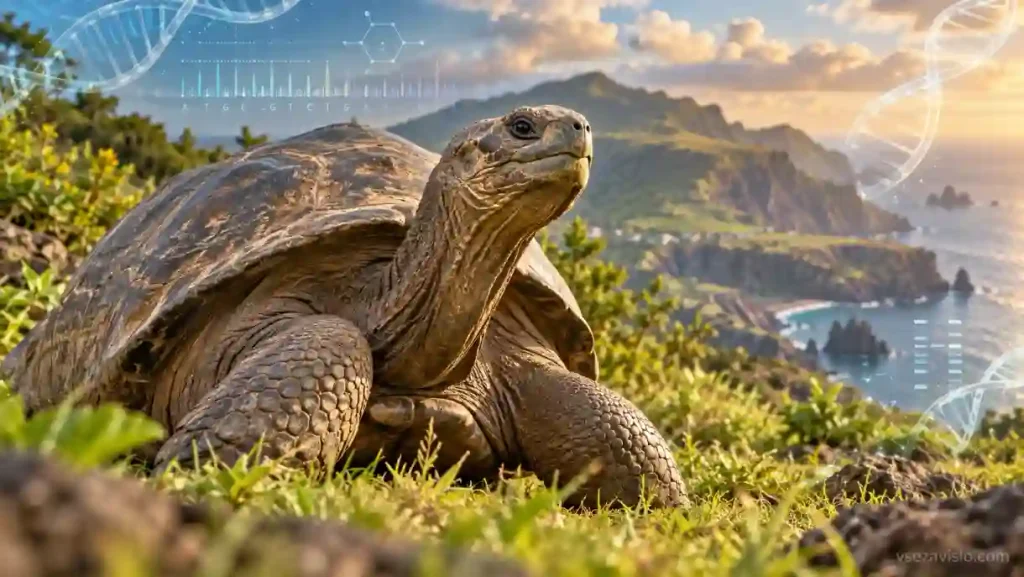
Geneticists have published an extensive study on the mechanisms of aging based on DNA analysis of Jonathan, a Seychelles giant tortoise. The reptile is officially recognized as the world’s oldest living land animal: estimated to be 194 years old, Jonathan arrived on the island of Saint Helena back in 1882 as a fully grown adult. The findings, published in the journal Science Advances, show that the secret to his extreme survival lies not simply in a slow metabolism, but in targeted protection of the cell’s powerhouses: mitochondria.
The research team fully sequenced the tortoise’s genome and compared it with samples from a younger Aldabra giant tortoise named Tank and the famous Galápagos tortoise Lonesome George. In Jonathan’s DNA, researchers identified 287 unique gene variants directly linked to age-related changes, Live Science reports. These modifications affect DNA repair mechanisms, telomere protection, cancer resistance, and insulin sensitivity.
An Epigenetic Paradox: An Aging Body with Youthful Mitochondria
The researchers’ key discovery involves epigenetics rather than the DNA sequence itself—specifically, chemical methylation marks that turn specific genes on and off. As most animals age, the distribution of these marks becomes chaotic (a phenomenon known as increased methylation entropy), causing cells to malfunction.
Most of Jonathan’s genome shows signs of deep biological aging. However, regions responsible for mitochondrial function and RNA processing maintained pristine order typical of young organisms, according to a press release from the University of Cambridge.
Mitochondria supply cells with energy, and their deterioration is considered one of the primary drivers of tissue aging in mammals. The reptile’s ability to maintain control over mitochondrial gene expression for nearly two centuries allowed its cells to continuously repair themselves and prevent catastrophic damage.
Could This Hold the Recipe for Human Longevity?
While the fundamental mechanisms of mitochondrial respiration and DNA repair are largely shared between reptiles and humans, scientists caution against jumping to conclusions. As Reuters notes, the study uncovered no “immortality gene.”
The paper describes the biology of a single, unique phenomenon and currently establishes only a statistical correlation. To translate these insights into applied medical therapies, biologists will need to examine similar epigenetic patterns in other long-lived species and determine whether it is pharmacologically feasible to slow the entropy of mitochondrial regulators in human cells.