








2026 Ig Nobel Prizes: Splash-Free Urinal, Mosquito Nozzles, and Buried Underwear for Soil Testing
 ·
04.09.2026 19:44
·
3 min read
·
04.09.2026 19:44
·
3 min read
The winners of the 36th Ig Nobel Prizes have been announced in Zurich, celebrating scientific research that “first makes you laugh, then makes you think.” The recent award ceremony marked a historic milestone for the organization: for the first time in its 36-year history, organizers held the main event outside the United States.
Behind the winners’ eccentric topics lie actual physics calculations, biological discoveries, and experiments with solid methodological foundations.
Splash-free urinal, mosquito nozzles, and superprotein
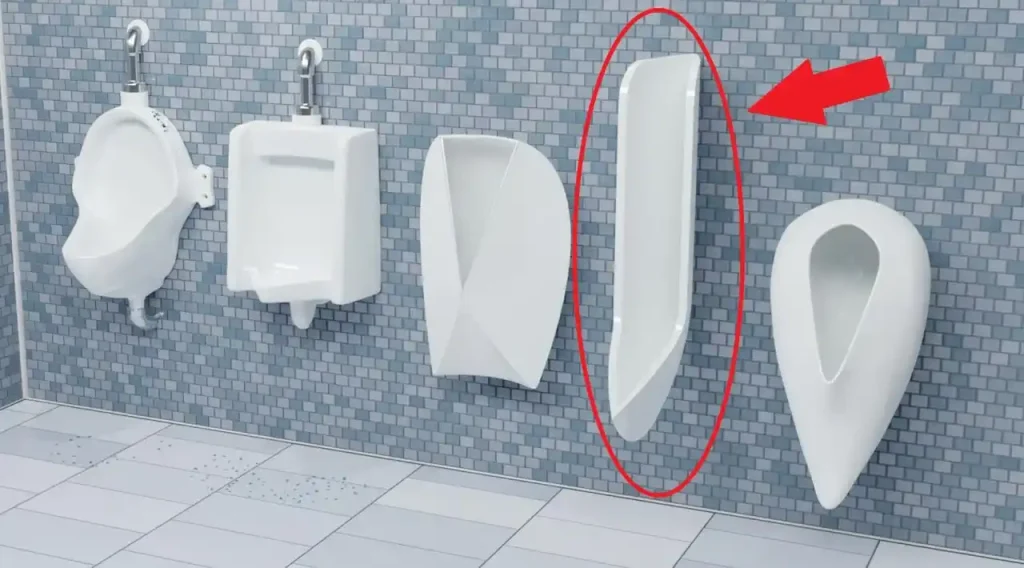
The prize in Physics went to an international team of scientists for calculating the fluid dynamics of an ideal urinal. The researchers found that splashing is virtually eliminated when the impact angle of the stream against the wall is under 30 degrees. Based on these equations, the team designed a custom curved bowl with geometry that ensures a sharp contact angle regardless of where the stream is directed.
In the Technology category, the award went to the developers of “necroprinting.” Scientists adapted the proboscises of dead mosquitoes to serve as ultra-fine nozzles for 3D printers. The insect’s natural capillary proved stronger and more precise than artificial counterparts of the same gauge, enabling high-resolution microstructure printing using tiny polymer drops.
Biologists studying the milk of the Pacific beetle cockroach Diploptera punctata took home the prize in Chemistry. The team discovered that the protein crystals fed by mothers to embryos in their brood pouch contain roughly three times as much energy as an equivalent volume of cow’s milk protein. However, the researchers tempered marketer enthusiasm: the crystals are being studied for targeted nutrient delivery in medicine, not for starting insect-based dairy farms.
Stolen kids’ candy, teen body odor, and buried underwear
Among other findings on the 2026 winners list, standout experiments spanned sociology, medicine, and ecology:
- Economics: Psychologists demonstrated that individuals with higher socioeconomic status commit minor unethical acts more frequently. In the experiment, wealthier participants took significantly more sweets from a bowl labeled “Candy for children.”
- Soil Science: Ecologists buried 1,000 identical pairs of cotton underwear across 25 countries. Two months later, they dug the garments back up: the degree of fabric degradation by soil microorganisms allowed researchers to map global soil biological activity.
- Olfaction: A study confirmed that parents find the smell of their own infants pleasant almost instinctively, whereas the sweat of teenagers triggers strong aversion.
- Biology: Scientists systematically stepped on different body parts of venomous snakes in the field to identify aggression patterns and formulate safety guidelines for walking through brush.
- Medicine: An award was retrospectively granted for a 1977 paper detailing pressure and airflow dynamics in nasal passages during proper nose-blowing.
- Peace Prize: Researchers described the “enemy of my enemy” social phenomenon, providing mathematical backing for why people favor those who actively conflict with their personal adversaries.
Organizers again emphasized that the Ig Nobels do not aim to discredit science, but rather to show that rigorous scientific methods can be applied to the most unexpected and everyday aspects of the world around us.