









Heart Cells Attempt to Divide After Heart Attack: Scientists Prove Human Myocardial Regeneration for First Time
 ·
11.09.2026 23:22
·
2 min read
·
11.09.2026 23:22
·
2 min read
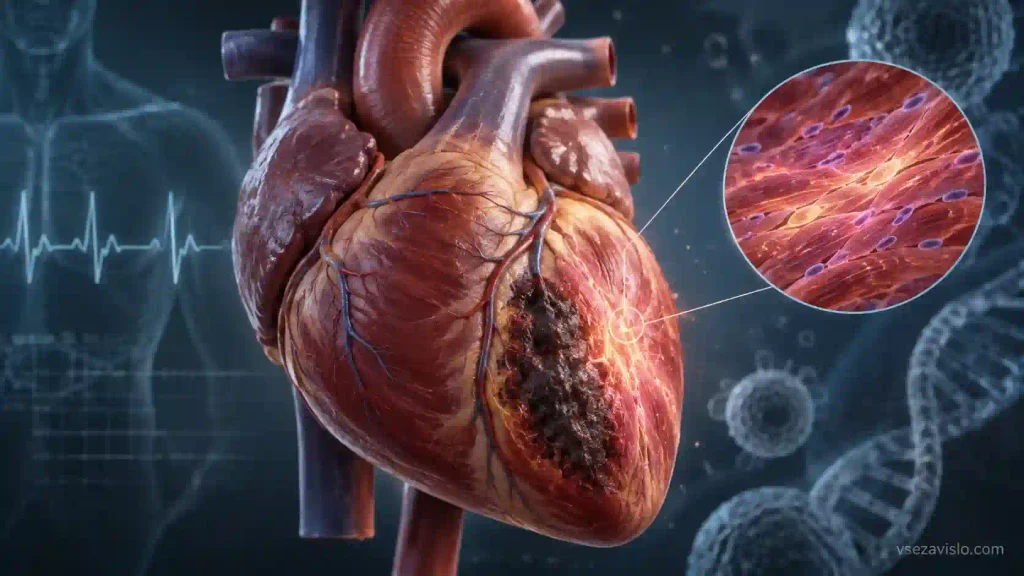
Cardiologists from the University of Sydney, the Baird Institute, and Royal Prince Alfred Hospital have gathered the first direct evidence that the adult human heart can generate new muscle cells in response to a myocardial infarction. Previously, this adaptive response to damage had only been reliably observed in laboratory rodents and fish. The findings of the fundamental study were published in Circulation Research.
Mitosis, Cytokinesis, and Live Tissue During Bypass Surgery
For decades, medical consensus held that cardiomyocytes—the muscle cells responsible for the heart’s continuous contractions—permanently lose their ability to divide shortly after birth. A severe heart attack destroys up to a third of the organ’s muscle mass, replacing the damaged area with a stiff fibrous scar that does not contribute to pumping blood and eventually leads to heart failure.
The Australian researchers used a unique biomaterial sampling technique: with patient consent, they collected live myocardial tissue samples directly during coronary artery bypass surgery. Surgeons extracted micro-samples from both the border zone near the heart attack site and distant healthy areas.
Analysis of cellular markers revealed that hypoxia triggers a full cell division cycle in cardiomyocytes: researchers observed signs of not only mitosis (duplication of genetic material) but also cytokinesis—the physical division of the parent cell into two independent units.
Why the Heart Cannot Recover Without Medication
As the authors highlight in a press release from the University of Sydney, the discovery does not mean the body can handle the aftermath of a major heart attack on its own. The natural rate of cell division is far too slow to offset the loss of millions of muscle fibers and prevent ventricular remodeling.
The key value of the study lies in identifying specific molecular targets. In a paper published in the PMC database, biologists described the signaling proteins and enzymes that regulate when cardiomyocytes enter the division phase.
Until now, attempts to stimulate myocardial regeneration relied on preclinical animal testing. Pharmacologists now have clear targets within living human tissue that could be targeted by future drugs to artificially accelerate heart recovery and promote healing with living muscle tissue rather than scar tissue.