






Massive Analysis of 69,000 Insect Species Debunks 60-Year-Old Theory of Ant and Bee Evolution
 ·
15.08.2026 21:42
·
2 min read
·
15.08.2026 21:42
·
2 min read
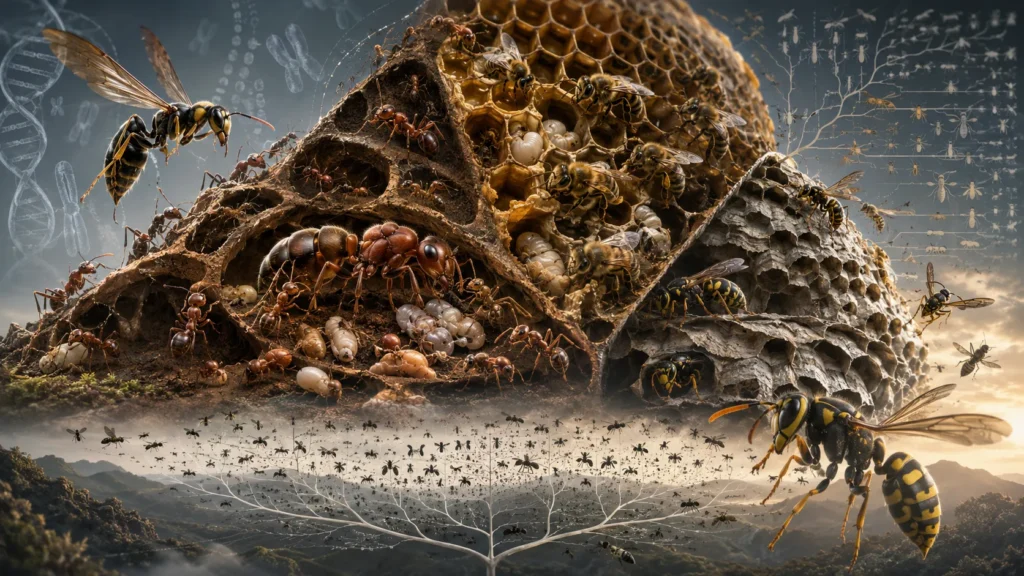
Biologists at Arizona State University have challenged a classic genetic hypothesis that explained the origin of complex social colonies in ants, bees, and wasps. According to a study highlighted by ScienceDaily citing the journal Current Biology, the rise of eusociality stems from behavioral and anatomical adaptations rather than chromosome inheritance patterns.
For six decades, the haplodiploidy hypothesis was considered fundamental. In hymenopterans, females develop from fertilized eggs and have a diploid set of chromosomes, while males are haploid. As a result, sisters share up to 75% of their genes, making caring for the queen’s offspring a genetically more advantageous strategy than having their own young.
Testing the Hypothesis Across 69,000 Species
To test whether this rule is universal, researchers analyzed the genetic mechanisms and social structures of nearly 69,000 insect species, mapping them across two of the largest phylogenetic trees.
Statistical analysis revealed that the correlation between haplodiploidy and division of labor in colonies exists in only one clade: stinging hymenopterans (Aculeata). In other insect groups, a haplodiploid system does not increase the likelihood of transitioning to complex colonies; they form social structures at the same rate as diploid species.
The Real Drivers of Eusociality
The researchers concluded that environmental factors and specific biological traits played a decisive role in the evolution of collective living: the emergence of stings to protect colonies from predators, the construction of complex, protected nests, and specialized offspring care. These advantages made worker cooperation an effective survival strategy.