




‘Mirror Life’: Why Biologists Are Sounding the Alarm Over Bacteria That Don’t Yet Exist
 ·
04.10.2026 18:07
·
3 min read
·
04.10.2026 18:07
·
3 min read
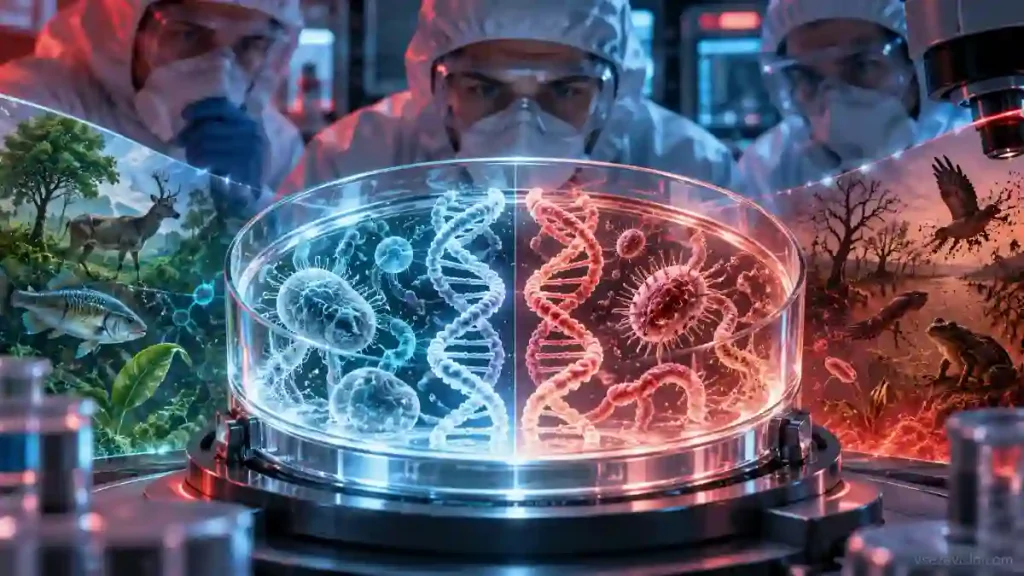
A debate has erupted in the scientific community over the potential dangers of “mirror life”—hypothetical synthetic organisms with a molecular structure inverted relative to Earth’s entire biosphere. The discussion was reignited by an international symposium in Singapore and a series of opinion pieces in the press. On social media, the topic quickly escalated into doomsday scenarios warning of imminent, invulnerable superbugs. The reality, however, is far more grounded: no such cells currently exist in nature or in laboratories, and the technology needed to create a living mirror organism remains at least a decade or 15 years away.
At the heart of the concept lies a fundamental property of organic molecules: chirality. Much like left and right hands, many molecules can exist in two mirror-image spatial forms. Almost all terrestrial life is strictly asymmetrical: amino acids in proteins have a left-handed orientation (L-forms), while sugars in DNA and RNA are right-handed (D-forms).
A hypothetical “mirror” bacterium would use a completely inverted set of chemical building blocks. It is precisely this theoretical incompatibility that worries researchers: plant and animal immune systems, clearing enzymes, and natural bacteriophages all evolved exclusively alongside standard biochemistry. If a mirror pathogen were to enter a host, natural defenses might simply fail to recognize the threat.
Ecosystem Threat or Starvation in a Test Tube
Serious debate around the issue began after a statement by 38 leading microbiologists and immunologists was published in the journal Science. The scientists concluded that, in the event of a lab leak, a viable mirror bacterium could spread across the planet unchecked by natural limiting factors, acting as an absolute invasive species.
Not all experts share this apocalyptic view, however. Skeptics point to a simple biochemical barrier: in a world where all organic matter has standard chirality, an inverted cell would have nothing to eat. It would require mirror sugars and amino acids that do not occur in nature. Cut off from a specialized bioreactor with synthetic nutrient broth, such a microbe would likely starve or lose out in competition with ordinary bacteria.
A Preemptive Barrier Ahead of the Technology
What makes this effort unique is that biologists are attempting to establish safety regulations long before the technology itself exists, a topic discussed by experts at the forum in Singapore. While regulators typically respond to risks after the fact, synthetic biologists are pushing for a global moratorium on creating self-replicating mirror cells.
This position is shared by the UN Secretary-General’s Scientific Advisory Board. Experts draw a clear line between basic research and high-risk experiments. Synthesizing individual mirror proteins or nucleotides is safe and highly valuable for pharmacology: such molecules break down much more slowly in the body and could serve as the foundation for next-generation therapeutics. However, assembling a fully functional mirror organism is seen as an unwarranted risk until dependable biological fail-safes are developed.