









Open robotics knowledge base on GitHub aggregates courses from MIT, Stanford, and Arduino build guides
 ·
23.08.2026 22:18
·
2 min read
·
23.08.2026 22:18
·
2 min read
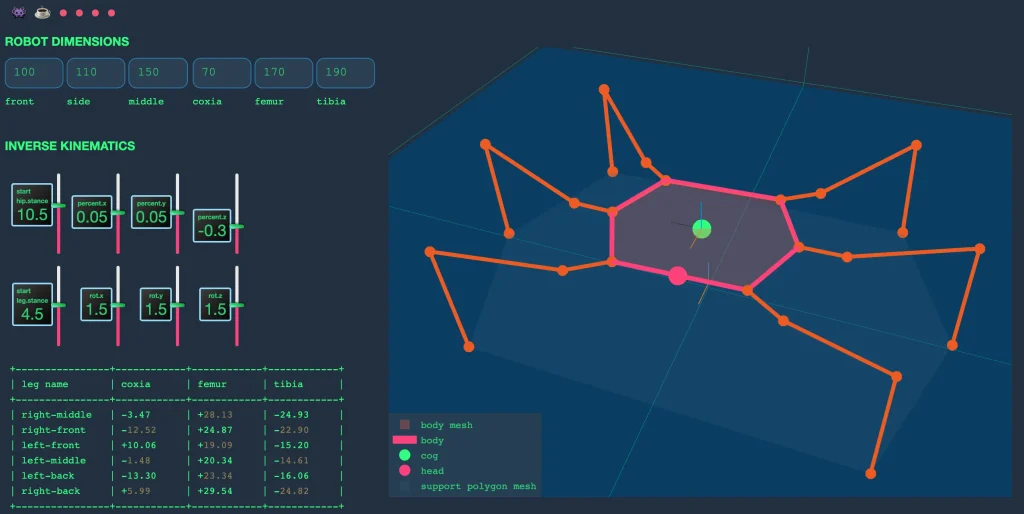
An open educational repository called Mithi’s Robotics Coursework has been gaining attention on GitHub for bringing together hundreds of robotics learning materials in one place. The catalog includes video lectures and programs from leading universities — MIT, Stanford, Carnegie Mellon, and ETH Zurich — as well as practical guides for building robots with Arduino and Raspberry Pi.
The project is a structured roadmap: the author organized materials by key disciplines, from basic electrical engineering and math to manipulator kinematics, control systems, and autonomous driving algorithms.
University programs and theory
The academic section of the repository provides direct links to world-class open courses:
- Introductory lectures on robotics fundamentals from Stanford University;
- Specialized courses on robotic manipulators: Robotic Manipulation from MIT and Underactuated Robotics;
- Programs on aerial drones, SLAM navigation algorithms, and deep learning for robots from UC Berkeley, Carnegie Mellon, and the Technical University of Munich;
- A practical course on developer tools: The Missing Semester of Your CS Education from MIT.
Beyond specialized theory, the repository includes resources on Kalman filters, CAD part design (Fusion 360, Onshape), algorithms in C++ and Python, and a list of classic literature, including “Artificial Intelligence: A Modern Approach” by Stuart Russell and Peter Norvig.
Hands-on projects: from simple motors to robot dogs
For practical experiments, the catalog features a dedicated Hands-on section. It includes documentation for open-source software libraries, such as the Hugging Face LeRobot framework for controlling robots via neural networks and the PythonRobotics algorithm package.
The list of practical guides includes schematics for open-source quadruped robots OpenDog, racing autonomous platforms MIT Racecar and Donkey Car, as well as blueprints for robotic arms and plotters.
Beginners can follow a step-by-step path: the authors explain how servos, stepper motors, and Motor Shield boards work with Arduino, then suggest moving on to computer vision programming on Raspberry Pi microcomputers.
The repository has been active since 2017, has over 5,100 stars on GitHub, and is regularly updated with new free materials.