









UK Royal Mint Extracts Up to 400 kg of Gold a Year From Old Smartphones and Computers
 ·
19.08.2026 09:23
·
2 min read
·
19.08.2026 09:23
·
2 min read
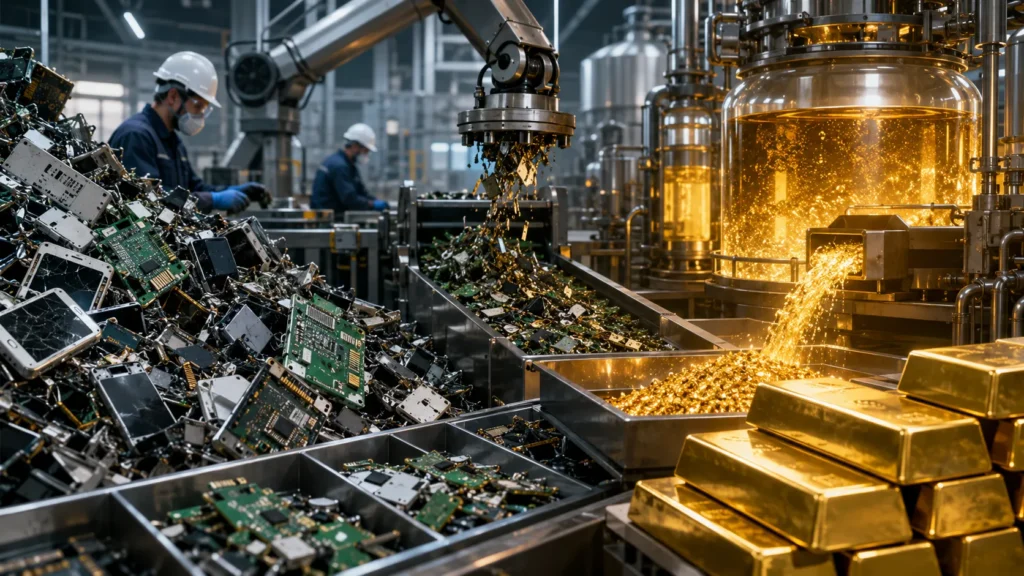
The UK’s Royal Mint has launched an industrial-scale operation to extract precious metals from electronic waste. A plant in Wales can process up to 4,000 tonnes of printed circuit boards per year, recovering around 400 kg of high-purity gold from discarded electronics.
The 3,700-square-meter facility is the first large-scale project to implement the concept of “urban mining” without traditional quarrying or underground mining.
Chemical Gold Extraction at Room Temperature
According to the official Royal Mint website, the facility uses patented technology from Canadian company Excir. Unlike traditional metallurgy involving high-temperature furnaces and toxic leaching, the new process dissolves gold from circuit boards at room temperature in a matter of minutes.
After filtration, the metal precipitates as a powder and is smelted into bars with a purity of 999.9 (99.99%). At full capacity, processing 4,000 tonnes of circuit boards annually will yield up to 1,000 tonnes of copper, 2.5 tonnes of silver, and 50 kg of palladium.
“886” Jewelry Made From Hundreds of Old Mobile Phones
On average, a single obsolete feature phone or mobile phone contains roughly 30–40 mg of gold in its contacts and circuit traces. As reported by The Guardian, the mint uses the recovered material to produce its own jewelry line, “886”, named after the year the organization was founded. Making a single 7.5-gram gold ring requires raw material from roughly 600 recycled phones.
Amid declining demand for physical cash, recycling microelectronics allows the mint to diversify its business and secure precious metals for investment and commemorative programs.
A $91 Billion E-Waste Market
According to the UN’s Global E-waste Monitor report, global electronic waste exceeds 62 million tonnes annually, with only 22.3% officially recycled. Discarded electronics contain $91 billion worth of valuable metals, including over $15 billion in unrecovered gold.
Environmentalists project that electronic waste will reach 82 million tonnes by 2030, making eco-friendly selective chemical recycling of circuit boards one of the most promising areas in recycling.