









An “Ambulance” for Androids: Japan Launches Mobile Repair and Replacement Service for Robots
 ·
13.09.2026 23:04
·
2 min read
·
13.09.2026 23:04
·
2 min read
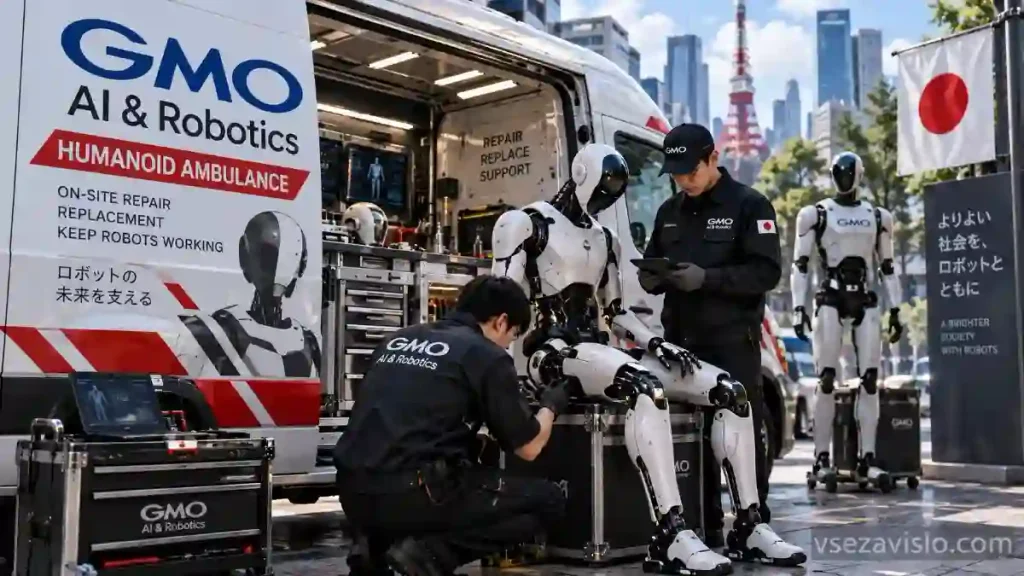
Japanese company GMO AI & Robotics (GMO AIR) has launched a mobile technical assistance service for humanoid robots called GMO Humanoid Ambulance. A specially modified van travels to commercial sites to perform rapid diagnostics and field repairs on androids. If a breakdown cannot be fixed quickly, specialists provide a temporary replacement robot while taking the faulty machine to a service center.
Shibuya Engineers and a Backup Fleet in the Cargo Bay
Inside the vehicle is a mobile diagnostic kit, a supply of servos, controllers, and a set of tools. The cargo area features a secure mount for transporting a backup robot.
According to the official GMO AIR portal, specialized engineers from the GMO Humanoid Lab in Tokyo’s Shibuya district respond to service calls. The service currently operates a single vehicle within the capital region, but as orders grow, the company plans to expand the fleet to other prefectures across the country.
The primary goal of the service is to prevent downtime in business operations. As Euronews notes, sending a robot back to the manufacturer for factory inspection traditionally put equipment out of service for weeks. Having an immediate pool of replacement androids allows businesses to keep warehouse logistics or hotel customer service running without interruption.
A Plan for 10 Million Machines and Service Infrastructure
The service operates as a closed corporate system: the mobile team services fleets of machines that GMO AIR itself integrates and supports.
The arrival of mobile repair crews coincides with a large-scale national robotics strategy. According to reports from Japan’s Ministry of Economy, Trade and Industry (METI), as part of efforts to address labor shortages, the country aims to integrate up to 10 million AI robots across 18 economic sectors by 2040 — ranging from healthcare and food service to heavy manufacturing.
The repair service for androids mirrors traditional roadside assistance for automobiles: as bipedal robots take over routine physical tasks, the speed of their maintenance becomes a critical economic factor.