





FDA clears autonomous robot that draws blood, hitting the vein on the first try 94.5% of the time
 ·
21.08.2026 07:58
·
2 min read
·
21.08.2026 07:58
·
2 min read
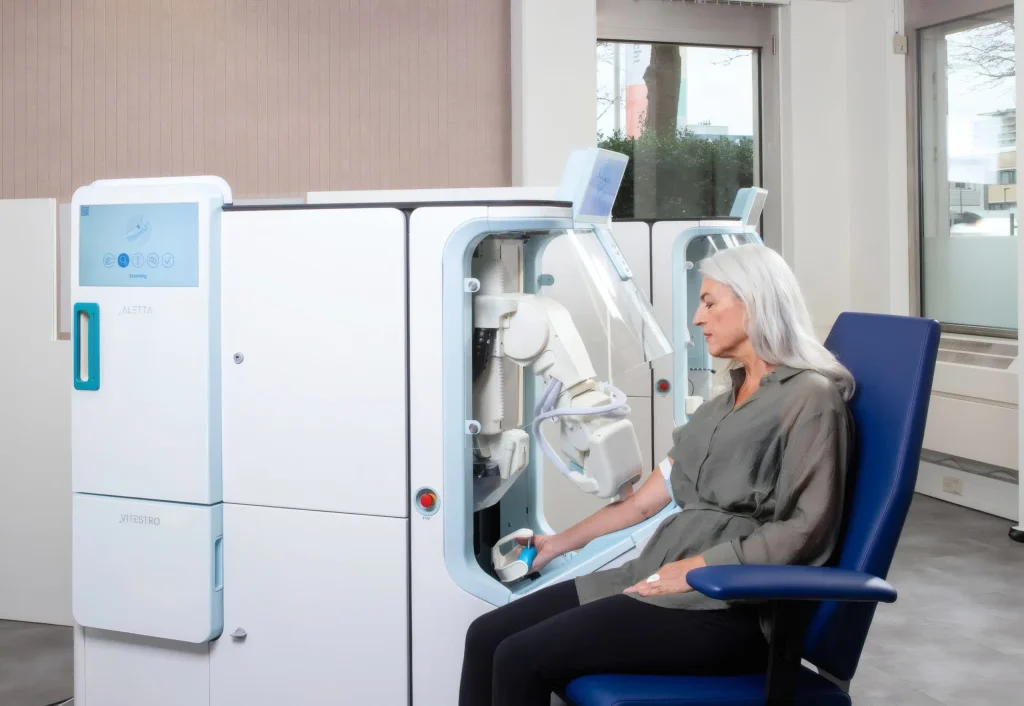
The US Food and Drug Administration (FDA) has for the first time authorized the use of an autonomous robotic device for drawing venous blood. According to the FDA’s official press release, the Aletta system from Vitestro has been granted De Novo authorization for adult patients in outpatient clinics.
The robot handles the entire procedure on its own, from locating a suitable vein to removing the needle and applying a bandage.
How the system finds veins and performs the puncture
The patient places their arm inside the manipulator, and the Vitestro Aletta system then runs a combined 3D scan:
- Near-infrared light maps the superficial veins;
- Ultrasound assesses the depth and diameter of the vein;
- A Doppler sensor helps distinguish a vein from an artery.
If the system cannot find a suitable vein for a safe puncture, it automatically halts the procedure and calls for a human. When the scan is successful, the robot applies a tourniquet with submillimeter precision, disinfects the skin, stabilizes the vein, inserts the needle, carefully fills and mixes the vials, and then disposes of the consumables.
Built-in motion sensors instantly detach the needle and stop the process if the patient suddenly jerks their arm.
Accuracy on par with experienced specialists
According to the large-scale ADOPT clinical study, published in the journal Clinical Chemistry and indexed in PubMed, the robot demonstrated impressive results in a sample of 1,633 patients:
| Patient category | First-attempt success rate |
| Overall blood draw success | 94.5% |
| Patients with obesity | 97.4% |
| Patients over 65 | 93.4% |
| Patients with difficult-to-access veins | 92.7% |
Mild adverse events were reported in only 0.6% of cases, and the risk of hemolysis (damage to blood cells) was just 0.3%. Meanwhile, 90% of participants said the procedure was less painful or felt the same as a blood draw by a human, and 82% said they would prefer the robot for future visits.
Staff oversight
Autonomy does not mean eliminating medical staff entirely. According to Vitestro’s information for laboratories, one trained phlebotomist can supervise up to three Aletta units simultaneously. This allows routine blood draws to be delegated to the technology, freeing clinicians to handle unusual and complex cases.